How to Thicken Epoxy: What to Add and How Much

08 August 2026
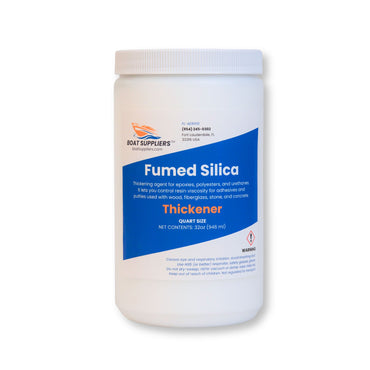
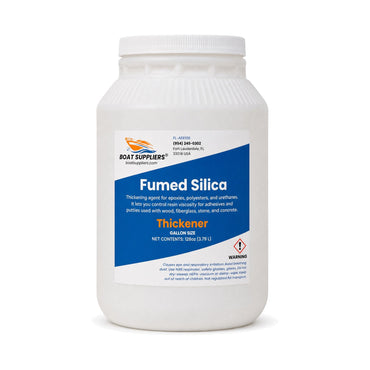
Straight epoxy runs off anything vertical and drains out of every gap you're trying to fill. The fix is fumed silica (the stuff most of us call cabosil), stirred into the mixed resin until it holds the shape you need. Here's how much to add, in what order, and when a different filler is the better call. New to it? Start with what fumed silica is and how it works.
The ratios
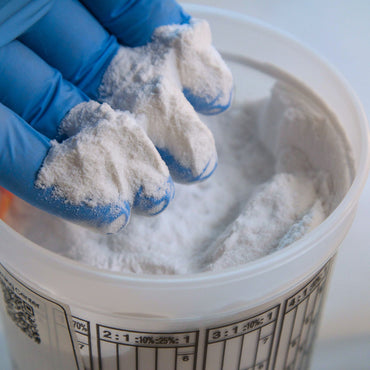
Mix resin and hardener first, then stir in loose fumed silica scooped from the jar. The volumes are per cup (8 fl oz) of mixed epoxy at room temperature; the weights are for anyone with a gram scale. Add about two thirds, mix it in, then add the rest slowly.
| Consistency | Loose fumed silica per cup of epoxy | By weight of epoxy | The job |
|---|---|---|---|
| Bodied but brushable | 1/4 to 1/2 cup | About 1 to 2% | Sag control on a laminating or coating coat |
| Ketchup | 3/4 cup | About 3% | Coating, sealing, bonding large flat panels |
| Mayonnaise | 1 cup | About 4.5% | Bonding putty, bedding hardware, filling coarse weave |
| Peanut butter, holds a peak | 1 3/4 cups | About 7.5% | Structural fillets, stitch-and-glue seams, gap filling |
Same numbers as the epoxy filler consistency chart. For microballoons, Q-Cells and glass bubbles you need more powder (about 1 3/4 cups per cup for mayonnaise); for cotton flock, less (about 1/2 cup).
Mixing order matters
Mix resin and hardener completely first, then add the silica. Thicken first and you can't judge your ratio, and you risk pockets of unmixed hardener that never cure. Fold the powder in before you stir hard; whipping a dry cloud of it just puts material in the air instead of the pot. A fitted P100 while you scoop is the whole safety story; fumed silica is amorphous, not crystalline, but don't breathe it.
Two behaviors worth understanding:
Thickened epoxy is shear-thinning. It flows when you spread it and stiffens the second you stop. That's the point: a peanut butter mix tools smoothly off the stick but won't slump out of a fillet. Don't chase "pourable but stays put"; that combination doesn't exist. Pick the consistency for the job.
Cold resin is thick but not sag-resistant. Epoxy at 60°F (16°C) feels like honey and fools people into skipping the silica. Warm it to working temperature and it thins right back out and runs. Viscosity from temperature and thixotropy from silica are different things; only the silica keeps it on a vertical surface through cure.
When fumed silica is the wrong filler
Silica-thickened epoxy cures hard and sands miserably. Use it where strength matters and sanding doesn't:
- Fairing: cut it with microballoons or Q-cells, around 1 part silica to 2-3 parts balloons by volume. The silica holds the shape, the balloons make it sandable.
- High-load fillets: add milled fiber alongside the silica when the joint carries real load and you want more than the resin's own strength.
- Flour, talc, sawdust: no. Inconsistent absorption, weaker bonds, and moisture problems later. Filler costs a few dollars a job; redoing a bond doesn't.
The short version
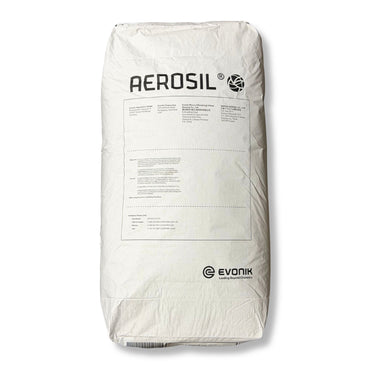
For general boat work keep one jar of fumed silica at the bench: 3/4 cup per cup of epoxy for ketchup, 1 cup for mayonnaise, 1 3/4 cups for peanut butter (about 3, 4.5 and 7.5 percent by weight). Mix hardener first, fold don't whip, and switch to a microballoon blend the moment the job ends in a sanding block. Our fumed silica guide covers the jar coverage, filler comparison and safety data. If you're deciding between brands, Aerosil 200 and Cab-O-Sil M-5 are both untreated 200 m²/g grades; here's the full comparison.
Shop the materials in this guide
Prev post

Silmar 249A vs 249B: One Additive Apart
Updated on 09 August 2026
Next post

Is Silmar 249 a Laminating Resin?
Updated on 08 August 2026