


Boat Suppliers Epoxy Resin Kit – Thin, Clear, with Hardener
Boat Suppliers Epoxy Resin Kit – Thin, Clear, with Hardener
SKU:EPOX-6355561
In stock
Couldn't load pickup availability
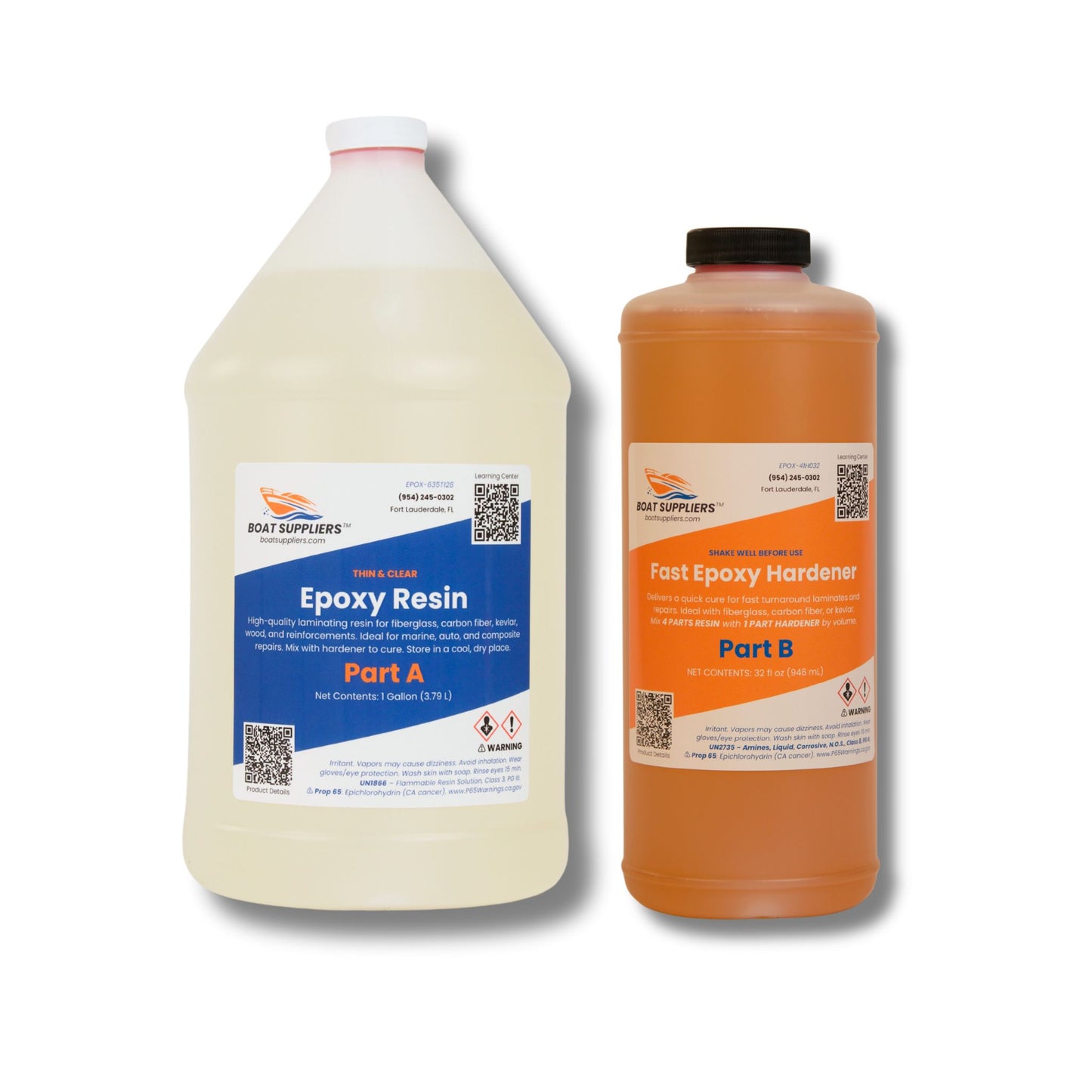
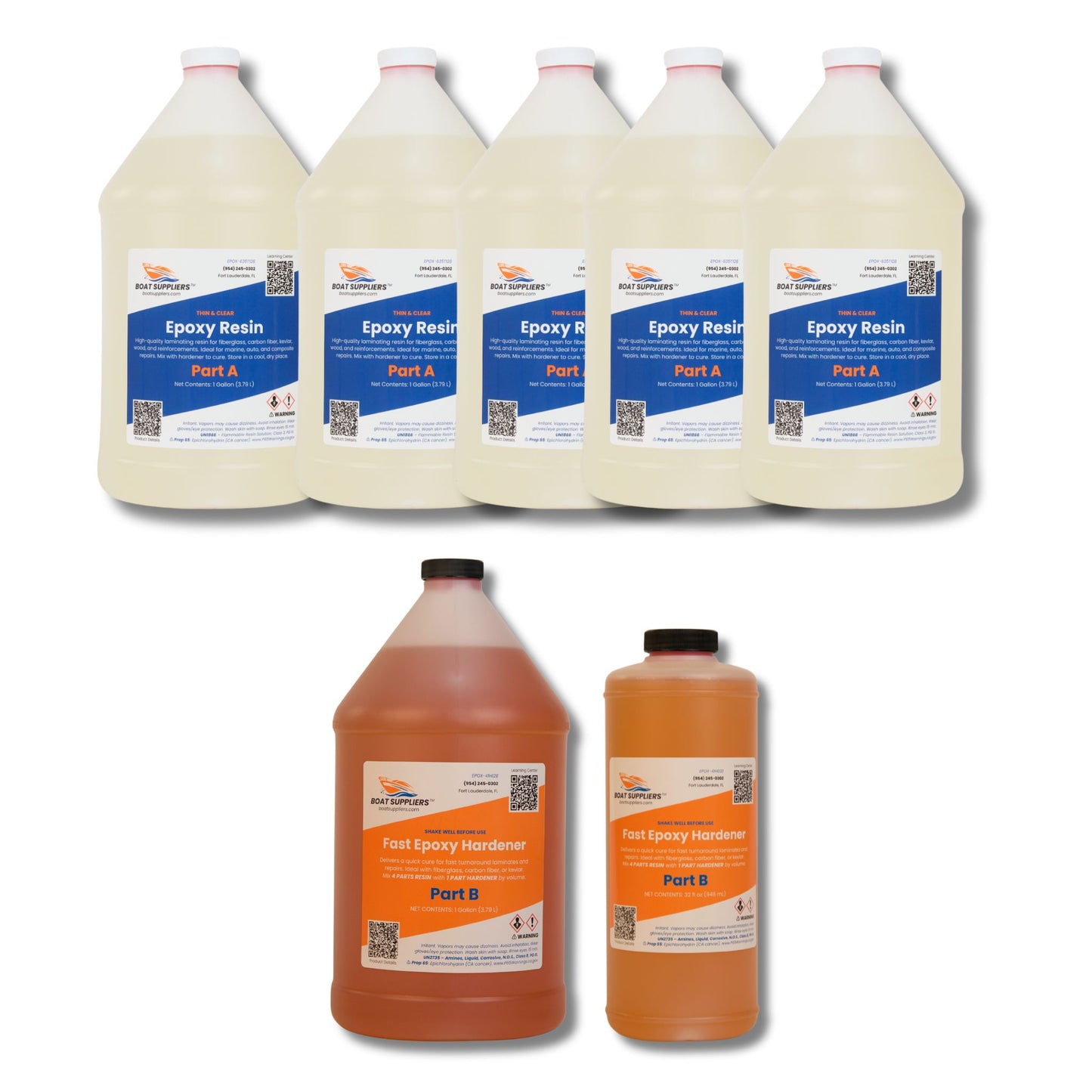
High quality resin which is popular for lamination with fiberglass, carbon fiber, Kevlar® or any type of reinforcement. The syrup-like consistency will generate fast wet-out and easy application of any reinforcement.
This is a thin, clear epoxy built for wetting out cloth and coating, sold with slow (2:1), medium (3:1) or fast (4:1) hardener. Low viscosity means it soaks into glass and flows level instead of sitting up in ridges. Mix by the system ratio, work in reasonable temps, and topcoat once it gels. Deciding between epoxy, polyester and vinyl ester? Read best resin for fiberglassing.
Which epoxy do I need?
- Thin soaks in: wets out fiberglass, carbon, and Kevlar for laminating and repairs.
- Thick stays put: 1:1 bonding, fillets, and high-build coats on vertical surfaces.
- Table Top flows flat: self-leveling, crystal-clear pours on bars, tables, and counters.
Working and cure times
All times at 80°F. Below 60°F expect them to double.
| Mix ratio by volume | slow 2:1, medium 3:1, fast 4:1 |
|---|---|
| Pot life | slow 35 to 40 min, medium 20 to 25 min, fast about 15 min |
| Gel (thin coat) | slow 5 to 6 h, medium 3 to 4 h, fast 1 to 2 h |
| Ready to sand | slow 24 to 28 h, medium 8 to 10 h, fast 3 to 4 h; full cure over the next 1 to 5 days |
| Shop temperature | slow 70°F and up (best at 80°F and above), medium down to about 55°F, fast down to about 45°F |
| Recoat without sanding | after the last coat gels and before it is ready to sand |
| Blush | slow does not blush; medium and fast can, so wash with warm water before sanding or recoating |
| Resin | 600 cps, cures semi-clear, 1/4 in maximum per pour, service temperature 150 to 195°F |
| Shelf life | 1 year sealed, stored at 60 to 80°F |
Specifications
Includes
Features


Technical Specifications
Compare Resins
| Product | 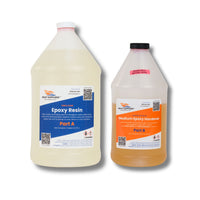 Boat Suppliers Epoxy Resin Kit – Thin, Clear, with HardenerYou're viewingfrom $17.95 Boat Suppliers Epoxy Resin Kit – Thin, Clear, with HardenerYou're viewingfrom $17.95
| 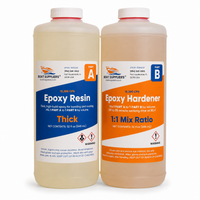 Boat Suppliers Epoxy Resin Kit - Thick, 1:1 Bonding and Coating, with Hardenerfrom $19.95 Boat Suppliers Epoxy Resin Kit - Thick, 1:1 Bonding and Coating, with Hardenerfrom $19.95
| 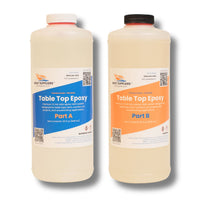 Boat Suppliers Table Top Kleer Kote Epoxy Resinfrom $44.99 Boat Suppliers Table Top Kleer Kote Epoxy Resinfrom $44.99
| 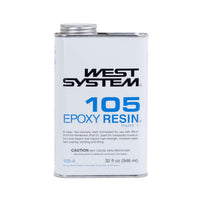 West System 105 Epoxy Resinfrom $59.51 West System 105 Epoxy Resinfrom $59.51
|
|---|---|---|---|---|
| Type | Epoxy - low-viscosity laminating system | Epoxy - thick 1:1 bonding & coating (no-sag) | Epoxy - 100% solids clear coating (KleerKote #30) | Epoxy - base resin for WEST SYSTEM 200-series hardeners |
| Mix Ratio | 2:1, 3:1, or 4:1 by volume (match your hardener) | 1:1 resin : hardener by volume - equal parts, no pump math | 1:1 by volume - exact; do not vary | 5:1 by volume with 205/206; 3:1 with 207/209 (300 Mini Pumps meter it) |
| Viscosity | 600 cps resin - thin, syrup-like for fast wet-out | Very thick - high build, no sag on vertical surfaces | — | Mixed @ 72°F: 975 cps (205) / 725 cps (206) / 760 cps (207) |
| Pot Life | 35-40 min (2:1) / 20-25 min (3:1) / 15 min (4:1) @ 80°F | 30-35 min @ 80°F | Pour right after mixing - massed epoxy kicks fast in the pot | 9-12 min (205) / 20-25 min (206) / 20-26 min (207), 100 g @ 72°F |
| Full Cure | Dry: 24-28 hr (2:1) / 8-10 hr (3:1) / 3-4 hr (4:1) | Dries hard in 12-14 hr | Light use after 2-3 days; hardens fully over ~2 weeks | Solid in 6-8 hr (205) to 10-15 hr (206/207); working strength 1-4 days |
| Cured Color | Semi-clear - hardener has an amber tint, dries clear in thin coats | — | Crystal clear; very slight amber over 1/2 in total depth | Clear/amber; exceptionally clear with 207 |
| Max Temp | 150-195°F | — | — | HDT 117-123°F by hardener |
| UV | No UV inhibitor - topcoat for sun exposure | Not UV-stable - topcoat for sun exposure | Resists yellowing, but not for continuous outdoor UV | Pair with 207 + UV varnish for bright finishes |
| Fabrics | Fiberglass, carbon fiber, Kevlar, 1708/1208 biaxial (CSM: stitched only) | None - NOT for wetting out fiberglass, carbon, or Kevlar; use the Thin epoxy kit for laminating | — | Fiberglass, carbon fiber, Kevlar, 1708/1208 biaxial (CSM: stitched only) |
| Best For | Lamination & wet-out, wood sealing, all-around marine repair | Bonding, fillets & high-build coats on vertical surfaces - stays where you put it | Bar tops, tables, counters, art pours | Premium marine coating, bonding & repair |
| View | View | View |
What To Expect When You Order Fabric Rolls
Works Great For:

Marine
Boat Building & Repairs
Aerospace
Built for airplane specs
Automotive
Fiberglass car body repair

Product Comparison

Boat Suppliers Epoxy Resin Kit - Thick, 1:1 Bonding and Coating, with Hardener
$19.95
Flexbility
Volume / Build Up
Epoxy Usage
Specifications


FAQ
Frequently Asked Questions

How much epoxy resin do I need?
What’s the difference between epoxy and polyester resin?
How do I mix epoxy resin and hardener properly?
Why are there different epoxy mix ratios like 5:1, 4:1, 3:1, and 2:1?
What is amine blush and how do I remove it?
What's the difference between fast and slow epoxy hardener?
Can I apply epoxy resin in cold weather?
How do I thin epoxy resin?
Can I tint or color epoxy resin?
Is epoxy still good after being frozen?
Does epoxy or polyester resin expire?
Guides for this product

How to Fiberglass Over Plywood: Complete Step...
How to Fiberglass Over Plywood: Complete Step...

Epoxy vs Polyester vs Vinyl Ester: Best Resin...
Epoxy vs Polyester vs Vinyl Ester: Best Resin...
Calculators and charts:Epoxy & Resin CalculatorResin Compatibility Chart