


SKU:FL-AER010
In stock
Couldn't load pickup availability
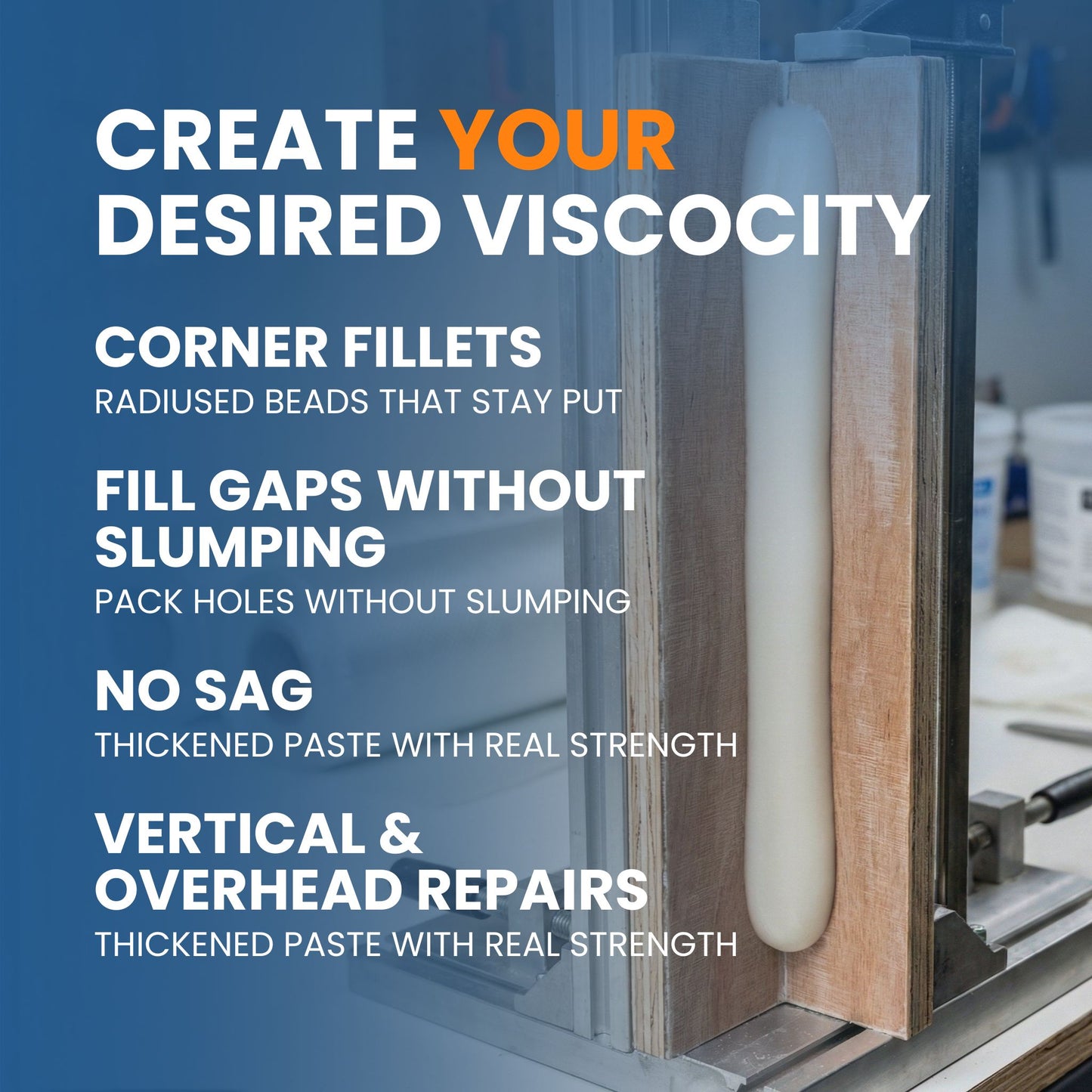
Fumed silica is what you stir into mixed resin when the bond or fillet has to stay where you put it. With fumed silica in it, a batch of epoxy stops running off a vertical bulkhead, a fillet keeps its radius in the corner, and a structural bond stays in the gap instead of draining out of it. It does the thickening, not the reinforcing, and it adds almost no weight doing it.
How much to add
| Consistency | Loose powder per cup of mixed epoxy |
|---|---|
| Mayonnaise: bonding, gap filling | About 1 cup |
| Peanut butter: fillets, vertical work that must not sag | About 1 3/4 cups |
It takes more powder by volume than people expect, because the dry powder is mostly air. Fold it into resin that already has its hardener or catalyst in it, never into the resin side alone. The full breakdown is in how much fumed silica to add for each consistency, the Fairing and Filler Calculator scales it to your batch, and the epoxy filler consistency chart sets it against the other fillers.
Where it fits, and where it does not
- Structural bonds and fillets in epoxy, polyester or vinyl ester. For a fillet you will have to sand, cut it with a lightweight filler.
- Not for fairing. Cured silica is hard and loads sandpaper. Fair over it with glass bubbles or fairing compound.
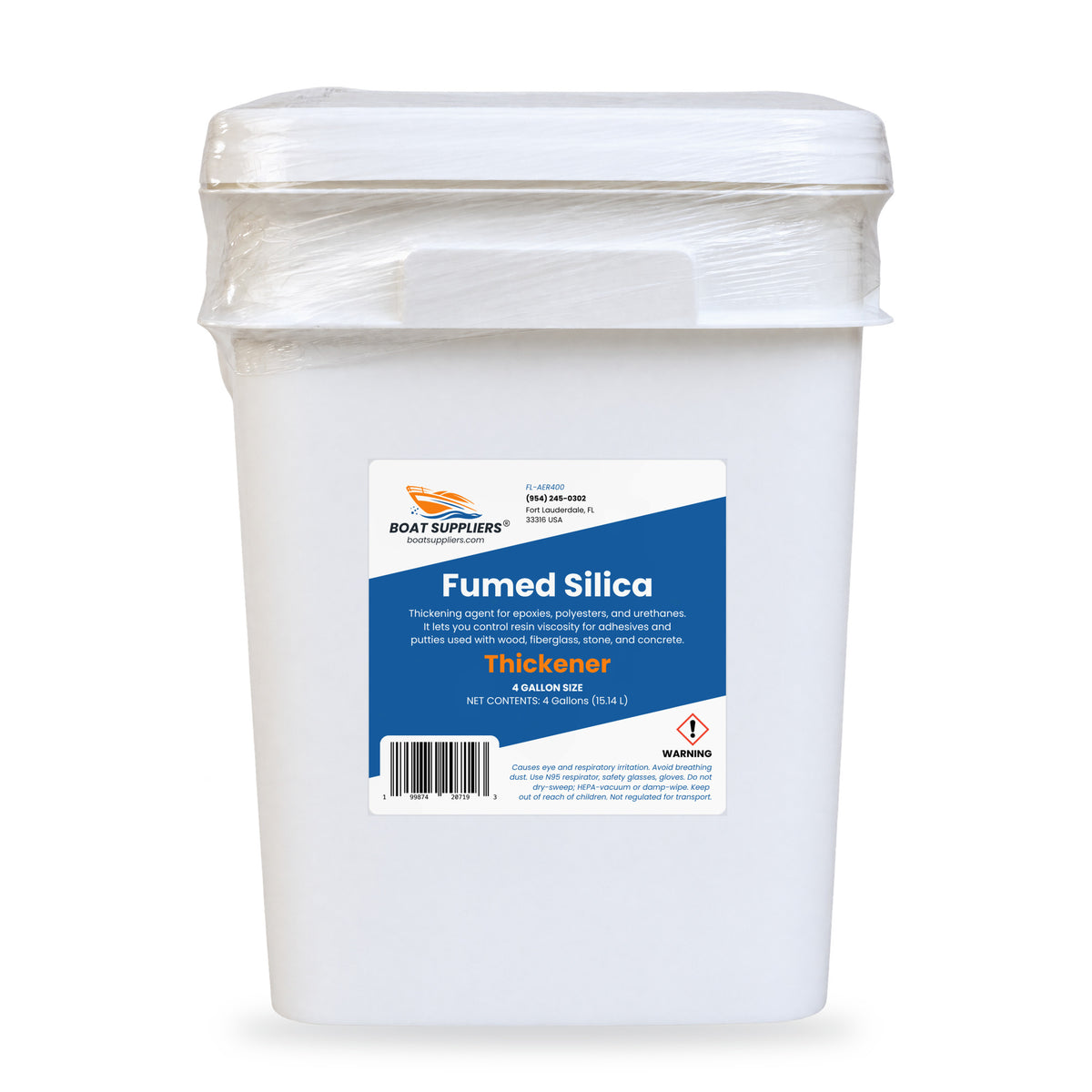
Hydrophilic, Aerosil 200 type: amorphous silica over 99.8% SiO2 with primary particles around 12 nm. The dry powder lifts into the air at the slightest draft, so wear a P100 and mix it in a covered tub or outside.
Specifications
Includes
Features




Overview
Fumed silica is the thickener you reach for when a bond or fillet has to hold its shape and carry load. Stirred into mixed resin it builds a thixotropic, non-sag paste that stays put on vertical and overhead surfaces instead of running. It is the standard additive for structural fillets, gap-filling bonds, and any putty that needs to keep its profile while it cures.
This is amorphous fumed silica at SiO2 greater than 99.8 percent with a BET surface area of 175 to 225 m2/g, the same material spec the big-name brands sell. A little goes a long way: add it to the mixed resin a bit at a time and stop when you reach the consistency you need, from a light non-sag thickening up to a stiff peanut-butter fillet mix.
Fumed silica cures hard, so the sanded surface is tougher than a microballoon or Q-cells fairing mix. Use it where strength matters (bonds, fillets, tabbing) and reach for a lightweight fairing filler when the job is shaping and sanding. Packed in our own shop, non-hazardous, and shipped ground in quart, gallon, 4-gallon and 10 lb bag sizes.
Technical Specifications
Net Weight by Size
Compare Fillers
| Product |  Aerosil - Cabosil (Fumed Silica)You're viewingfrom $9.95 Aerosil - Cabosil (Fumed Silica)You're viewingfrom $9.95
|  Q-Cellsfrom $8.95 Q-Cellsfrom $8.95
| 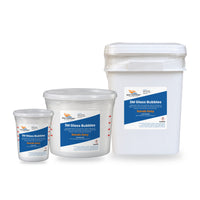 3M Glass Bubblesfrom $9.95 3M Glass Bubblesfrom $9.95
| 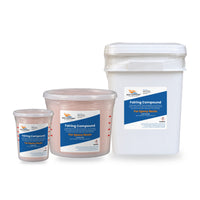 Boat Suppliers Fairing Compoundfrom $13.95 Boat Suppliers Fairing Compoundfrom $13.95
|
|---|---|---|---|---|
| Best for | Thixotropic thickener | Lightweight fairing filler | Lightweight fairing filler | Pre-blended fairing compound |
| Density | Light | Light | Light | Light |
| Sandability | Not for fairing | Easy | Easy | Easy |
| Resins | Epoxy, Polyester, Vinyl Ester | Epoxy, Polyester, Vinyl Ester | Epoxy, Polyester, Vinyl Ester | Epoxy |
| Material | Amorphous fumed silica (SiO2 >99.8%) | Expanded perlite (sodium potassium aluminum silicate) | Soda-lime-borosilicate hollow glass microspheres | In-house blend of fumed silica, phenolic microballoons and 3M glass bubbles |
| View | View | View |

What is fumed silica (Aerosil / Cabosil) used for?
How much fumed silica do I add to resin?
Which resins does fumed silica work with?
Does fumed silica sand easily?
Is fumed silica hazardous to ship?
Which epoxy filler do I use for fairing, bonding, or filleting?
What's the difference between a fairing filler and an adhesive filler?
How much filler do I add to epoxy or polyester resin?
Which filler makes the easiest-to-sand fairing compound?
Are epoxy fillers structural?
Guides for this product

Aerosil 200 vs Cab-O-Sil M-5: Same Fumed Sili...
Aerosil 200 vs Cab-O-Sil M-5: Same Fumed Sili...

Fumed Silica: What It Is, How Much to Add to ...
Fumed Silica: What It Is, How Much to Add to ...

Microballoons vs Cabosil: Which Filler Do You...
Microballoons vs Cabosil: Which Filler Do You...
Calculators and charts:Epoxy Filler Consistency ChartFairing and Filler Calculator