


SKU:FL-FX010
In stock
Couldn't load pickup availability
Cotton flock is fine cotton fiber, and it makes one of the toughest gap fillers you can mix into resin. It thickens epoxy, polyester or vinyl ester into a heavy, fibrous paste that grips the inside of a joint and resists cracking when the joint flexes.
Where it earns its place
- High-load bonds that have to move a little without letting go
- Fillets and gap fills where toughness matters more than a smooth finish
Where it does not
It is not a fairing filler. Cured flock is tough and resists the sanding board, so use it where the strength is needed and fair over the top with a lightweight filler such as 3M glass bubbles if the surface has to come out smooth. The epoxy filler consistency chart sets it against the other fillers.
- Off-white cellulose fiber flock
- Non-hazardous and not regulated for transport
- Sizes: 1 quart, 5 quart, 4 gallon and 50 lb bag
Specifications
Features





Overview
Cotton flock is fine cotton fiber that makes one of the toughest gap-filling fillers you can mix into epoxy or polyester. It blends to a thick, fibrous paste that grips into a joint and resists cracking, which makes it the choice for high-load bonds and fillets that have to flex and hold.
It is not a fairing filler: a cured cotton-flock mix is tough and not easy to sand, so use it where strength matters and the surface gets covered. It shines for bonding hardware, building thick structural fillets and filling gaps in a loaded joint.
Stocked from small tubs up to a 50 lb bag.
Technical Specifications
Net Weight by Size
Compare Fillers
| Product | 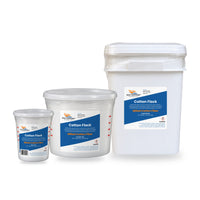 Cotton FlockYou're viewingfrom $9.95 | 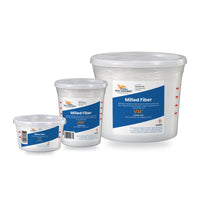 1/32" Milled Fiberfrom $14.95 | 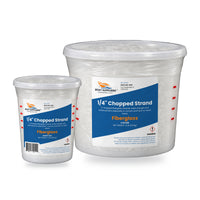 1/4" Chopped Strand Fiberglassfrom $13.95 | 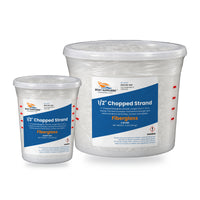 1/2" Chopped Strand Fiberglassfrom $13.95 |
|---|---|---|---|---|
| Best for | Structural / gap-filling reinforcement | Thickening / reinforcing filler | Chopped strand reinforcement | Chopped strand reinforcement |
| Density | Light | Medium | Medium | Medium |
| Sandability | Not for fairing | Moderate | Not for fairing | Not for fairing |
| Resins | Epoxy, Polyester, Vinyl Ester | Epoxy, Polyester, Vinyl Ester | Epoxy, Polyester, Vinyl Ester | Epoxy, Polyester, Vinyl Ester |
| Material | Cotton fiber flock (cellulose) | Milled E-glass fiber (1/32 in) | 1/4 inch chopped E-glass fiber | 1/2 inch chopped E-glass fiber |
| View | View | View |

What is cotton flock used for?
How does cotton flock compare to glass fillers?
Which resins work with cotton flock?
Is cotton flock easy to sand?
Does cotton flock ship by ground?
Which epoxy filler do I use for fairing, bonding, or filleting?
What's the difference between a fairing filler and an adhesive filler?
How much filler do I add to epoxy or polyester resin?
Which filler makes the easiest-to-sand fairing compound?
Are epoxy fillers structural?
Guides for this product

How to Thicken Epoxy: What to Add and How Much
How to Thicken Epoxy: What to Add and How Much

Marine Filler Types: Complete Guide to Fairin...
Marine Filler Types: Complete Guide to Fairin...

Fumed Silica: What It Is, How Much to Add to ...
Fumed Silica: What It Is, How Much to Add to ...
Calculators and charts:Epoxy Filler Consistency ChartFairing and Filler Calculator