Boat Suppliers

Q-Cells

Q-Cells

SKU:FL-QC010

Regular price $7.95 USD
Sale price $7.95 USD Regular price
Unit price $7.95  per  qt
Sale Sold out
Shipping calculated at checkout.

496 in stock

Size: 1 Quart
Earn 7 Boat Points Learn More
Ships Today if ordered before 4pm Learn More
Free Shipping on orders over $99 Learn More

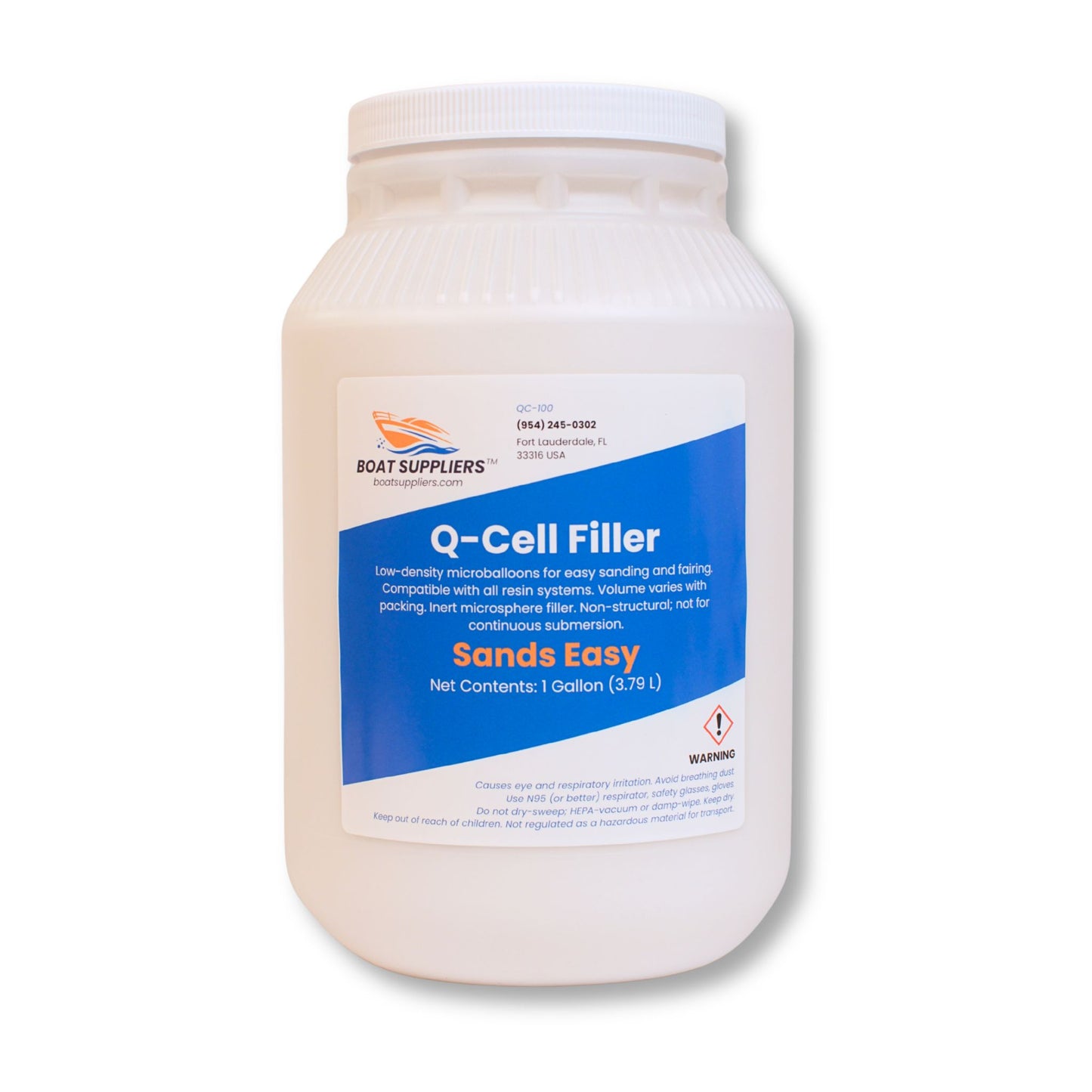
Q-cells are hollow glass microspheres that turn epoxy or polyester into a light, easy-sand fairing compound. Best for shaping and smoothing above the waterline, not structural bonds.

For the difference between Q-cells, microballoons, glass bubbles and fumed silica, and when to reach for each, see our filler comparison.

  • Hollow glass microspheres for light, easy-sand fairing compound
  • Mixes into epoxy or polyester to a creamy, non-slumping paste
  • Sands far easier than fumed silica, ideal for shaping low spots
  • Builds thickness without much added weight
  • Best used above the waterline
  • Off-white surface that takes primer cleanly
View full details

Overview


Q-cells are hollow glass microspheres that turn epoxy or polyester into a light, creamy fairing compound that sands like soft balsa. Mix them into your resin until you get a non-slumping paste, trowel it over low spots and weave, and once it kicks you can knock it back fast with 80 grit.

Because the spheres are hollow, a batch of Q-cell fairing weighs a fraction of a straight resin-and-silica mix, so you can build thickness without adding much weight or running up the cost. They sand far easier than fumed silica and leave a uniform off-white surface that takes primer cleanly.

Keep Q-cells above the waterline. The spheres can pick up a little moisture over time, so for anything permanently submerged reach for glass bubbles or an epoxy-specific fairing filler. Stocked in quart, gallon, 4-gallon pail and 32 lb bag.

Technical Specifications


Made in AustraliaNon-Hazmat: Ships GroundWorks with Epoxy, Polyester, Vinyl Ester
MaterialHollow borosilicate glass microspheres
Filler TypeLightweight fairing filler
Physical FormFree-flowing off-white microsphere powder
ColorOff-white
Density ClassLight
SandabilityEasy
Compatible ResinsEpoxy, Polyester, Vinyl Ester
CAS Number50815-87-7
Country of OriginAustralia
Regulatory StatusNon-hazardous, not regulated for transport

Net Weight by Size

QT3 oz net
4 GAL3 lb net
32 LB Bag32 lb net

Compare Fillers


ProductQ-CellsQ-CellsYou're viewingfrom $7.95 3M Glass Bubbles3M Glass Bubblesfrom $7.95 Phenolic MicroballoonsPhenolic Microballoonsfrom $18.95 Boat Suppliers Fairing CompoundBoat Suppliers Fairing Compoundfrom $13.95
Best forLightweight fairing fillerLightweight fairing fillerLightweight fairing fillerPre-blended fairing compound
DensityLightLightLightLight
SandabilityEasyEasyEasyEasy
ResinsEpoxy, Polyester, Vinyl EsterEpoxy, Polyester, Vinyl EsterEpoxy, Polyester, Vinyl EsterEpoxy
MaterialHollow borosilicate glass microspheresSoda-lime-borosilicate hollow glass microspheresPhenolic resin hollow microspheres (microballoons)In-house blend of fumed silica, phenolic microballoons and 3M glass bubbles
SelectedViewViewView
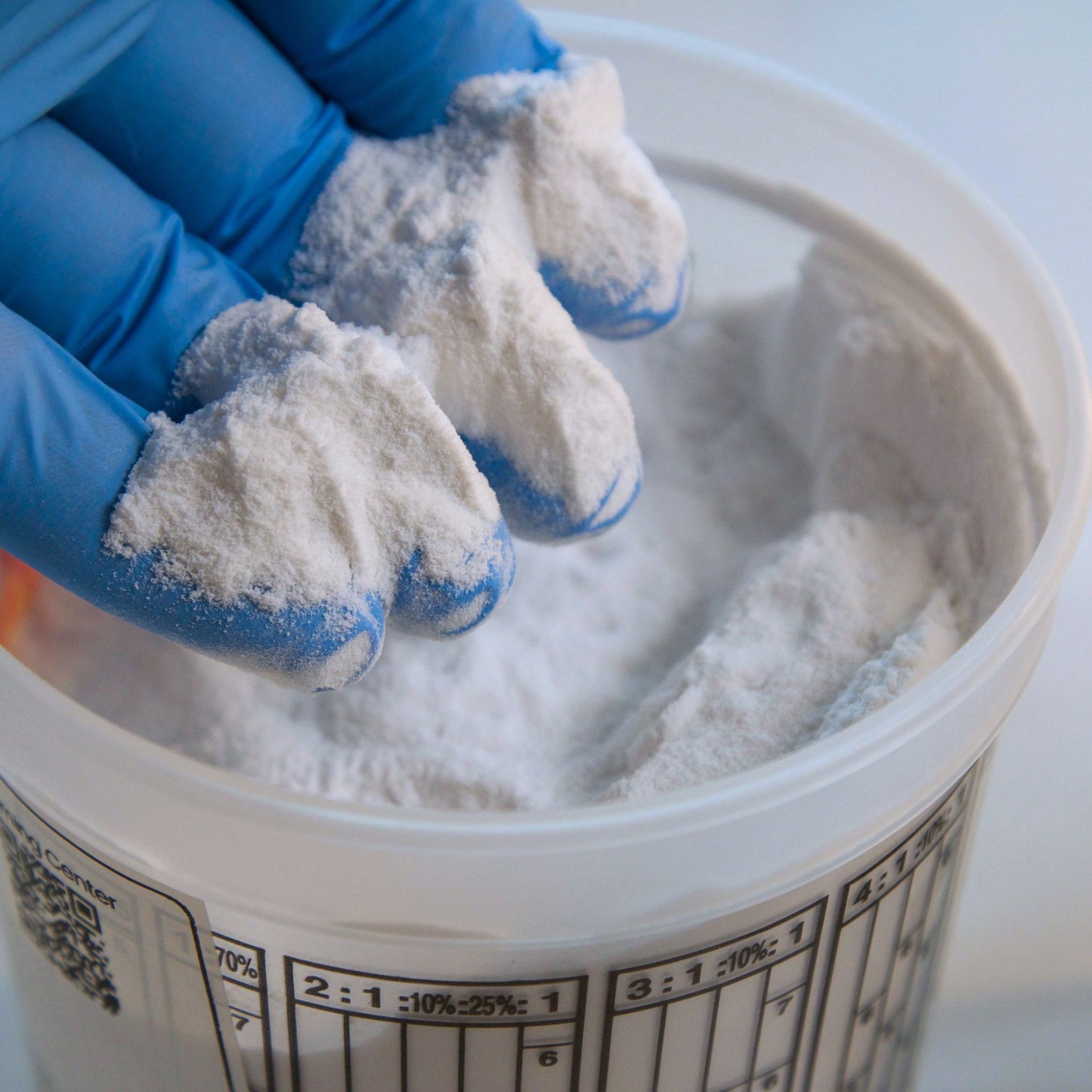
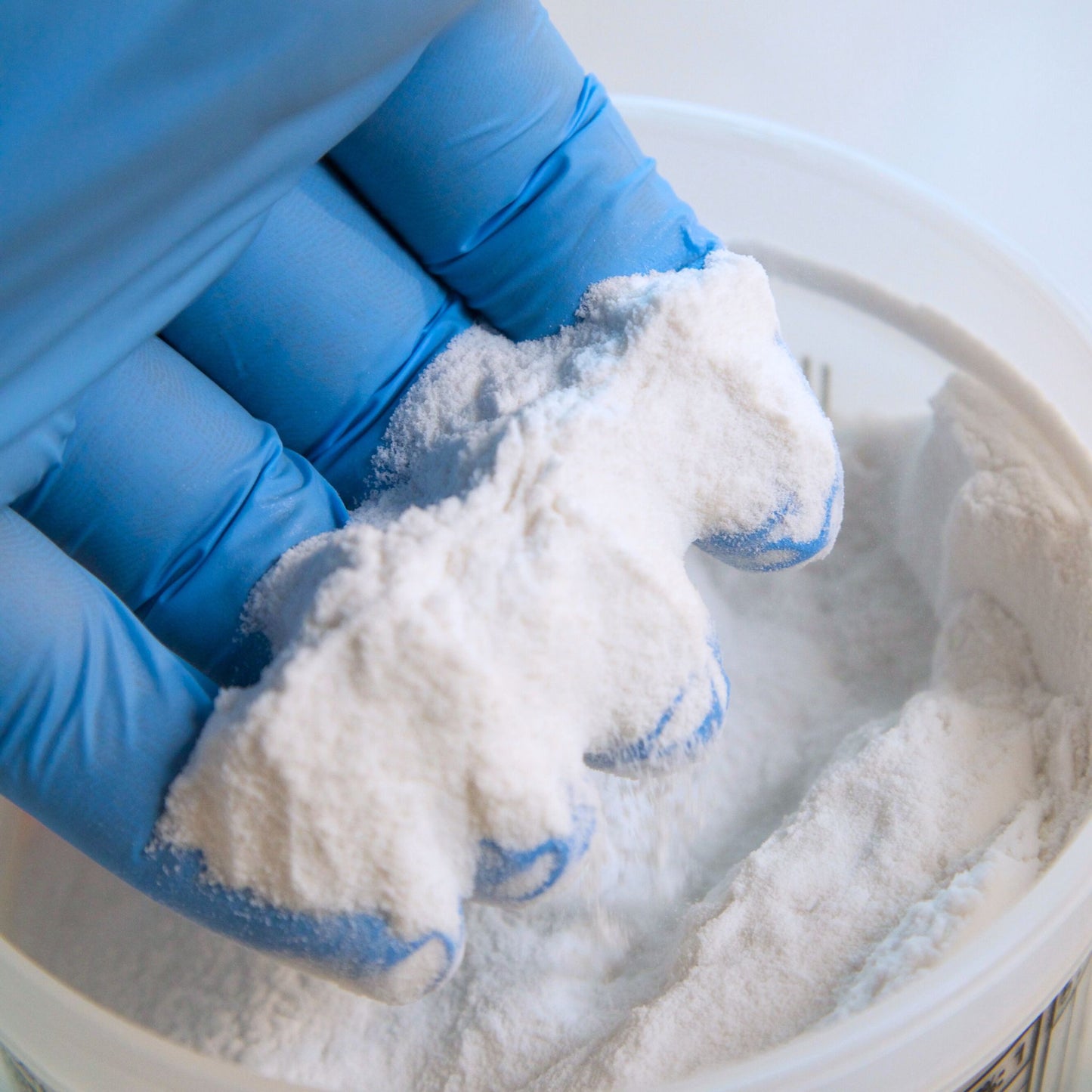
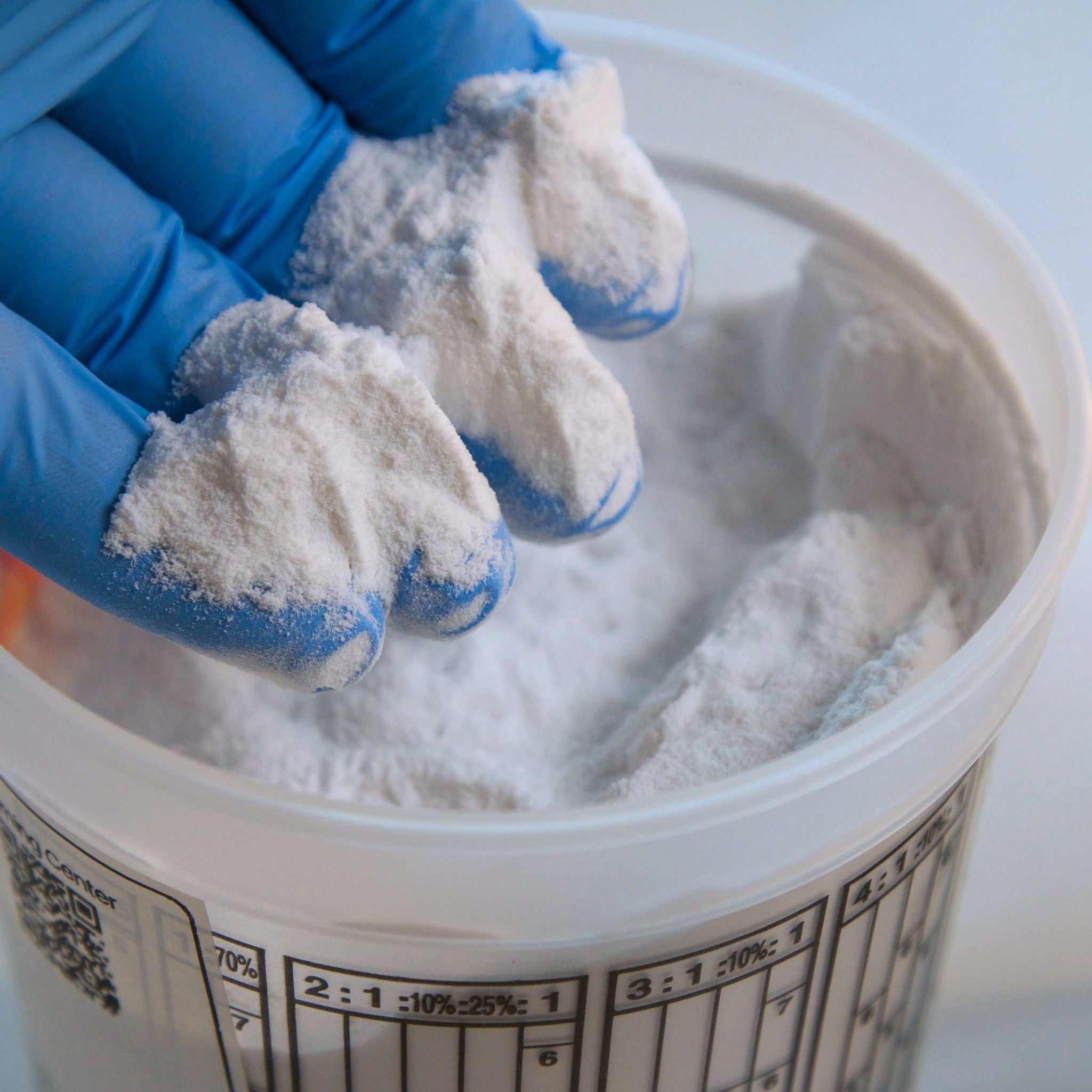
Gloved hand scooping white Q-Cells microsphere powder from a mixing tub, light fairing filler for resin

Q-Cells are microscopic, hollow glass microspheres used as a lightweight filler in marine and composite applications. They are added to resin systems—typically epoxy, polyester, or vinyl ester—to create fairing compounds and low-density putties that are easy to sand and shape.

Both are lightweight fillers for fairing, but Q-Cells are made from hollow glass, which makes them slightly harder and more moisture-resistant than phenolic microballoons. Q-Cells may be slightly more difficult to sand but offer better compressive strength.

To achieve a peanut butter-like consistency for troweling or fairing, mix approximately 2 parts Q-Cells to 1 part resin by volume. Adjust as needed depending on the desired thickness and application.

No. Q-Cells are intended for fairing and cosmetic work, not for structural bonding. If strength is required, consider blending Q-Cells with a high-strength filler like colloidal silica or chopped fiberglass for reinforcement.

Yes, Q-Cells create a fairing mix that is lightweight and easy to sand—one of their main advantages. This makes them a favorite among boatbuilders for final surface prep before painting.

Yes, Q-Cells are compatible with epoxy, polyester, and vinyl ester resins. They are extremely versatile for a wide range of applications in fiberglass and composite work.

Match the filler to the job, and keep strength fillers below the surface with fairing fillers on top:

  • Bonding and structural fillets: use a high-density or fiber filler like colloidal silica (Cabosil), milled fiber, or microfibers, which cure hard and strong.
  • Fairing and shaping: use a low-density filler like phenolic microballoons, glass bubbles, or a fairing compound, which sand and feather easily.

Adhesive, high-density fillers like colloidal silica and microfibers make a hard, strong mix for bonding and structural filleting, but they are tough to sand. Fairing, low-density fillers like microballoons and glass bubbles make a light, soft mix that sands and feathers easily for a smooth surface, but they are not structural. Use adhesive fillers for strength and fairing fillers for finish.

There is no fixed ratio. Mix the resin and hardener fully first, then stir in filler a little at a time until you reach the consistency the job needs:

  • Ketchup consistency: for a coating or pre-coat that still flows.
  • Mayonnaise consistency: for bonding parts together.
  • Peanut-butter consistency that holds a peak: for filleting and gap-filling.

Low-density microsphere fillers sand the easiest. Phenolic microballoons, 3M glass bubbles, and lightweight blends like our fairing compound or West System 410 Microlight feather to a fine edge and carve with little effort once cured. They trade strength for sandability, so use them above the structural layer for shaping and smoothing, not for bonding or load-bearing fillets.

Some are. High-density and fiber fillers like colloidal silica, milled glass fiber, and microfibers add real strength and are made for bonding and load-bearing fillets. Low-density fairing fillers like microballoons and glass bubbles are not structural; they are for shaping and fairing only. Build strength with a high-density filler first, then fair over it with a low-density filler.