
Gelcoats
-
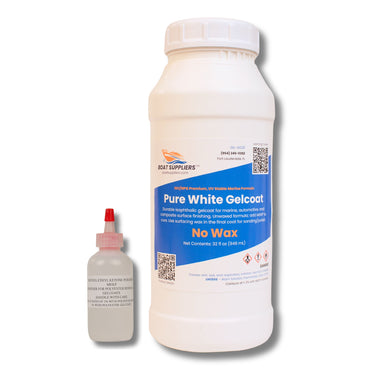
 Vendor:Boat Suppliers
Pure White Gelcoat with Hardener - No Wax
Isophthalic polyester gelcoat in pure white, the standard repair and new-mold color. It ships unwaxed with MEKP included,...Regular price $39.95 USDSale price $39.95 USD Regular priceUnit price $1.25 per floz -
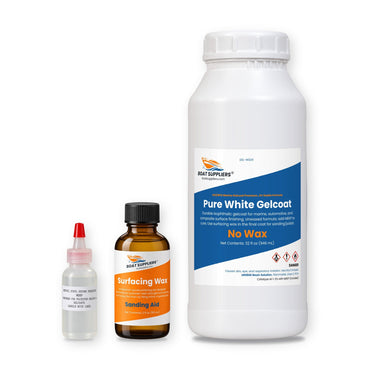
 Vendor:Boat Suppliers
Pure White Gelcoat Finish Kit - Gelcoat, Surfacing Wax & MEKP
Everything for a final coat that cures hard and sands clean: unwaxed pure white ISO/NPG gelcoat, a bottle...Regular price $39.95 USDSale price $39.95 USD Regular priceUnit price $1.25 per floz -
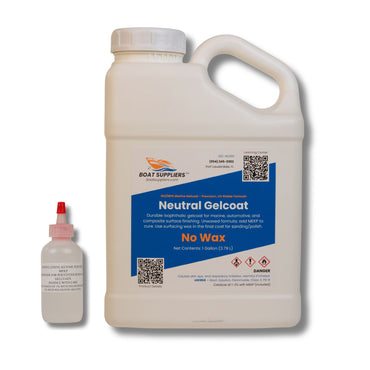
 Vendor:Boat Suppliers
Neutral Gelcoat with Hardener - No Wax
The tintable base version of our isophthalic gelcoat. It cures neutral and translucent, so you add pigment to...Regular price $39.95 USDSale price $39.95 USD Regular priceUnit price $1.25 per floz -
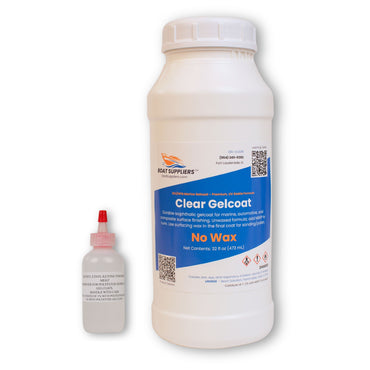
 Vendor:Boat Suppliers
Clear Gelcoat with Hardener - No Wax
Clear unwaxed polyester gelcoat goes on as a clear, UV-inhibited topcoat over a polyester or vinyl ester laminate,...Regular price $39.95 USDSale price $39.95 USD Regular priceUnit price $1.25 per floz -

 Vendor:Boat Suppliers
Orange Tooling Gelcoat with Hardener - No Wax
The surface coat for building a mold. Orange is not decoration: against white laminate it shows you exactly...Regular price $42.95 USDSale price $42.95 USD Regular priceUnit price $1.34 per floz -

 Vendor:Boat Suppliers
Black Tooling Gelcoat with Hardener - No Wax
Black Tooling Gelcoat delivers a strong, durable surface finish for fiberglass molds. Formulated for high-performance composites, it creates...Regular price $42.95 USDSale price $42.95 USD Regular priceUnit price $1.34 per floz -
 Vendor:Boat Suppliers
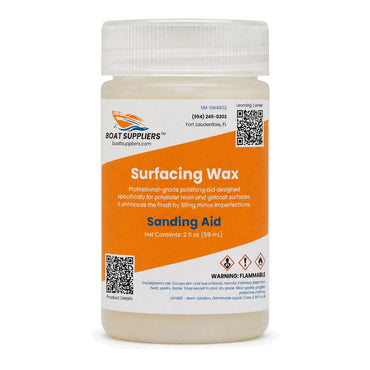
Surfacing Wax
Surfacing wax turns unwaxed polyester resin or gelcoat into a coat you can sand. Left alone, the face...Regular price $4.55 USDSale price $4.55 USD Regular priceUnit price per -
 Vendor:Boat Suppliers
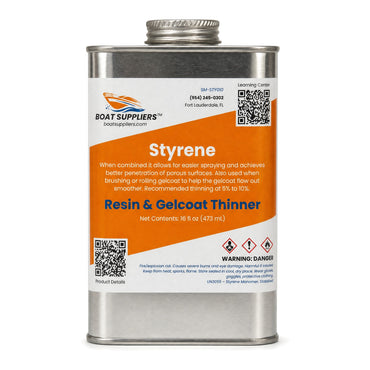
Styrene - Thinner for Polyester Resins and Gelcoats
Styrene monomer is the right thinner for polyester resin and gelcoat, and it is not interchangeable with acetone....Regular price $10.99 USDSale price $10.99 USD Regular priceUnit price per -

 Vendor:Boat Suppliers
MEKP Hardener
Methyl ethyl ketone peroxide, the catalyst that kicks every polyester and vinyl ester resin and gelcoat we sell....Regular price $4.95 USDSale price $4.95 USD Regular priceUnit price per -
 Vendor:Boat Suppliers
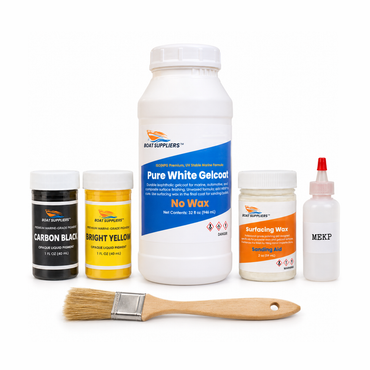
Gelcoat Repair Kit - Pure White Gelcoat, Surfacing Wax, Hardener & Tinting Pigments
Professional grade isophthalic gelcoat kit for marine, automotive, and composite repairs. Lay your build coats straight from the...Regular price $64.95 USDSale price $64.95 USD Regular priceUnit price per -
 Vendor:Boat Suppliers
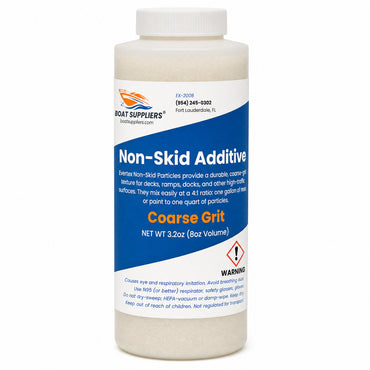
Non-Skid Additive For Gelcoats & Paints
Non-skid additive is a polymer grit that stirs into gelcoat, paint or epoxy and gives decks, steps, swim...Regular price $11.38 USDSale price $11.38 USD Regular priceUnit price $45.52 per qt -
 Vendor:Fiberglass Evercoat
Evercoat Gel-Kote Neutral - Quart
Evercoat Gel-Kote Neutral - Quart Evercoat's Gel-Kote manufacturers the highest-quality, ISO NPG marine finish gel coat used to...Regular price $86.49 USDSale price $86.49 USD Regular priceUnit price $2.70 per floz -
 Vendor:Fiberglass Evercoat
Premium Gel-Kote White
Premium Gel-Kote White The quality ISO NPG marine laminating gel coat to permanently repair or replace original, high-gloss...Regular price $56.49 USDSale price $56.49 USD Regular priceUnit price $3.53 per floz -
 Vendor:Fiberglass Evercoat
One Step Finish Gel Coat - White
An ISO NPG polyester gelcoat formulated to cure hard on its own. That is the whole point of...Regular price $67.49 USDSale price $67.49 USD Regular priceUnit price $4.22 per floz -
 Vendor:Fiberglass Evercoat
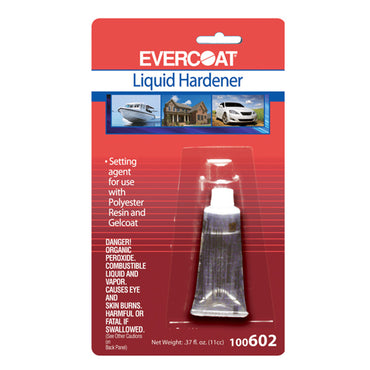
Resins & Gelcoat Liquid Hardener (MEK)
Catalyst for polyester resins and gel coats in a graduated plastic squeeze tube. The graduations are the reason...Regular price $8.49 USDSale price $8.49 USD Regular priceUnit price per -
 Vendor:Fiberglass Evercoat
Gelcoat Match & Patch Repair Kit
Evercoat Gelcoat Match & Patch Repair Kit The Evercoat Gelcoat Match & Patch Repair Kit permanently repairs nicks, gouges...Regular price $89.99 USDSale price $89.99 USD Regular priceUnit price perSold out -
 Vendor:HI-Bond
Hi-Bond Styrene
Hi-Bond Styrene Hi-Bond Styrene is a reducer for polyester resins and Gel Coats. Quart Frequently Asked Questions What...Regular price $37.99 USDSale price $37.99 USD Regular priceUnit price per -
 Vendor:Fiberglass Evercoat
Evercoat Gel Coat Scratch Patch
Evercoat Marine Gel Coat Scratch Patch Use Evercoat Gel Coat Scratch & Patch to repair fiberglass boats, bathtubs,...Regular price $25.29 USDSale price $25.29 USD Regular priceUnit price per -
 Vendor:Fiberglass Evercoat
Evercoat Gelcoat Repair Kit
Evercoat Gelcoat Repair Kit Wear and tear on your gelcoat is inevitable, However, the Evercoat gel coat repair...Regular price $78.69 USDSale price $78.69 USD Regular priceUnit price per -
 Vendor:Fiberglass Evercoat
Polyester Gel Paste Pint
Polyester Gel Paste Pint Neutral color polyester paste for permanent gelcoat marine repairs. Neatly covers gouges, scrapes and...Regular price $53.79 USDSale price $53.79 USD Regular priceUnit price $3.36 per floz -

 Vendor:Boat Suppliers
Mica Pearl Powder Pigment
Premium Mica Pearl Powder Pigment for use with epoxy resin, polyester resin, vinyl ester resin, gelcoat, paint, soap...Regular price $14.95 USDSale price $14.95 USD Regular priceUnit price per -
 Vendor:Boat Suppliers
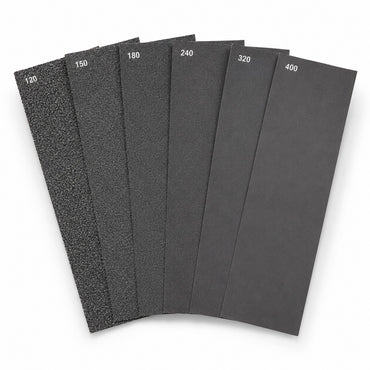
Wet & Dry Sandpaper Packs for Fiberglass, Gelcoat & Epoxy
Wet or dry sandpaper packed in the grit sequences that fiberglass, gelcoat and epoxy repairs follow, from scuffing...Regular price $7.95 USDSale price $7.95 USD Regular priceUnit price per -
 Vendor:Boat Suppliers
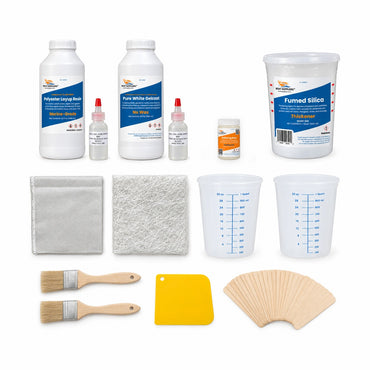
RV & Camper Fiberglass Repair Kit with White Gelcoat
A structural repair kit for fiberglass RV and camper bodies: cracked end caps, holed sidewalls, broken corners, damaged...Regular price $109.95 USDSale price $109.95 USD Regular priceUnit price per -
 Vendor:Boat Suppliers
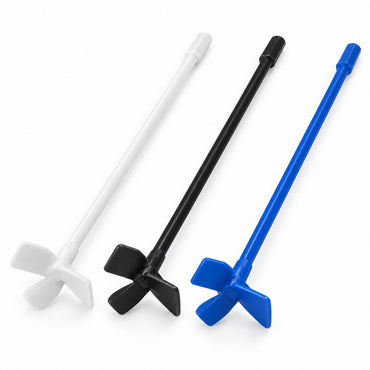
Small Drill Mixer Paddle - Plastic Power Mixer for Resin, Gelcoat & Fillers
The small drill mixer is how you get a consistent mix in a pint or quart cup without...Regular price $4.95 USDSale price $4.95 USD Regular priceUnit price per


Gelcoats
Marine gelcoat, and the one decision that ruins most first jobs
Gelcoat is pigmented polyester resin made to be the surface rather than the structure. It is what gives a hull its gloss and its UV protection, and it goes into a mold first, before any glass. Quart through 5 gallon, every size shipped with MEKP.
Waxed or unwaxed. Get this one right
Gelcoat is air inhibited: exposed to air, the surface will not fully cure and stays tacky. Waxed gelcoat has a surfacing agent blended in that floats to the top and seals it, so it cures hard and sandable. Unwaxed gelcoat stays tacky on purpose so the next layer bonds to it.
So: waxed for a final coat in open air, like a repair on a deck or a topside patch. Unwaxed when you are laying glass over it, which is every gelcoat sprayed into a mold. Using waxed gelcoat in a mold is the classic mistake, and it delaminates. If you have unwaxed gelcoat and need a hard finish, add surfacing wax to the last coat yourself.
White, neutral, clear and tooling
Pure white is the stock hull colour and the one most repairs need. Neutral is an untinted base for colour matching an aged hull, which almost never matches a tin of white straight off the shelf. Clear goes over graphics and veneers. Orange and black tooling gelcoat are harder and more heat resistant than hull gelcoat, built to survive being demolded dozens of times, and the high contrast colours make pinholes and scratches visible on a mold surface.
Spraying, brushing and thinning
Gelcoat sprays at roughly 15 to 20 mil in two coats and brushes heavier. It is too viscous for most guns as supplied, so it is thinned with styrene, not acetone, which flashes off and leaves the film short. Hold thinning to about 5 percent or the film loses build and gloss.
Catalyst and coverage
Gelcoat takes about 2 percent MEKP, noticeably more than laminating resin, and the window is narrower. The gelcoat calculator sizes the job by area, coats and mil thickness, and gives the catalyst dose for your shop temperature.