
Fiberglass Tools


-
 Vendor:Boat Suppliers
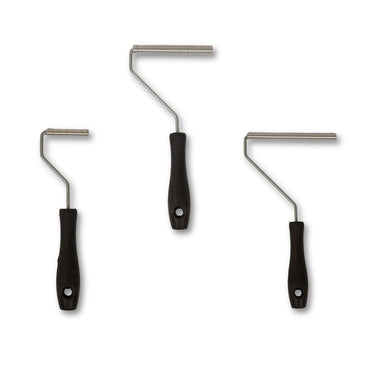
Economy Fiberglass Roller - 3 Pack
Three rollers, because one is never enough on a real layup. A roller that sits for ten minutes...Regular price $23.99 USDSale price $23.99 USD Regular priceUnit price per -

 Vendor:Boat Suppliers
Fiberglass Detail Roller Kit - 3 Pack
A three pack of small rollers for detail work. Patch repairs, narrow tabbing and tight corners chew through...Regular price $28.95 USDSale price $28.95 USD Regular priceUnit price per -
 Vendor:Boat Suppliers
Fiberglass Roller Starter Kit (Corner, Radius & Standard)
Three rollers because one shape does not reach everything. A standard roller consolidates the flats, a radius roller...Regular price $31.95 USDSale price $31.95 USD Regular priceUnit price per -
 Vendor:Boat Suppliers
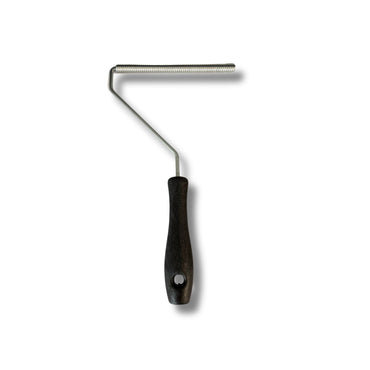
Economy Fiberglass Roller
A basic all-aluminum bubble buster for consolidating wet laminate. It is not built like our detail rollers and...Regular price $7.99 USDSale price $7.99 USD Regular priceUnit price per -

 Vendor:Boat Suppliers
Fiberglass Detail Roller
The small rollers. When the job is a 4 in wide tab, a patch behind a bulkhead or...Regular price $11.99 USDSale price $11.99 USD Regular priceUnit price per -
 Vendor:Boat Suppliers
Fiberglass Corner Roller
A flat roller bridges an inside corner, which is exactly where most repairs fail. The corner roller is...Regular price $12.49 USDSale price $12.49 USD Regular priceUnit price per$9.50 USD -
 Vendor:Boat Suppliers
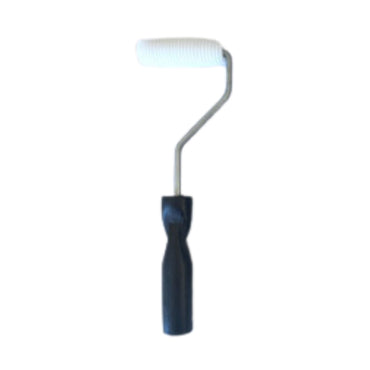
Fiberglass Radius Roller
A flat roller cannot consolidate a corner. It rides the two faces and leaves the cloth tented across...Regular price $11.95 USDSale price $11.95 USD Regular priceUnit price per$12.95 USDSale -

 Vendor:Boat Suppliers
Disposable Natural Bristle Chip Brushes – Wood Handle
These Natural Bristle Wood Handle Brushes are affordable, disposable brushes designed for polyester resins, epoxy resins, gelcoat, adhesives,...Regular price $0.99 USDSale price $0.99 USD Regular priceUnit price $0.99 per item -

 Vendor:Boat Suppliers
Foam Brush
A foam brush for laying thin, even coats of epoxy, varnish, polyurethane, stain or resin, made to be...Regular price $0.99 USDSale price $0.99 USD Regular priceUnit price per -

 Vendor:Boat Suppliers
Plastic Spreader
A flexible plastic spreader is the tool for pulling epoxy, polyester, body filler or fairing compound flat across...Regular price $0.92 USDSale price $0.92 USD Regular priceUnit price per -
 Vendor:Boat Suppliers
Rotary Cutter
The Rotary Cutter is a precision tool designed for clean, effortless cutting of fiberglass, carbon fiber, fabric, and...Regular price $24.95 USDSale price $24.95 USD Regular priceUnit price per -

 Vendor:Boat Suppliers
WBT2 Heavy Duty Rechargeable Fiberglass Cutter
The WBT2 is a rechargeable rotary cutter for fiberglass and carbon fiber, built to slice cloth, mat and...Regular price $169.00 USDSale price $169.00 USD Regular priceUnit price per -

 Vendor:Corona
Roller Frames
These Lightweight Roller Frames are designed to fit all standard paint rollers and other epoxy-rated roller covers. Featuring a...Regular price $5.49 USDSale price $5.49 USD Regular priceUnit price per -
 Vendor:Red Tree Industries
Redtree Fiberglass Resin Paint Nap Roller
A roller cover that survives resin. The phenolic core is the part that matters: a cardboard core turns...Regular price $17.99 USDSale price $17.99 USD Regular priceUnit price per -

 Vendor:Boat Suppliers
2" Foam Brush - 48 Pack
Forty-eight 2-inch foam brushes give you a fresh one for every thin coat of epoxy or varnish on...Regular price $24.95 USDSale price $24.95 USD Regular priceUnit price $0.52 per item -

 Vendor:Boat Suppliers
1" Foam Brush - 48 Pack
When the surface is only an inch or so wide, this 48 pack of 1-inch foam brushes puts...Regular price $17.95 USDSale price $17.95 USD Regular priceUnit price $0.37 per item -

 Vendor:Boat Suppliers
3" Foam Brush - 36 Pack
The 3-inch foam brush in a 36 pack covers ground faster than the narrow sizes, which makes it...Regular price $24.95 USDSale price $24.95 USD Regular priceUnit price $0.52 per item -

 Vendor:Boat Suppliers
4" Foam Brush - 24 Pack
This 24 pack of 4-inch foam brushes is for big flat areas: a cabin sole, a transom face,...Regular price $23.95 USDSale price $23.95 USD Regular priceUnit price $0.50 per item -

 Vendor:Boat Suppliers
Gelcoat Spray Gun - Quart Dump Cup Sprayer for Gelcoat & Resin
This air powered dump gun sprays gelcoat into a mold or over a big repair without a catalyst...Regular price $169.95 USDSale price $169.95 USD Regular priceUnit price per -

 Vendor:Boat Suppliers
Paper Refill Cups for Gelcoat Dump Gun - 1 Quart, Pack of 25
Disposable 1 quart paper cups, 25 to a pack, for mixing and spraying with the gelcoat dump gun....Regular price $19.95 USDSale price $19.95 USD Regular priceUnit price per


Fiberglass Tools
The tools that decide a layup
Rollers do the work resin cannot. Standard and economy rollers in 1, 2 and 3 inch drive resin through the laminate and chase air out. Detail rollers get into narrow tape work. Radius and corner rollers in 1/4 and 3/8 inch push glass down into a stringer corner, where a flat roller bridges and leaves a void.
The rest is consumable. Plastic spreaders in 4, 5 and 6 inch for putty and fairing, natural bristle chip brushes for wetting out, foam brushes by the 24, 36 or 48 pack, and Corona roller frames in 3, 4 and 7 inch. The WBT and WBT2 battery powered cutters handle repeat cuts through mat and 1708 without wrecking your hand.