


SKU:GEL-BL025
In stock
Couldn't load pickup availability
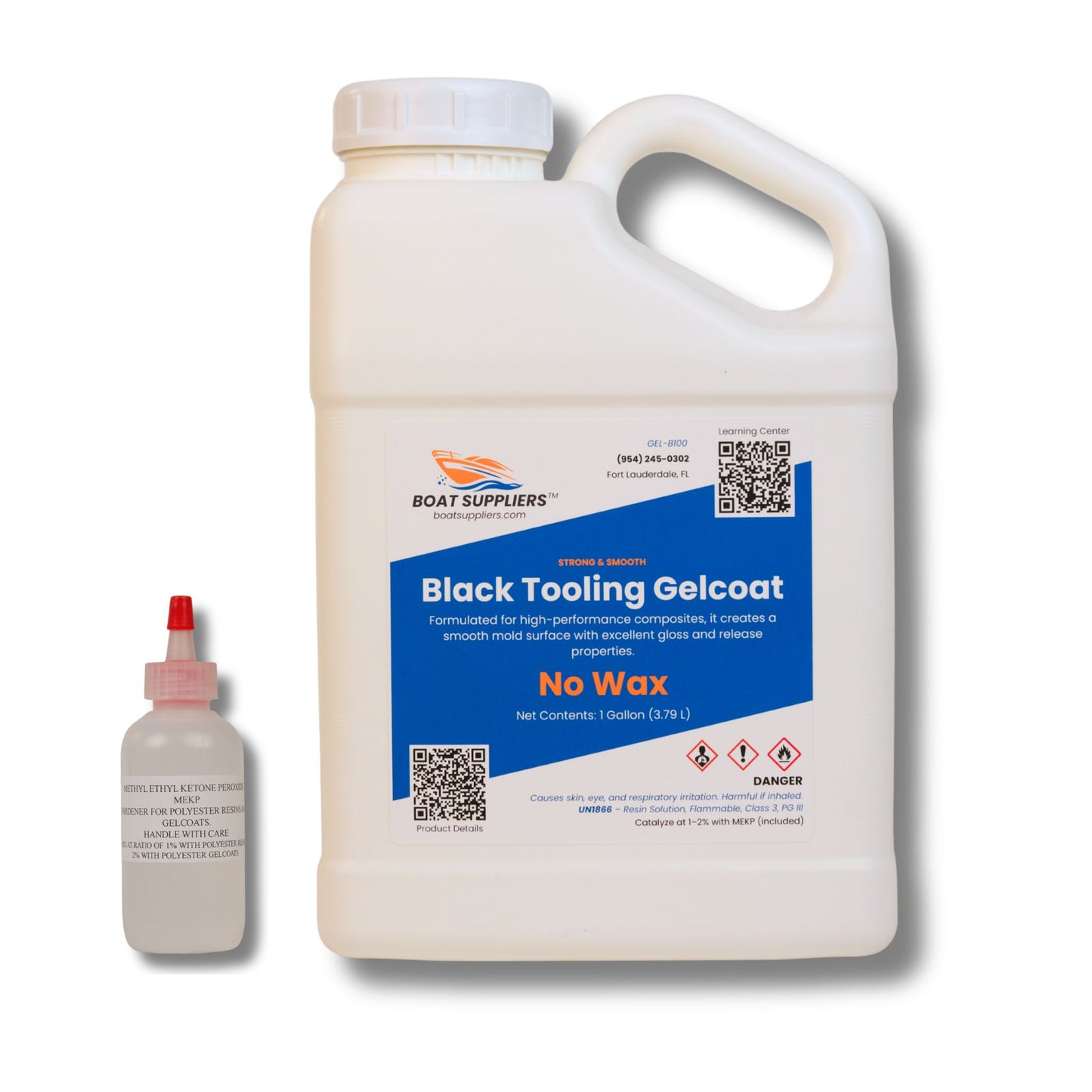
Black Tooling Gelcoat delivers a strong, durable surface finish for fiberglass molds. Formulated for high-performance composites, it creates a smooth mold surface with excellent gloss and release properties. When combined with Isophthalic Tooling Resin and fiberglass reinforcement, this gelcoat ensures precision results for professional mold-making projects. Includes MEKP catalyst
Specs
| Base | polyester tooling gelcoat, no wax |
|---|---|
| Color | high-opacity black |
| Sizes | quart, gallon, 5 gallon |
| Catalyst | MEKP approx 2% (19 cc per quart, 76 cc per gallon), included |
| Pot life | approx 15 to 20 min at 80°F |
| Application | brush or spray into a waxed or PVA-prepped plug or mold; back with isophthalic tooling resin plus mat and cloth |
| Storage | 60 to 75°F, dry; 3 to 6 months unopened |
Same tooling gelcoat as our orange, same sizes, same catalyst; the difference is what the color tells you. Black shows every scratch, swirl and pinhole when you cut and polish the finished mold surface, so choose it for tools you will bring to a high gloss and inspect hard. Choose orange tooling gelcoat when you want to see coverage and thin spots while you are spraying and laminating. Both are no-wax on purpose: the backup laminate bonds chemically to the gel. The build sequence is in how to make a fiberglass mold.
Specifications
Includes
Features


Technical Specifications
Compare Resins
| Product |  Black Tooling Gelcoat with Hardener - No WaxYou're viewingfrom $42.95 Black Tooling Gelcoat with Hardener - No WaxYou're viewingfrom $42.95
|  Orange Tooling Gelcoat with Hardener - No Waxfrom $42.95 Orange Tooling Gelcoat with Hardener - No Waxfrom $42.95
|  Pure White Gelcoat with Hardener - No Waxfrom $39.95 Pure White Gelcoat with Hardener - No Waxfrom $39.95
|
|---|---|---|---|
| Type | Polyester tooling gelcoat - black, unwaxed | Polyester tooling gelcoat - orange, unwaxed | Polyester gelcoat - pigmented white, unwaxed |
| Mix Ratio | MEKP 2% by volume: 19 cc (2/3 oz) per quart, 76 cc (2.5 oz) per gallon; 1.5% hot to 2.5% cold | MEKP 2% by volume: 19 cc (2/3 oz) per quart, 76 cc (2.5 oz) per gallon; 1.5% hot to 2.5% cold | MEKP 2% by volume: 19 cc (2/3 oz) per quart, 76 cc (2.5 oz) per gallon; 1.5% hot to 2.5% cold |
| Pot Life | ~15-20 min @ 80°F; up to 2.5% MEKP in a cold shop | ~15-20 min @ 80°F; up to 2.5% MEKP in a cold shop | ~15-20 min @ 80°F |
| Cured Color | Black - shows mold-surface defects while polishing | Orange - high visibility against laminate | White |
| Wax | No wax by design - the mold's backup laminate bonds chemically | No wax by design - the mold's backup laminate bonds chemically | Unwaxed - stir surfacing wax into the FINAL coat only, 1/2 to 1 oz per quart (2 to 4 oz per gallon) |
| Best For | Mold surface coat - black reveals scratches & defects | Mold surface coat - orange shows thin spots while laminating | Hull & deck refinishing, repairs |
| View | View |
How do I apply polyester gelcoat?
Do I need to add wax to gelcoat?
How much MEKP do I add to gelcoat?
What's the difference between waxed and unwaxed gelcoat?
Can I use polyester gelcoat over epoxy resin?
Can I roll or brush gelcoat instead of spraying it?
Why is my gelcoat still tacky and not curing?
How much gelcoat do I need?
What's the difference between tooling gelcoat and regular gelcoat?
How do I thin gelcoat for spraying?
Guides for this product

How to Make a Fiberglass Mold: Complete Step-...
How to Make a Fiberglass Mold: Complete Step-...

Polyester Gelcoat: Waxed vs Unwaxed, Tooling ...
Polyester Gelcoat: Waxed vs Unwaxed, Tooling ...

PVA vs Wax vs Semi-Permanent Mold Release: Wh...
PVA vs Wax vs Semi-Permanent Mold Release: Wh...
Calculators and charts:Gelcoat CalculatorMEKP Catalyst Calculator