


SKU:SM-SWAX02
Regular price
$4.55 USD
Sale price
$4.55 USD
Regular price
Unit price
per
Shipping calculated at checkout.
105 in stock
Couldn't load pickup availability
Earn 4 Boat Points Learn More
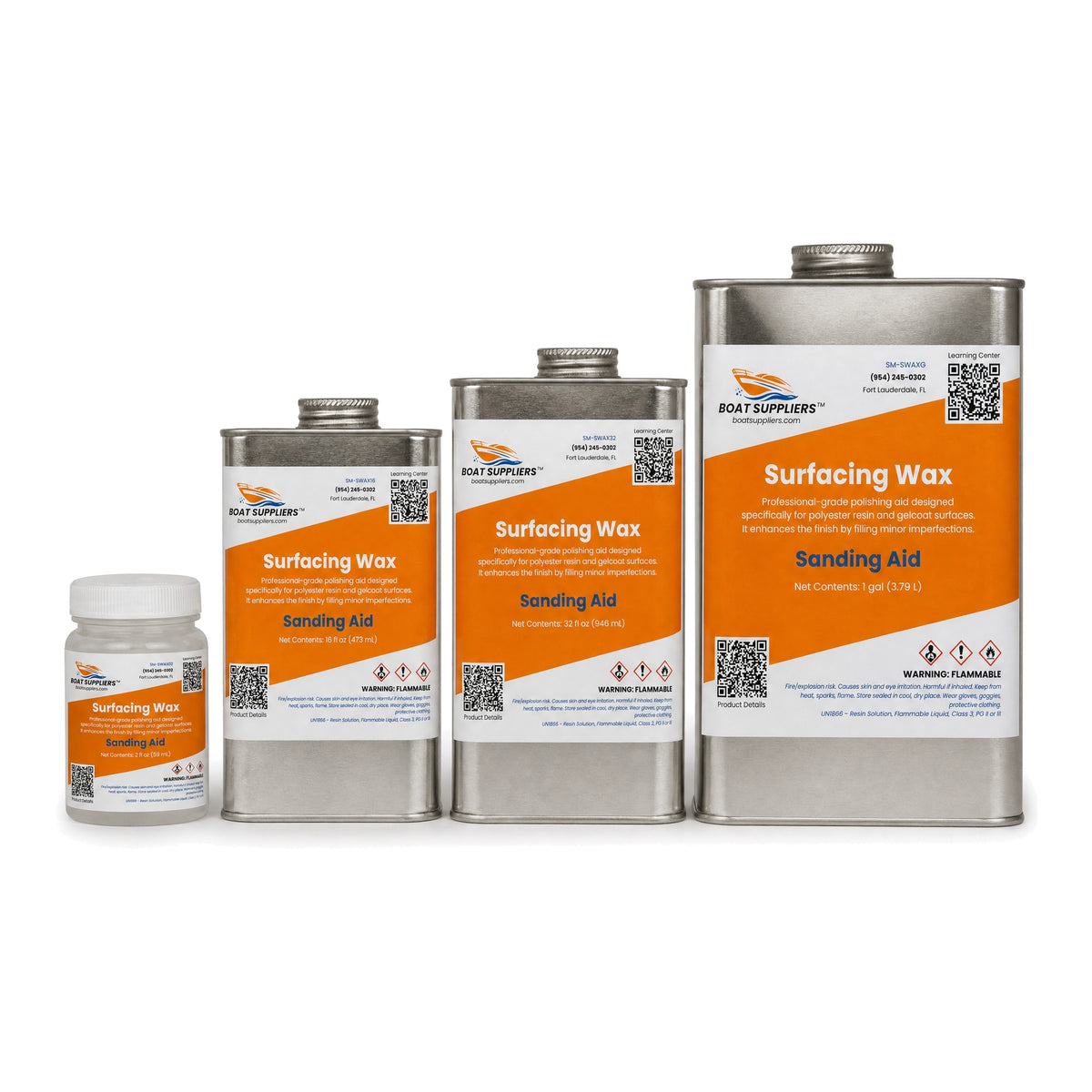
Unwaxed polyester and gelcoat stay tacky in air because the styrene at the surface never fully cures. Surfacing wax is the fix: stir it into the final coat only, and it floats to the surface, seals the film off from oxygen and lets that last layer cure hard enough to sand and polish.
- Add 1/2 oz per quart, or 2 oz per gallon (about 20 drops per ounce)
- Final coat only, never in laminating layers you plan to bond to
- Still needs MEKP; wax is an additive, not a catalyst
- For unwaxed polyester resin and unwaxed gelcoat
- Sizes: 2 oz, pint, quart, gallon, 5 gallon
If you have to recoat over a waxed layer, sand it and wipe with acetone first. The wax film that made the surface cure is the same film that will keep the next coat from sticking.


Technical Specifications
Mix 1/2 oz per quart (2 oz/gal, 20 drops/oz) into the final coat only
Resin TypeWax additive (sanding aid) for polyester resin & gelcoat
Mix Ratio1/2 oz per quart (2 oz/gal, 20 drops/oz) into the final coat only
CatalystMEKP still required - wax is an additive, not a catalyst
Apply OverFinal layer only; sand + acetone-wipe the wax film before any recoat
Best ForTack-free, sandable final coats on unwaxed resin/gelcoat
Do I need to add wax to gelcoat?
What's the difference between waxed and unwaxed gelcoat?
Why is my gelcoat still tacky and not curing?
Blog posts

28 September 2026
Epoxy Calculator: How Much Resin Your Layup A...
28 September 2026
Epoxy Calculator: How Much Resin Your Layup A...

26 September 2026
Polyester Gelcoat: Waxed vs Unwaxed, Tooling ...
26 September 2026
Polyester Gelcoat: Waxed vs Unwaxed, Tooling ...

25 September 2026
Fiberglass Kayak Build and Repair: Layup Sche...
25 September 2026