How to Fix Fiberglass Crack: Complete Guide to Boat Hull Crack Repair

09 June 2026
Discovering a crack in your boat's fiberglass hull demands immediate attention. This comprehensive guide covers professional boat hull crack repair techniques using proven materials and methods that deliver lasting results.
Quick reference: fiberglass crack repair steps and specs
| Step | What to do | Spec |
|---|---|---|
| Check the crack | Flex the area around it | Opens and closes means structural |
| Clean | Wipe down with acetone | Removes wax, dirt and contaminants |
| Grind | V-groove along the crack | About 1/8 in (3 mm) wide |
| Sand | Feather 80 grit past the crack | 2 to 3 in (5 to 7 cm) |
| Catalyze | MEKP in polyester resin | About 1.5% at 70°F, 15 cc per quart |
| First layer | 0.75 oz chopped strand mat | Cut slightly larger than the prepped area |
| Build layers | 1.5 oz chopped strand mat | Each slightly larger than the last |
| Layer count | Cosmetic crack | Usually one or two layers of mat |
| Finish | Sand, then gelcoat or primer | 80, 220, then 400 grit |
MEKP dose is percent by volume from our MEKP catalyst chart; always check the resin maker's data sheet.
Products used in this guide
-

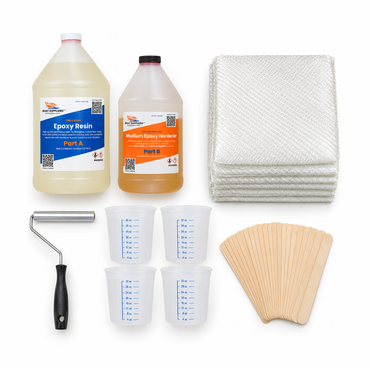
Boat Fiberglass Repair Kit - Professional Grade with Gallon Resin & Roller
Regular price $163.95 USDSale price $163.95 USD Regular priceUnit price per -

1708 Biaxial Fiberglass
Regular price From $12.95 USDSale price From $12.95 USD Regular priceUnit price $12.95 per yd -

1.5oz Fiberglass Chopped Strand Mat
Regular price From $6.45 USDSale price From $6.45 USD Regular priceUnit price $6.45 per yd -


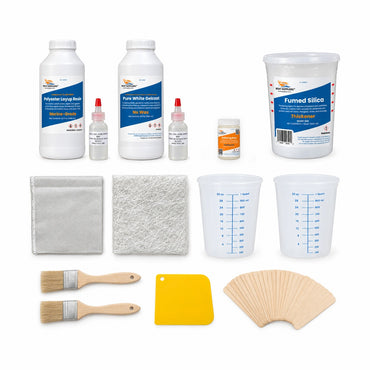
Marine-Grade Polyester Layup Resin with Hardener
Regular price From $34.95 USDSale price From $34.95 USD Regular priceUnit price $1.09 per floz


Understanding Different Types of Fiberglass Cracks
Stress cracks appear as thin, spider-web patterns in the gelcoat and remain surface-level cosmetic issues. Structural cracks extend through the fiberglass laminate itself and require extensive repair. Gelcoat cracks are surface-level damage from UV exposure or minor impacts.
To determine severity, gently flex the area around the crack. If the crack opens and closes with pressure, you're dealing with structural damage requiring immediate attention.
Essential Materials for Fiberglass Stress Crack Repair
Gathering proper materials ensures professional results. For most crack repairs, use 1708 biaxial fabric or chopped strand mat. Our 1.5oz Fiberglass Chopped Strand Mat provides excellent flexibility and strength, conforming to curved hull surfaces while delivering adequate reinforcement.
For smaller repairs requiring precise application, 1.5oz Fiberglass Mat Tape works perfectly for narrow cracks and provides controlled reinforcement exactly where needed.
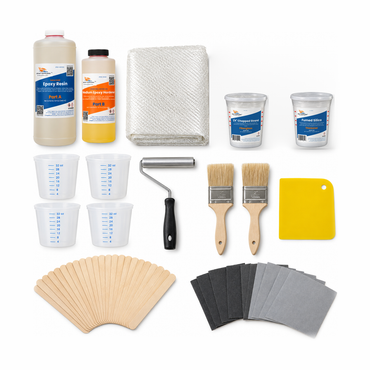
Required materials include polyester or epoxy resin, MEKP catalyst, acetone for cleaning, sandpaper (80, 220, and 400 grit), mixing cups, natural bristle brushes, and safety equipment including nitrile gloves, safety glasses, and NIOSH-approved respirator rated for organic vapors (P100 filter minimum).
Step-by-Step Fiberglass Crack Repair Process
1. Prepare the Damaged Area
Clean the cracked area thoroughly with acetone to remove wax, dirt, or contaminants. Use a grinding disc or coarse sandpaper to create a V-shaped groove along the crack, approximately 1/8 inch (3mm) wide and deep enough to reach sound fiberglass. This V-groove provides proper adhesion and prevents crack propagation.
Sand the surrounding area with 80-grit paper, creating a feathered edge extending 2-3 inches (5-7cm) beyond the crack on all sides. This provides proper bonding surface for repair materials.
2. Apply the First Layer of Reinforcement
Cut fiberglass mat slightly larger than the prepared area. For most hull repairs, 0.75oz Fiberglass Chopped Strand Mat works well as first layer due to lightweight nature and excellent conformability to complex curves.
Mix polyester resin with MEKP at 1.5% ratio (1.5ml per 100ml resin) for cure time of 4-6 hours at 70°F (21°C). Work quickly in temperatures above 75°F (24°C) or humidity below 50% as cure time accelerates. Brush thin resin coat into V-groove and over sanded area, lay fiberglass mat and saturate thoroughly using stippling motion to eliminate air bubbles.
3. Build Up Structural Strength
For structural repairs, apply additional reinforcement layers. Use progressively heavier materials like our 1.5oz Fiberglass Chopped Strand Mat for subsequent layers, each slightly larger than previous to create pyramid effect distributing stress effectively.
For maximum strength areas, incorporate 1/4" Chopped Strand Fiberglass mixed directly into resin for final structural layer. This loose fiber adds significant tensile and impact strength to repairs.
4. Fair and Finish the Repair
Once structural layers cure completely, sand repair smooth with 80-grit paper to remove high spots and achieve proper profile. Progress through 220-grit to eliminate 80-grit scratches, then 400-grit for smooth gelcoat-ready surface. Each grit removes previous grit scratches while preparing surface for next step. Apply gelcoat or primer to match surrounding hull finish.
When to Use Waterproof Sealers
For boats with multiple stress cracks or moisture intrusion signs, apply protective sealer after completing repairs. Products like Gluvit Epoxy Waterproof Sealer create additional barrier against future water damage and prevent new crack formation.
I've found this sealer type especially valuable for older hulls or boats operating in harsh marine environments where constant flexing and UV exposure accelerate crack formation.
Advanced Techniques for Complex Repairs
For larger structural damage or multiple intersecting cracks, remove more material and build repairs in stages. Use 1/2" Chopped Strand Fiberglass mixed into resin for maximum reinforcement in heavy-duty structural applications.
Always work in thin layers, allowing each to cure before applying next. This prevents exothermic heat buildup causing resin cracking or cure failure. I've learned that ambient temperature affects cure dramatically - below 65°F (18°C) requires longer cure times while above 80°F (27°C) accelerates curing significantly.
Preventing Future Fiberglass Cracks
Prevention beats repair every time. Conduct regular hull inspections, especially after rough weather or grounding incidents, to catch problems early. Apply UV-protective wax regularly, avoid overloading, and address small stress cracks promptly before they become structural issues.
Keep boats properly supported when hauled, avoiding point loads that stress hulls and create new crack patterns. Before cold storage, a full fiberglass winterization routine keeps moisture out of the laminate through the off-season.
Professional Results Through Quality Materials
Learning proper fiberglass crack repair takes practice, but quality materials and proven techniques deliver professional results. Success depends on proper surface preparation, appropriate reinforcement materials, and patience during curing process.
Fiberglass repair prevents future problems as much as fixing current ones. Following these techniques with quality materials like our chopped strand mats and reinforcement fibers ensures boat hull crack repairs lasting years.
Need materials for larger projects? Contact our wholesale team for volume pricing on professional-grade fiberglass repair supplies. We offer competitive rates for marine repair shops and boat builders requiring consistent material supply.
Frequently asked questions
How do I tell if a fiberglass crack is cosmetic or structural?
Stress cracks and gelcoat cracks show up as thin spider-web patterns and stay on the surface. Structural cracks run through the laminate itself. Gently flex the area around the crack: if it opens and closes with pressure, the laminate is compromised and needs a structural repair, not just gelcoat work.
What materials do I need to repair a cracked boat hull?
Polyester or epoxy resin, MEKP catalyst, chopped strand mat (0.75 oz for the first layer, 1.5 oz for build-up layers), mat tape for narrow cracks, acetone, sandpaper in 80, 220, and 400 grit, mixing cups, and brushes. Wear nitrile gloves, safety glasses, and a P100 respirator rated for organic vapors.
How many layers of fiberglass does a crack repair need?
Cosmetic cracks usually need one or two layers of mat. Structural cracks need the laminate rebuilt in stages: a light, conformable first layer, then progressively heavier layers, each cut slightly larger than the last so the patch spreads stress into sound laminate. Let each layer cure before the next to avoid heat buildup.
When should I use a waterproof sealer like Gluvit?
After the structural repair is done, on hulls with multiple stress cracks or signs of moisture intrusion. An epoxy waterproof sealer penetrates hairline cracks and adds a barrier against future water damage, but it supplements laminate repair rather than replacing it.
Shop the materials in this guide
- 0.75 oz chopped strand mat, the conformable first layer.
- 1.5 oz chopped strand mat, for structural build-up layers.
- 1.5 oz fiberglass mat tape, for narrow cracks.
- marine polyester layup resin, the everyday repair resin.
- Gluvit epoxy waterproof sealer, for hairline cracks and moisture protection.
- all chopped strand mat.
- boat fiberglass repair kit, gallon resin + cloth + mat.
Prev post

Polyester Resin for Boat Repair: Orthophthalic vs Isophthalic Selection Guide
Updated on 11 June 2026
Next post

Fiberglass Cloth vs Tape: Complete Guide for Marine Repairs and Reinforcement
Updated on 08 June 2026