


Marine-Grade Polyester Layup Resin with Hardener
Marine-Grade Polyester Layup Resin with Hardener
Share
SKU:SM-435025
Regular price
$34.95 USD
Sale price
$34.95 USD
Regular price
Unit price
$1.09
per
floz
Shipping calculated at checkout.
In stock
Couldn't load pickup availability
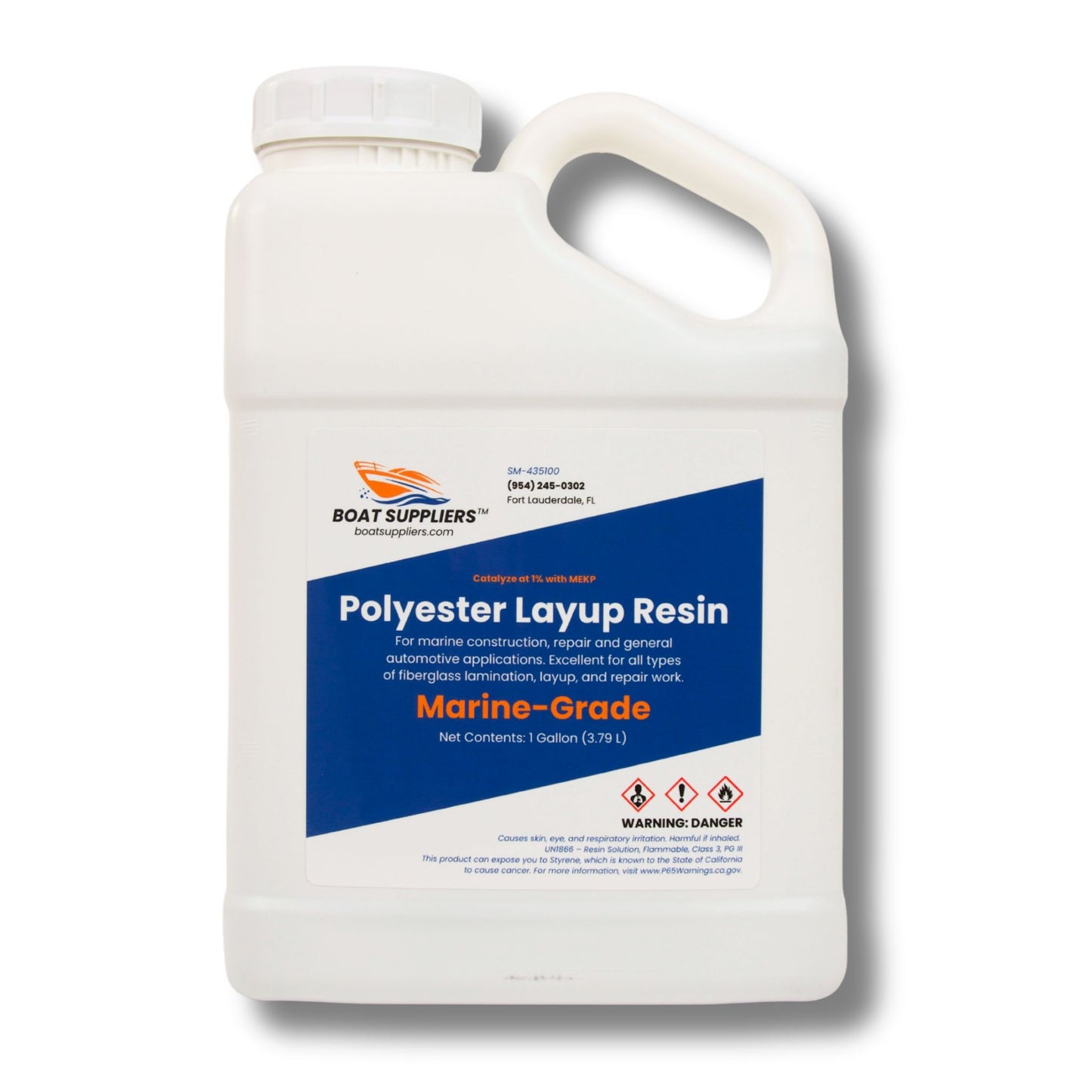
Our most-used resin for marine construction, repair and general fiberglass work. It wets out mat, cloth and woven roving without fighting you, has the strength a hull repair needs, and comes with the right amount of MEKP in the box so you are not sourcing catalyst separately.
- Catalyze at about 1.25% MEKP, roughly 1.6 oz (47 cc) per gallon, included
- Pot life 15 to 20 minutes at 80 F; recoat in about 1.5 hours when laminating
- Unwaxed, so successive laminating layers bond without sanding
- Wets out cloth, chopped strand mat, woven roving and 1708 or 1208 biaxial
- Apply over polyester or vinyl ester laminate, bare fiberglass or wood, never over epoxy
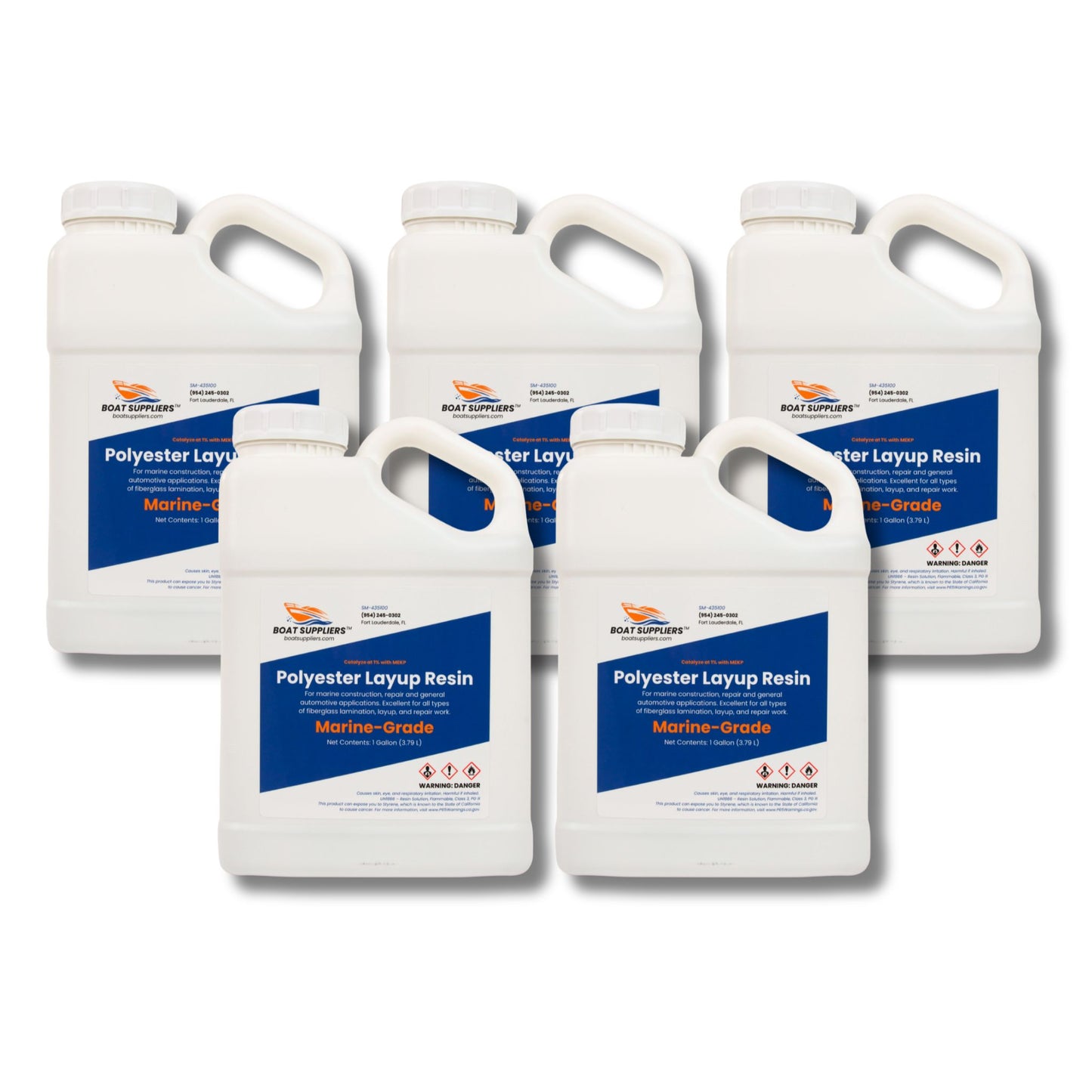
- Sizes: quart, gallon and 5 gallon; drums available by quote
Adjust the catalyst for the day. Plus or minus 50% is normal for temperature, and above 90 F cut the dose roughly in half or the batch will kick in the bucket.


Technical Specifications
Mix MEKP ~1.25% (≈1 oz/gal) - includedWorks with Fiberglass cloth, CSM, woven roving, 1708/1208 biaxial - not for carbon/Kevlar structural work
Resin TypePolyester - standard marine laminating (unwaxed)
Mix RatioMEKP ~1.25% (≈1 oz/gal) - included
Pot Life15-20 min @ 80°F
Tack-FreeRecoat in ~1.5 hr when laminating
Wax ContentUnwaxed (laminating) - add surfacing wax to the final coat to sand/polish
CatalystMEKP included; more in a cold shop, less in heat, within 1 to 2%
Works With (Fabrics)Fiberglass cloth, CSM, woven roving, 1708/1208 biaxial - not for carbon/Kevlar structural work
Works With (Fillers)All BS fillers - fumed silica, glass bubbles, Q-Cells, microballoons, milled fiber, chopped strand, cotton flock
Apply OverPolyester/VE laminate, bare fiberglass, wood - never over epoxy
Best ForMarine construction & structural repair
Compare Resins
| Product |  Marine-Grade Polyester Layup Resin with HardenerYou're viewingfrom $34.95 Marine-Grade Polyester Layup Resin with HardenerYou're viewingfrom $34.95
|  General Purpose Polyester Resin with Hardenerfrom $59.95 General Purpose Polyester Resin with Hardenerfrom $59.95
| 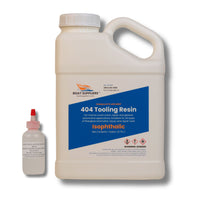 Isophthalic Polyester Tooling Resin with Hardenerfrom $32.95 Isophthalic Polyester Tooling Resin with Hardenerfrom $32.95
| 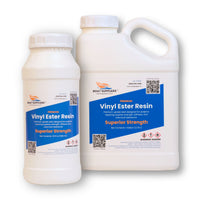 Premium Vinyl Ester Resin with Hardenerfrom $39.95 Premium Vinyl Ester Resin with Hardenerfrom $39.95
|
|---|---|---|---|---|
| Type | Polyester - standard marine laminating (unwaxed) | Polyester - general purpose, non-structural (unwaxed) | Isophthalic polyester - tooling & laminating (unwaxed) | Vinyl ester - premium strength & chemical resistance (unwaxed) |
| Mix Ratio | MEKP ~1.25% (≈1 oz/gal) - included | MEKP ~1 oz/gal - included | MEKP 1.25% (≈1 oz/gal) - included | MEKP ~1 oz/gal - included; increase below 75°F |
| Viscosity | — | — | 325-525 cps (Brookfield), thixotropic | — |
| Pot Life | 15-20 min @ 80°F | 15-20 min @ 80°F | Gel time 20-24 min @ 1.25% MEKP | — |
| Wax | Unwaxed (laminating) - add surfacing wax to the final coat to sand/polish | Unwaxed (laminating) - add surfacing wax to the final coat to sand/polish | Unwaxed - add surfacing wax to the final coat to sand/polish | Unwaxed (laminating) - add surfacing wax to the final coat to sand/polish |
| Max Temp | — | — | HDT 223°F (106°C) - highest of our polyesters | — |
| Fabrics | Fiberglass cloth, CSM, woven roving, 1708/1208 biaxial - not for carbon/Kevlar structural work | Fiberglass cloth, CSM, woven roving, 1708/1208 biaxial - not for carbon/Kevlar structural work | Fiberglass cloth, CSM, woven roving, 1708/1208 biaxial - not for carbon/Kevlar structural work | Fiberglass cloth, CSM, woven roving, 1708/1208 biaxial - not for carbon/Kevlar structural work |
| Best For | Marine construction & structural repair | Budget repairs & small projects - not for structural work | Molds & tooling, high-heat, low-shrink laminates | Fuel tanks, chemical exposure, blister-resistant hulls |
| View | View | View |
What’s the difference between epoxy and polyester resin?
What is polyester resin used for in marine applications?
How long does polyester resin take to cure?
How much MEKP do I add to polyester resin?
What's the difference between laminating resin and finishing resin?
Can I tint polyester resin?
Can I use polyester resin on EPS foam?
Does epoxy or polyester resin expire?
Guides for this product

21 February 2026
What Oz Fiberglass Cloth to Use: A Comprehens...
21 February 2026
What Oz Fiberglass Cloth to Use: A Comprehens...

21 February 2026
Epoxy vs Polyester vs Vinyl Ester: Best Resin...
21 February 2026
Epoxy vs Polyester vs Vinyl Ester: Best Resin...

07 July 2026
Composite Layup Schedule Guide: How to Plan a...
07 July 2026
Composite Layup Schedule Guide: How to Plan a...
Calculators and charts:MEKP Catalyst CalculatorResin Compatibility ChartEpoxy & Resin Calculator