Breather Cloth: 4oz vs 7oz and How Much to Buy

14 November 2026
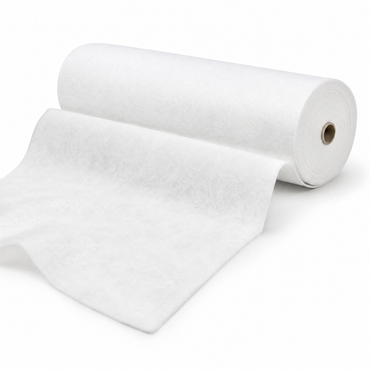
Breather cloth is the polyester batting that goes between the release film and the nylon bag, and the only real decision is 4 oz or 7 oz. The spec that settles it: 4 oz breather at 60 in wide handles nearly every hand layup you will bag, including a four-ply 1708 transom skin, and 7 oz is for the resin-rich laminate or the heavy schedule where the 4 oz loads up before the bleed is done. Everything else in this guide is how much to buy and how to lay it so the bag actually pulls through the part.
What breather cloth does under the bag
Two jobs. First, it keeps the vacuum path open. Without it the nylon film seals itself against the release film, the gauge at the port reads 25 inHg and nothing is being pulled from the far corner of the part. Breather is a loose nonwoven that stays porous under full vacuum, so air moves through it from every edge of the laminate to the connector.
Second, it is the bleeder. Excess resin comes up through the perforations in the release film and into the breather, and once the breather is loaded the bleed stops. That is what sets the final resin content of the laminate, and it is why the weight matters: a 4 oz breather holds a certain amount of resin per square yard and a 7 oz holds more. Load up the breather and the part is resin-rich and heavy; overbleed it and the part is starved and dry.
4 oz vs 7 oz breather cloth
| 4oz Breather Cloth | 7oz Breather Cloth | |
|---|---|---|
| Weight | 4 oz/yd² (136 g/m²) | 7 oz/yd² (237 g/m²) |
| Width | 60 in | 60 in |
| Cuts | 1, 3, 10 yd or 100 yd roll | 1, 3, 10 yd or 50 yd roll |
| Max use temperature | 400°F (204°C) | Check the roll label |
| Use it for | Bench parts, hull repairs, bagged tabbing, laminates up to about four plies of 1708 or equivalent | Heavy laminates, resin-rich schedules, thick core bonds, any part where a 4 oz loads before the bleed is done |
The 4 oz is the one we run on most work. It is the most common absorber weight in the trade for a reason: it takes up enough bleed for a normal hand layup, it drapes over edges without bridging, and at 60 in wide by 100 yd a roll lasts a shop a long time. On a 20 to 25 inHg consolidation of a two- or three-ply skin, the 4 oz takes what the release film lets through and does not saturate.
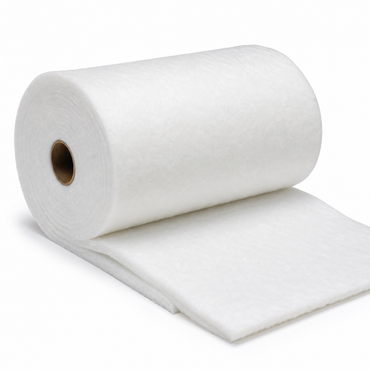
The 7 oz earns its cost when the laminate is thick or wet. Six plies of 1708 in polyester, a core bond where you laid thickened resin heavy on purpose, a mat-and-roving schedule that started at 2:1 resin to glass: those put more resin through the perforations than a 4 oz will absorb, and when the breather saturates it stops passing air. The 7 oz has the capacity and the loft to keep breathing under that load. It also holds its thickness better on a sharp edge, which is where a compressed 4 oz can pinch off the path.
If you only have 4 oz and the laminate is heavy, a second layer of 4 oz does most of what the 7 oz does. Two layers of 4 oz is 8 oz of absorber; the 7 oz single is a little less capacity but a lot easier to keep flat and pleated.
Breather cloth for vacuum bagging: how to lay it
Run the breather 2 to 3 in past the release film on every side, and run the release film 2 in past the laminate, so the breather never touches wet resin directly. Where it does, it bonds, and you sand it off the cured part. Overlap any seam in the breather by 2 in; do not butt it, a butt joint is a gap in the air path.
Carry a strip of breather from the part to the connector pad and double it under the connector. The pad keeps the fitting off the laminate and keeps resin from climbing into the stem. On a sharp outside edge, a chine or a flange corner, wrap the breather over the edge and add a second strip; the bag compresses breather hard on an edge and a single layer pinches shut. On a part over 6 ft long, run breather to a second connector at the far end.
Breather is not a release layer. Do not skip the perforated release film to save a step. Breather laid straight on wet epoxy becomes part of the laminate, and a bag with nothing between breather and resin is a part you will be grinding for an hour. Nitrile gloves, eye protection, and a fitted P100 with organic vapor cartridges if the laminate is polyester or vinyl ester.
How much breather cloth to buy
Take the part footprint, add 6 in on every side, and divide by the 60 in by 36 in you get per yard. A 4 ft by 8 ft panel becomes 60 in by 108 in, which is three yards off the 60 in roll with the width used exactly. Add one more yard for the connector pads and the edge doubles. A transom skin on a 20 ft outboard hull, roughly 24 in by 84 in, is 36 in by 96 in with the margin, so three yards again after you cut the 60 in width down. A canoe or kayak hull in a mold takes 4 to 5 yd of 60 in for a 16 ft boat once you wrap the sheer and double the stems.
For a shop bagging weekly, the 100 yd roll of 4 oz is the buy; for a single project the 3 yd or 10 yd cut is enough with margin. Buy 7 oz by the 3 yd or 10 yd for the specific heavy job and keep 4 oz as the stock. Size the resin for the laminate with the resin calculator and remember that the breather takes some of it: on a bagged hand layup expect 10 to 20% of the mixed resin to end up in the bleeder.
What to buy
The 4oz Breather Cloth in 60 in is the stock breather for bench parts, hull repairs, bagged tabbing and any laminate up to about four plies of 1708. Buy the 10 yd cut for a project or the 100 yd roll for a shop. The 7oz Breather Cloth in 60 in is for the heavy or resin-rich laminate where a 4 oz saturates before the bleed is done; buy it by the 3 or 10 yd for the specific job. Both go over perforated release film and under the nylon bag, never directly on resin.
Frequently asked questions
What is breather cloth used for?
Two things under a vacuum bag: it keeps an air path open from every edge of the part to the connector, and it absorbs the excess resin that bleeds through the perforated release film. Without it the nylon bag seals against the release film and the pump pulls nothing through the laminate. Use 4 oz at 60 in for most hand layups; go to 7 oz for thick or resin-rich schedules.
Is 4 oz or 7 oz breather cloth better?
Four ounce for most work. It absorbs the bleed from a two- to four-ply hand layup at 20 to 25 inHg, drapes without bridging, and is rated to 400°F. Seven ounce is for laminates that put more resin through the release film than 4 oz can hold, six plies of 1708, a heavy core bond, a mat-and-roving polyester schedule. If you only have 4 oz, two layers covers the heavy case.
Can I use breather cloth without release film?
No. Breather laid on wet resin bonds to the part and becomes a layer you grind off after cure. Run perforated release film 2 in past the laminate edge and breather 2 to 3 in past that, so no breather touches resin. The release film's holes on 1/2 in centers meter the bleed into the breather; the breather itself has no release properties at all.
How much breather cloth do I need per part?
Part footprint plus 6 in on each side, cut from a 60 in wide roll sold by the 36 in yard. A 4 ft by 8 ft panel is 60 in by 108 in, three yards, plus a yard for connector pads and edge doubles. A 16 ft canoe hull runs 4 to 5 yd once you wrap the sheer. Buy the 10 yd cut for a project and the 100 yd roll of 4 oz for a shop.
Does breather cloth go under the vacuum connector?
Yes, doubled. Cut two squares of breather about 6 in across, stack them on a flat area of the bag off the part, and set the connector through the film over them. The pad keeps the fitting from denting the laminate and keeps resin from wicking up the stem. Run a strip of breather from the part edge to the pad so the path is continuous.
What You Need For This Job
- 4oz Breather Cloth: the stock absorber for bench parts, hull repairs and bagged tabbing, 60 in wide
- 7oz Breather Cloth: heavyweight absorber for thick or resin-rich laminates, 60 in wide
- 4oz Breather Cloth 100 yard roll: the shop quantity of the 4 oz for weekly bagging work
Prev post

Next post

2 Part Epoxy Putty: Where a Stick Beats a Mixed Batch
Updated on 13 November 2026