Vacuum Bagging Film: Width, Stretch and How Much to Buy Per Part

09 November 2026
Vacuum bagging film is the outer envelope that lets the atmosphere squeeze a wet layup, and the three numbers that decide which roll to buy are width, elongation and how many yards the part eats once you add borders and pleats. Our nylon bagging film comes as a 55 in V-fold that opens to 110 in (2.8 m) layflat, which covers most bench and mold work in one width. Below it in the stack sits perforated release film to meter the bleed, and through it goes a connector to pull vacuum. Here is what each layer does, the spec that matters on each, and how to size a bag for a part.
The bag stack, bottom to top
| Layer | What it does | Spec that matters |
|---|---|---|
| Mold release | Keeps the part off the tool | Wax build-up and PVA, or a semi-permanent |
| Laminate | The part | Fully wet out, no dry spots |
| Peel ply | Leaves a textured, bondable surface; strips the stack off | Nylon, uncoated if you bond to it later |
| Perforated release film | Meters resin bleed into the breather | Hole spacing, here 1/2 in centers |
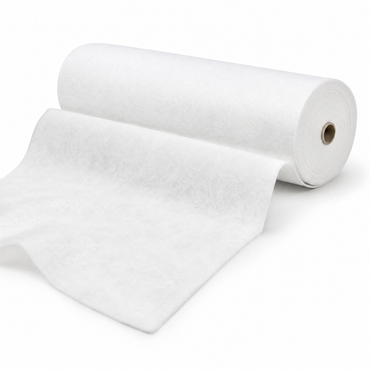
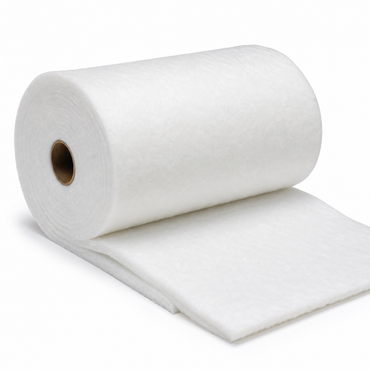
| Breather | Absorbs bleed, carries vacuum to every point | Weight; go heavier at ports and corners |
| Bagging film | The envelope | Width, elongation, temperature rating |
| Connector | Gets vacuum through the bag | Through-bag type, on a breather pad off the part |
Nylon vacuum bagging film: the specs that matter
Width first. Film sold as a V-fold is folded once along its length, so a 55 in V-fold is a 110 in layflat sheet when you open it, cut by the yard along the roll. That is wide enough to bag a 4 ft wide panel with borders and a pleat without a splice, and a splice is a leak you will be hunting later. Elongation second. Nylon film stretches several times its length before it tears, which is what lets it pull into inside corners and over a flange without bridging, and bridging is where a bag tears or a corner ends up resin-starved. Polyethylene sheeting from the hardware store has a fraction of that stretch and punctures on the first sharp edge of breather; do not use it. Temperature third. Nylon film handles a post cure at 140°F (60°C) and the exotherm of a thick laminate; check the roll's rating before an oven cycle. Thickness is the number people ask about and the one that matters least: most nylon bagging film runs about 2 mil (50 microns), and you are paying for elongation and puncture resistance, not gauge. Confirm the mil on the roll spec if a drawing calls for it.
Envelope bag or surface bag: the V-fold trick
A surface bag is film sealed to the mold flange all the way around with sealant tape; you need a flange at least 2 in (50 mm) wide and clean. An envelope bag puts the whole tool and part inside the film and seals film to film, which is how you bag a plywood panel, a foam blank or a mold with no flange. The V-fold gives you the envelope for free: slide the panel into the fold and you have one closed edge and three to seal instead of four. For a 4 x 8 ft plywood panel with 1708 biaxial on one face, a 3 yard cut of the 110 in film makes an envelope with a 6 in border on every side and enough slack for a pleat at each end.
Perforated release film: metering the bleed
Between the peel ply and the breather goes a release film with holes on 1/2 in (12 mm) centers. Without it, the breather sits directly on the wet laminate and takes as much resin as the vacuum can push into it, and on a thin laminate under full vacuum that is enough to starve the part. With it, resin passes only at the holes, so the bleed is controlled and the breather comes off with the film instead of bonding to the peel ply. The Perforated Release Film is the blue film, cut by the yard or as a 100 yard roll, and it does not bond to epoxy or polyester, so it peels off the cured part clean. Use it on every wet layup bag. For resin infusion, leave it out over the laminate, because infusion wants full vacuum with no bleed through the top.
Getting vacuum through the bag
The Aluminum Vacuum Bag Connector is a two-piece through-bag fitting: cut a short slit in the film, seat the base under it and the top over it, and tighten. The hose pushes onto the stem and the joint holds through the cure. Put it on a pad of breather that sits off the edge of the part, never directly over the laminate, because the base prints a ring into anything it sits on and the port starves the spot under it. Pull the bag down, then close the valve and watch the gauge: our pass is a drop of less than 1 inHg over 5 minutes. If it drops faster, run a thumb along the sealant tape pressing every inch, check the slit at the connector, and look for a pleat that folded over itself, which is where most leaks live.
How much film to buy per part
Add 6 in (150 mm) to every edge of the part footprint for the sealant tape border, then add a pleat every 2 to 3 ft (0.6 to 1 m) on any part with depth, and each pleat eats about 6 in of film. A 24 x 48 in hatch lid on a flanged mold needs a 36 x 60 in piece plus one pleat each way, so about 42 x 66 in: one yard of 110 in film, cut in half, does two of them. A 4 x 8 ft panel needs the 3 yard cut. A 16 ft hull side wants 6 yards. Buy the Nylon Bagging Film in 1, 3 or 10 yard cuts by the job, or the 333 yard roll for a shop. Breather and release film are cut to the part footprint plus 2 in per side, not to the bag size. Resin for the laminate under the bag: size it with the resin calculator and add 10 percent for what the breather takes. Wear a fitted P100 respirator with organic vapor cartridges, nitrile gloves and eye protection during the wet layup.
Frequently asked questions
What thickness is vacuum bagging film?
Most nylon bagging film is about 2 mil (50 microns), and gauge is the least important spec on it. Elongation is what keeps a bag from bridging in a corner and tearing under 25 inHg, and nylon has several times the stretch of polyethylene at the same thickness. Buy a nylon film in the width you need, 110 in layflat for most work, and check the roll spec if a drawing calls out a mil.
Can I use plastic sheeting from the hardware store as a vacuum bag?
No. Polyethylene sheeting has almost no elongation, so it bridges every inside corner and tears there, it punctures on breather edges, and it goes slack in the heat of an exotherm or a post cure. A 1 yard cut of 110 in nylon bagging film costs less than the resin you lose in a bag that fails at midnight. Use nylon.
How much vacuum should I pull on a wet layup?
For a hand layup under a bag, 15 to 20 inHg is plenty and pulling to 28 inHg bleeds a thin laminate dry through the perforated film. Save full vacuum for infusion. Whatever the number, close the valve and check for a drop under 1 inHg over 5 minutes before you walk away; a slow leak lets the bag relax while the resin is still liquid.
Do I need perforated release film if I already use peel ply?
Yes on a wet layup with breather over it. Peel ply gives the surface texture and separates the stack from the part, but it passes resin freely, so the breather on top drinks whatever the vacuum pushes and bonds itself to the peel ply. A perforated film with holes on 1/2 in centers between them limits the bleed and lets the breather come off clean. Cut it 2 in bigger than the part on every side.
What does 55 inch V-fold mean on bagging film?
The film is folded once along its length before it is rolled, so the roll is 55 in wide and the sheet opens to 110 in layflat. Buy by the yard along the roll: 1 yard is a 36 x 110 in sheet. The fold is useful as-is for an envelope bag around a flat panel, since you only seal three edges. Cut the fold open when you need the full 110 in for a surface bag.
What You Need For This Job
- Nylon Bagging Film: the outer envelope, 55 in V-fold opening to 110 in layflat, by the yard or the 333 yard roll
- Perforated Release Film: the blue film with holes on 1/2 in centers that meters bleed into the breather
- Aluminum Vacuum Bag Connector: the two-piece through-bag fitting that gets the hose into the bag without a leak