Customer Spotlight: A Poured Foam Race Seat for a Vintage Lola T342

09 August 2026
Most of the pour foam that leaves our shop goes under a deck or into a transom. This kit went into a race car. Bill M., a vintage racer who runs with the Vintage Drivers Club of America, used our 2 lb density urethane pour foam to mold a custom seat for his Lola T342 Formula Ford, one of the classic 1970s Lola customer cars, and he sent us photos of the whole process.
His review after the first pour: "Great stuff." Five stars, verified buyer. The photos say the rest.
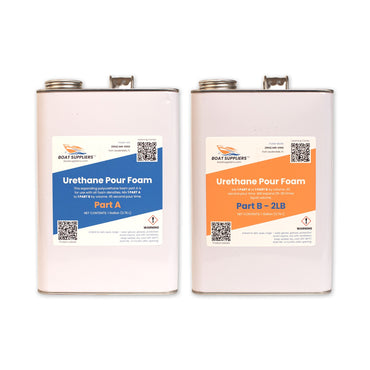
Boat Suppliers Urethane Pour Foam, 2 quart and 2 gallon kits is the same 1:1 two-part foam he used, in stock and ready to ship.
Why racers pour their seats
A vintage formula car has a bare aluminum tub. There is no adjustable seat, no padding, nothing between the driver and the monocoque except whatever you put there. A poured seat fixes that: the foam expands around you and cures into a rigid shell that matches your back, hips, and legs exactly. Better support, better feedback, and no sliding around under braking. Race shops charge real money for a fitted seat insert. Bill did it in his garage with a 2 gallon kit.

The process
The technique is the same one seat builders have used for decades, and it works because rigid urethane foam expands to roughly 25 to 30 times its liquid volume and picks up every detail of whatever contains it.
Bill masked the cockpit with plastic sheeting and taped it off so the foam could not bond to the chassis. Then he mixed the two parts, poured into bag liners set in the tub, and got into position while the foam rose around him. The foam does the fitting. A 2 lb density pour kicks fast, so you mix, pour, and commit. Work between 75°F and 80°F (24°C to 27°C) for a full, even rise.


He split the job into two pours: the lower cushion under his legs first, then the seat back a week later. Smart move. Smaller pours are easier to control, and you can refine the fit of the second piece against the cured first one. After demolding, each piece got trimmed and covered in fleece before going back in the car.
When he sent the first batch of photos: "Photos of the front half of the seat under my legs. I still need to make the part behind my back." Eight days later: "Seat back is complete."


The same foam, boat side
This is the identical material we sell for marine work: closed cell, water resistant, sandable, and compatible with polyester, vinyl ester, and epoxy resin once cured. The seat technique transfers straight to the water. Helm bolster pads, molded coamings, kayak and dinghy seats, tool tray liners in a center console, any spot where you want rigid support shaped to a body or an odd cavity. And of course the usual jobs: flotation under decks, filling stringer bays, and backfilling voids.
Density picks the job. 2 lb foam is the flotation and molding workhorse. 4 lb and up trade buoyancy for compressive strength when the part needs to carry load.
Get the kit
Boat Suppliers Urethane Pour Foam, 2 quart and 2 gallon kits covers all four densities, 2 lb through 16 lb, in 2 quart and 2 gallon kits. The 2 gallon kit is what Bill used for the full seat.
Building something with our materials, on the water or off it? Send photos to hello@boatsuppliers.com. We would love to see it, and your project might be the next spotlight.
Next post

Silmar 249A vs 249B: One Additive Apart
Updated on 09 August 2026