

Isophthalic Polyester Tooling Resin with Hardener
Isophthalic Polyester Tooling Resin with Hardener
Share
SKU:SM-404025
Regular price
$32.95 USD
Sale price
$32.95 USD
Regular price
Unit price
$1.03
per
floz
Shipping calculated at checkout.
96 in stock
Couldn't load pickup availability
Earn 32 Boat Points Learn More
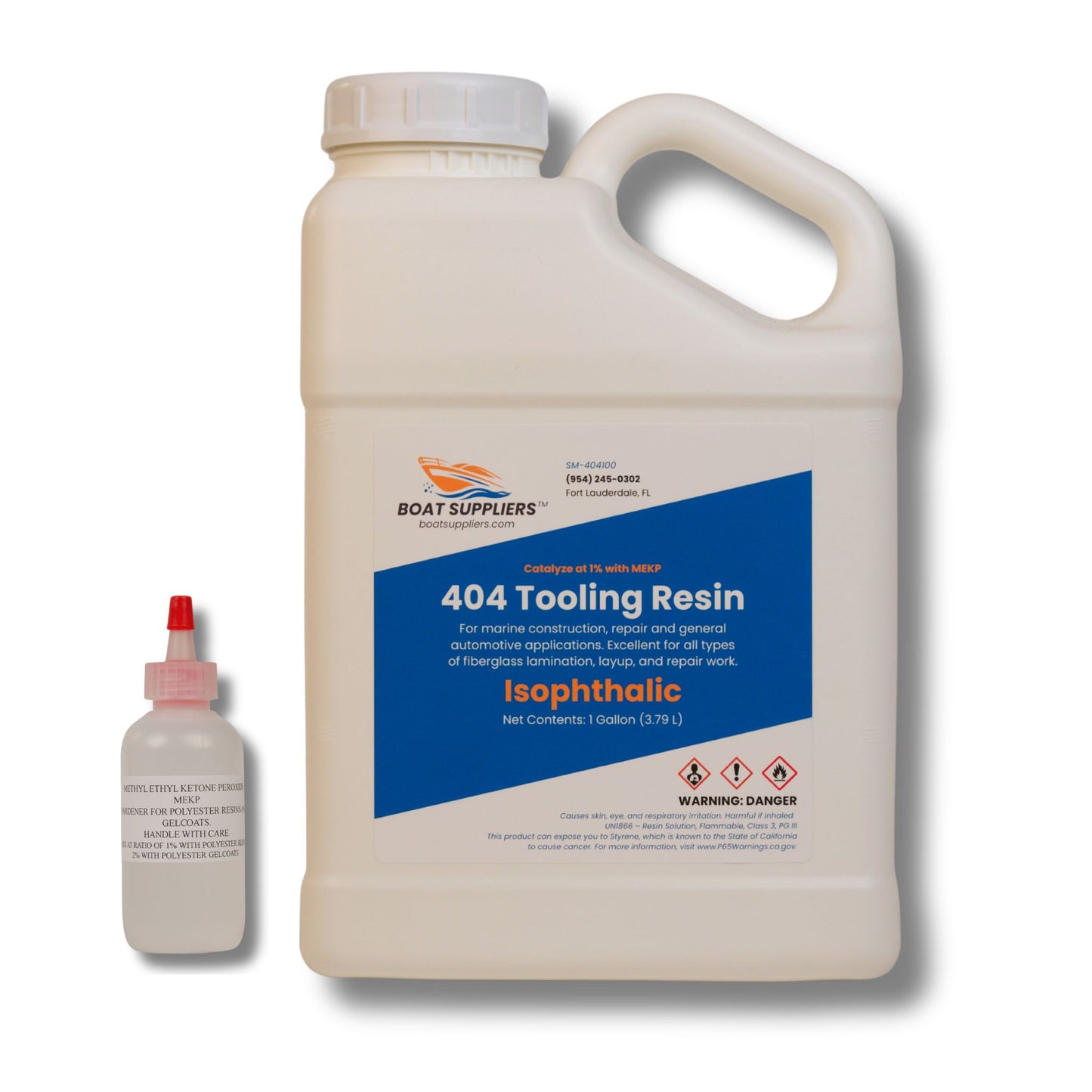
Isophthalic resin for mold building. Compared to a standard orthophthalic layup resin it shrinks less, holds up hotter and resists chemical attack better, which is exactly what a mold needs if it is going to hold shape through a production run instead of moving on you after ten parts.
- Catalyze at 1.25% MEKP, about 1.6 oz (47 cc) per gallon, included
- Viscosity 325 to 525 cps, thixotropic so it holds on a vertical mold face
- Gel time 20 to 24 minutes at 1.25% MEKP
- Heat distortion temperature 223 F (106 C), the highest of our polyesters
- Tensile strength 7,300 psi on a post-cured sample
- Unwaxed, so laminate layers bond without sanding between
- Sizes: quart, gallon and 5 gallon; drums available by quote
Back an orange tooling gelcoat with 404 and mat, and let each stage cure before you build thickness. Rushing the laminate is what puts print-through in a brand new mold.
Specifications
Includes
Features
Technical Specifications
Mix MEKP 1.25% (≈1 oz/gal) - includedWorks with Fiberglass cloth, CSM, woven roving, 1708/1208 biaxial - not for carbon/Kevlar structural work
Resin TypeIsophthalic polyester - tooling & laminating (unwaxed)
Mix RatioMEKP 1.25% (≈1 oz/gal) - included
Viscosity325-525 cps (Brookfield), thixotropic
Pot LifeGel time 20-24 min @ 1.25% MEKP
Wax ContentUnwaxed - add surfacing wax to the final coat to sand/polish
CatalystMEKP included; more in a cold shop, less in heat, within 1 to 2%
Max Service TempHDT 223°F (106°C) - highest of our polyesters
Tensile Strength7,300 psi (post-cured spec sample)
Works With (Fabrics)Fiberglass cloth, CSM, woven roving, 1708/1208 biaxial - not for carbon/Kevlar structural work
Works With (Fillers)All BS fillers - fumed silica, glass bubbles, Q-Cells, microballoons, milled fiber, chopped strand, cotton flock
Apply OverPolyester/VE laminate, bare fiberglass, wood - never over epoxy
Best ForMolds & tooling, high-heat, low-shrink laminates
Compare Resins
| Product |  Isophthalic Polyester Tooling Resin with HardenerYou're viewingfrom $32.95 Isophthalic Polyester Tooling Resin with HardenerYou're viewingfrom $32.95
|  Marine-Grade Polyester Layup Resin with Hardenerfrom $34.95 Marine-Grade Polyester Layup Resin with Hardenerfrom $34.95
|  General Purpose Polyester Resin with Hardenerfrom $59.95 General Purpose Polyester Resin with Hardenerfrom $59.95
| 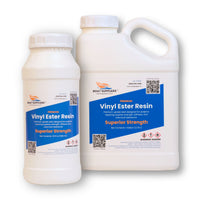 Premium Vinyl Ester Resin with Hardenerfrom $39.95 Premium Vinyl Ester Resin with Hardenerfrom $39.95
|
|---|---|---|---|---|
| Type | Isophthalic polyester - tooling & laminating (unwaxed) | Polyester - standard marine laminating (unwaxed) | Polyester - general purpose, non-structural (unwaxed) | Vinyl ester - premium strength & chemical resistance (unwaxed) |
| Mix Ratio | MEKP 1.25% (≈1 oz/gal) - included | MEKP ~1.25% (≈1 oz/gal) - included | MEKP ~1 oz/gal - included | MEKP ~1 oz/gal - included; increase below 75°F |
| Viscosity | 325-525 cps (Brookfield), thixotropic | — | — | — |
| Pot Life | Gel time 20-24 min @ 1.25% MEKP | 15-20 min @ 80°F | 15-20 min @ 80°F | — |
| Wax | Unwaxed - add surfacing wax to the final coat to sand/polish | Unwaxed (laminating) - add surfacing wax to the final coat to sand/polish | Unwaxed (laminating) - add surfacing wax to the final coat to sand/polish | Unwaxed (laminating) - add surfacing wax to the final coat to sand/polish |
| Max Temp | HDT 223°F (106°C) - highest of our polyesters | — | — | — |
| Fabrics | Fiberglass cloth, CSM, woven roving, 1708/1208 biaxial - not for carbon/Kevlar structural work | Fiberglass cloth, CSM, woven roving, 1708/1208 biaxial - not for carbon/Kevlar structural work | Fiberglass cloth, CSM, woven roving, 1708/1208 biaxial - not for carbon/Kevlar structural work | Fiberglass cloth, CSM, woven roving, 1708/1208 biaxial - not for carbon/Kevlar structural work |
| Best For | Molds & tooling, high-heat, low-shrink laminates | Marine construction & structural repair | Budget repairs & small projects - not for structural work | Fuel tanks, chemical exposure, blister-resistant hulls |
| View | View | View |
What’s the difference between epoxy and polyester resin?
What is polyester resin used for in marine applications?
How long does polyester resin take to cure?
How much MEKP do I add to polyester resin?
What's the difference between laminating resin and finishing resin?
Can I tint polyester resin?
Can I use polyester resin on EPS foam?
Does epoxy or polyester resin expire?
Blog posts

28 September 2026
Epoxy Calculator: How Much Resin Your Layup A...
28 September 2026
Epoxy Calculator: How Much Resin Your Layup A...

26 September 2026
Polyester Gelcoat: Waxed vs Unwaxed, Tooling ...
26 September 2026
Polyester Gelcoat: Waxed vs Unwaxed, Tooling ...

25 September 2026
Fiberglass Kayak Build and Repair: Layup Sche...
25 September 2026