How to Mix Polyester Resin: Complete Beginner's Guide for Perfect Results

04 April 2026
Learning how to mix polyester resin properly is crucial for any successful fiberglass project, whether you're repairing a boat hull, building a custom mold, or creating composite parts. Getting the mixture right ensures proper curing, optimal strength, and professional-looking results. In this comprehensive guide, we'll walk you through everything you need to know about mixing polyester resin like a pro.
Quick reference: how to mix polyester resin, MEKP by temperature
| Shop temperature | MEKP dose | 8 oz resin | 1 quart resin | 1 gallon resin |
|---|---|---|---|---|
| 60°F and below | 2% | 4.7 cc | 19 cc | 76 cc |
| 65°F | 1.8% | 4.3 cc | 17 cc | 68 cc |
| 70°F | 1.55% | 3.7 cc | 15 cc | 59 cc |
| 77°F (standard) | 1.25% | 3.0 cc | 12 cc | 47 cc |
| 80°F | 1.2% | 2.8 cc | 11 cc | 45 cc |
| 85°F | 1.1% | 2.6 cc | 10 cc | 42 cc |
| 90°F and above | 1% | 2.4 cc | 9.5 cc | 38 cc |
Percent by volume for laminating resin; never go below 1% or above 2%, and gelcoat runs higher, about 2% at 77°F.
Products used in this guide
-


Marine-Grade Polyester Layup Resin with Hardener
Regular price From $34.95 USDSale price From $34.95 USD Regular priceUnit price $1.09 per floz -
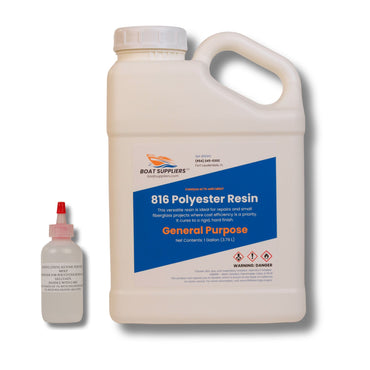
General Purpose Polyester Resin with Hardener
Regular price From $59.95 USDSale price From $59.95 USD Regular priceUnit price $0.47 per floz -


MEKP Hardener
Regular price From $4.95 USDSale price From $4.95 USD Regular priceUnit price per -
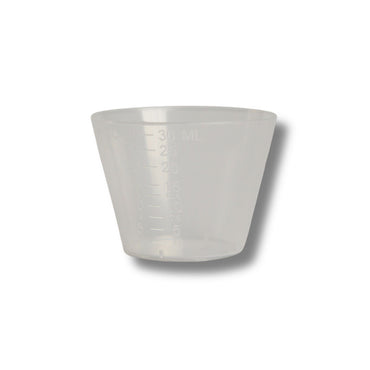
Graduated Plastic Mixing Cups - Polypropylene
Regular price From $9.95 USDSale price From $9.95 USD Regular priceUnit price per


Understanding Polyester Resin Basics
Polyester resin is a thermosetting polymer that cures through a chemical reaction when mixed with a catalyst, typically MEKP (Methyl Ethyl Ketone Peroxide). The resin remains liquid until the catalyst is added, which initiates the curing process. Understanding this fundamental chemistry is the first step in mastering the mixing process.
There are several types of polyester resins available for different applications. For general repairs and small projects, the General Purpose Polyester Resin with Hardener offers excellent value and ease of use. For more demanding marine applications, the Marine-Grade Polyester Layup Resin with Hardener provides superior strength and durability.
Essential Tools and Materials for Mixing Polyester Resin
Before you begin mixing, gather these essential items:
- Clean mixing containers (disposable cups work well)
- Accurate measuring tools or graduated containers
- Wooden stir sticks or disposable mixing paddles
- MEKP catalyst (hardener)
- Protective equipment (gloves, safety glasses, respirator)
- Well-ventilated workspace
Having the right setup is crucial for safety and success. Always work in a well-ventilated area, as polyester resin releases styrene vapors during mixing and curing.
The Critical Polyester Resin Catalyst Ratio
The polyester resin catalyst ratio is perhaps the most important aspect of mixing. Too little catalyst results in incomplete curing or extremely long cure times, while too much catalyst can cause the resin to cure too quickly, potentially generating dangerous heat buildup.
The standard mixing ratio is typically 1-2% catalyst by volume, but this can vary based on temperature and desired working time:
- Cool conditions (60-70°F): Use 1.5-2% catalyst
- Room temperature (70-75°F): Use 1-1.5% catalyst
- Warm conditions (75-85°F): Use 1-1.25% catalyst
For precision mixing, many professionals prefer working with products like the Isophthalic Polyester Tooling Resin, which offers consistent performance and predictable curing characteristics.
MEKP Catalyst Mixing Guidelines
When working with MEKP catalyst mixing, remember these safety tips:
- Never add more than 2% catalyst under any circumstances
- Always add catalyst to resin, never resin to catalyst
- Mix thoroughly but avoid whipping air into the mixture
- Use within the working time specified by the manufacturer
Step-by-Step Mixing Process
Follow these steps for perfect results every time:
Step 1: Prepare Your Workspace
Set up in a well-ventilated area with all materials within reach. Ensure your work surface is clean and level. Temperature should be between 65-75°F for optimal results.
Step 2: Measure the Resin
Pour the required amount of polyester resin into your mixing container. For small repairs, you might only need a few ounces, while larger projects may require quarts. The Clear Polyester Surfboard Resin - Silmar 249 is excellent for projects where clarity and UV resistance are important.
Step 3: Calculate Catalyst Amount
Based on your resin volume and working conditions, calculate the precise amount of catalyst needed. For example, if you're using 100ml of resin at room temperature, you'll need approximately 1-1.5ml of catalyst.
Step 4: Add Catalyst
Slowly add the measured catalyst to the resin while stirring gently. Avoid creating bubbles or vortexes in the mixture.
Step 5: Mix Thoroughly
Stir the mixture for 30-60 seconds, ensuring complete incorporation of the catalyst. The mixture should be uniform in color with no streaks.
Understanding Polyester Resin Curing Time
Polyester resin curing time varies significantly based on several factors:
- Catalyst percentage: More catalyst = faster cure
- Temperature: Higher temperatures accelerate curing
- Resin type: Different formulations have varying cure rates
- Mass effect: Larger quantities generate heat and cure faster
Typical curing stages include:
- Gel time: 8-20 minutes (mixture begins to thicken)
- Tack-free time: 30-60 minutes (surface no longer sticky)
- Full cure: 24-48 hours (maximum strength achieved)
For projects requiring extended working time, consider the Hi-Bond Polyester Resin W/ Hardener, which offers excellent workability and strong bond strength.
Common Mixing Mistakes to Avoid
Even experienced builders can make mistakes when mixing polyester resin. Here are the most common errors and how to avoid them:
Incorrect Catalyst Ratios
Using too much or too little catalyst is the most frequent mistake. Always measure carefully and adjust for temperature conditions. Keep detailed notes of what works in your specific environment.
Inadequate Mixing
Incomplete mixing leads to soft spots or areas that never fully cure. Ensure thorough incorporation of all components while avoiding air entrapment.
Working Past Pot Life
Once mixed, polyester resin has a limited working time. Plan your application carefully and only mix what you can use within the gel time.
Temperature and Environmental Considerations
Environmental factors significantly impact both mixing and curing. Cold temperatures slow the cure rate and may require additional catalyst, while hot conditions accelerate the process and reduce working time.
Humidity also plays a role – high humidity can interfere with proper curing, especially for surface layers. When possible, maintain consistent temperature and moderate humidity levels throughout the curing process.
Safety Precautions When Mixing Polyester Resin
Safety should always be your top priority when working with polyester resins:
- Wear nitrile gloves to prevent skin contact
- Use safety glasses to protect your eyes
- Ensure adequate ventilation to avoid inhaling vapors
- Keep fire extinguisher nearby – resin is flammable
- Never smoke or use open flames in the work area
- Store catalyst separately from resin in a cool, dry place
Troubleshooting Common Issues
If your mixed resin isn't performing as expected, here are some solutions:
- Resin won't cure: Usually insufficient catalyst or old materials
- Too fast curing: Reduce catalyst percentage or work in cooler conditions
- Soft or tacky surface: Often due to inhibition from air exposure
- Cracking or brittleness: May indicate too much catalyst or temperature shock
Conclusion
Mastering how to mix polyester resin opens up countless possibilities for boat repairs, custom projects, and professional-quality composite work. By understanding the proper catalyst ratios, curing times, and safety procedures, you'll achieve consistent, professional results every time. Remember to always prioritize safety, measure accurately, and practice with small batches before tackling major projects. Whether you're using general-purpose resins for quick repairs or specialized formulations for demanding applications, proper mixing technique is the foundation of success in composite work.
Frequently asked questions
How much MEKP catalyst do I add to polyester resin?
The standard range is 1 to 2% MEKP by volume, adjusted for temperature. In cool conditions of 60 to 70F use 1.5 to 2%, at room temperature of 70 to 75F use 1 to 1.5%, and in warm conditions of 75 to 85F drop to 1 to 1.25%. Never exceed 2%, since too much catalyst kicks the resin too fast and generates dangerous heat. As an example, 100ml of resin at room temperature needs roughly 1 to 1.5ml of MEKP.
Do I add the catalyst to the resin or the resin to the catalyst?
Always add catalyst to resin, never resin to catalyst. Stir it in gently for 30 to 60 seconds until the mix is uniform in color with no streaks, and avoid whipping air or creating a vortex. Mix only what you can lay down within the gel time, which runs about 8 to 20 minutes. Keep the MEKP stored separately from the resin in a cool, dry place when you are done.
How long does polyester resin take to cure?
Cure runs in stages. Gel time, when the mix starts to thicken, is about 8 to 20 minutes. The surface goes tack-free in roughly 30 to 60 minutes. Full cure, where the laminate reaches maximum strength, takes 24 to 48 hours. More catalyst, higher temperature, and larger mass all speed it up, while cold conditions slow it down and may call for slightly more catalyst.
Why is my polyester resin still tacky after it should have cured?
A soft or tacky surface is usually air inhibition, where styrene at the exposed layer never fully kicks, common on the top coat. If the whole batch will not cure, the cause is typically too little catalyst or old, expired materials. Too much catalyst or a temperature shock swings the other way and shows up as cracking or brittleness. Measure carefully, keep the shop between 65 and 75F, and watch humidity, since high humidity can interfere with surface cure.
Which polyester resin should I pick for my project?
Match the resin to the job. For general repairs and small projects, a general purpose polyester is easy to use and good value. For demanding marine layups, a marine-grade layup resin gives better strength and durability. Tooling work calls for a 404 isophthalic for predictable, consistent curing, and clear or surfboard jobs needing UV resistance and clarity suit a Silmar 249-type resin. All of these cure with MEKP, not a hardener.
Shop the materials in this guide
- marine polyester layup resin.
- general purpose polyester resin.
- MEKP hardener, the catalyst polyester needs.
- all polyester resins.
Prev post

Table Top Epoxy vs Marine Epoxy: How to Choose the Right System for Your Project
Updated on 04 April 2026
Next post

Table Top Epoxy: How to Pour a Perfect Crystal-Clear Finish Every Time
Updated on 03 April 2026