

SKU:FG-ROV2450
Regular price
$22.39 USD
Sale price
$22.39 USD
Regular price
$19.44 USD
Unit price
$22.39
per
yd
Shipping calculated at checkout.
98 in stock
Couldn't load pickup availability
Earn 22 Boat Points Learn More
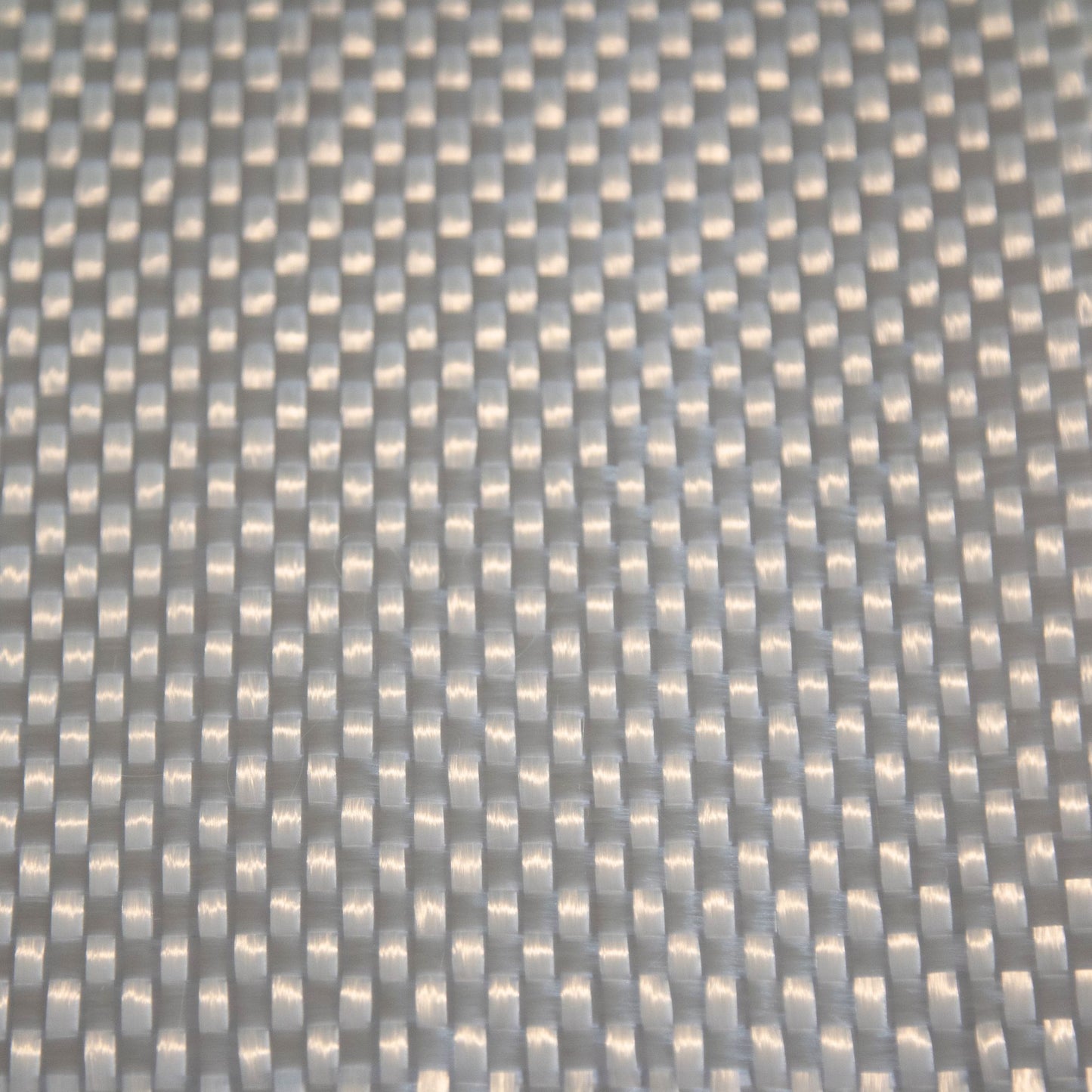
Woven roving is coarse, heavy fabric woven from untwisted glass bundles, and at 24 oz per square yard this is the most bulk you can put down in a single ply. It is the traditional hull-bottom and transom-core fabric: alternate it with chopped strand mat and you build a thick laminate fast, with the mat filling the coarse weave and tying the plies together.
- Where it goes: hull bottoms, transom cores, heavy structural repairs, mold backing laminates.
- Run it between mat layers. Roving does not bond well roving-to-roving; the mat is what makes the stack work.
- Resin demand: roughly 1:1 resin to glass by weight, about 2.79 oz per square foot.
- Thread count: about 5 by 4, 0/90 woven orientation.
- Width: 50 in, cut from 1 yard up to a full roll.
The coarse weave traps air. Roll it hard and expect to work resin up through it rather than down into it.
Specifications
Technical Specifications
E-GlassWoven RovingWorks with Epoxy, Polyester, Vinyl Ester
MaterialE-Glass
Weight24 oz/yd²
Weave / ConstructionWoven Roving
Fiber Orientation0°/90° (woven)
Available Widths50"
Full Roll Lengthapprox. 52 yd
Thread Count~5 × 4
Resin-to-Reinforcement Ratio~1:1 by weight
Compatible ResinsEpoxy, Polyester, Vinyl Ester
Best ForHeavy bulk build between mat layers
Compare Fabrics
| Product |  24oz Woven RovingYou're viewingfrom $22.39 24oz Woven RovingYou're viewingfrom $22.39
|  18oz Fiberglass E Clothfrom $27.45 18oz Fiberglass E Clothfrom $27.45
|  40oz Fiberglass E Clothfrom $47.95 40oz Fiberglass E Clothfrom $47.95
|  18oz Woven Rovingfrom $19.44 18oz Woven Rovingfrom $19.44
|
|---|---|---|---|---|
| Material | E-Glass | E-Glass | E-Glass | E-Glass |
| Style | — | Style 7544 | — | — |
| Weight | 24 oz/yd² | 18 oz/yd² | 40 oz/yd² | 18 oz/yd² |
| Weave | Woven Roving | Plain weave (2-end cloth) | Double plain weave | Woven Roving |
| Orientation | 0°/90° (woven) | 0°/90° (woven) | 0°/90° (woven) | 0°/90° (woven) |
| Thickness | — | 0.0207" | 0.0386" | — |
| Widths | 50" | 50" | 38" | 50" |
| Full Roll | approx. 52 yd | 125 yd | approx. 70 yd | 125 yd |
| Thread Count | ~5 × 4 | — | — | ~5 × 4 |
| Resin Ratio | ~1:1 by weight | ~1:1 by weight | ~1:1 by weight | ~1:1 by weight |
| Resins | Epoxy, Polyester, Vinyl Ester | Epoxy, Polyester, Vinyl Ester | Epoxy, Polyester, Vinyl Ester | Epoxy, Polyester, Vinyl Ester |
| Best For | Heavy bulk build between mat layers | Heavy structural reinforcement | Very heavy structural build | Fast bulk build between mat layers |
| View | View | View |
What To Expect When You Order Fabric Rolls
Is woven roving flexible?
Can I layer woven roving with other fiberglass materials?
What resin should I use with woven roving?
What is woven roving fiberglass?
How is woven roving different from fiberglass cloth?
How do I cut woven roving?
Blog posts

28 September 2026
Epoxy Calculator: How Much Resin Your Layup A...
28 September 2026
Epoxy Calculator: How Much Resin Your Layup A...

26 September 2026
Polyester Gelcoat: Waxed vs Unwaxed, Tooling ...
26 September 2026
Polyester Gelcoat: Waxed vs Unwaxed, Tooling ...

25 September 2026
Fiberglass Kayak Build and Repair: Layup Sche...
25 September 2026