
40oz Fiberglass E Cloth
40 oz, nominal0°/90°38" wide


40 oz, nominal0°/90°38" wide
SKU:FG-C4038-01
In stock
9.5 sq ft
Couldn't load pickup availability
Key Specs
- Weight
- 40 oz/yd² (1356 g/m²), nominal
- Fiber Angle
- 0°/90° (woven)
- Widths
- 38 in
- Compatible Resins
- Epoxy, Polyester, Vinyl Ester
- Ships
- Folded under 10 yd, rolled from 10 yd
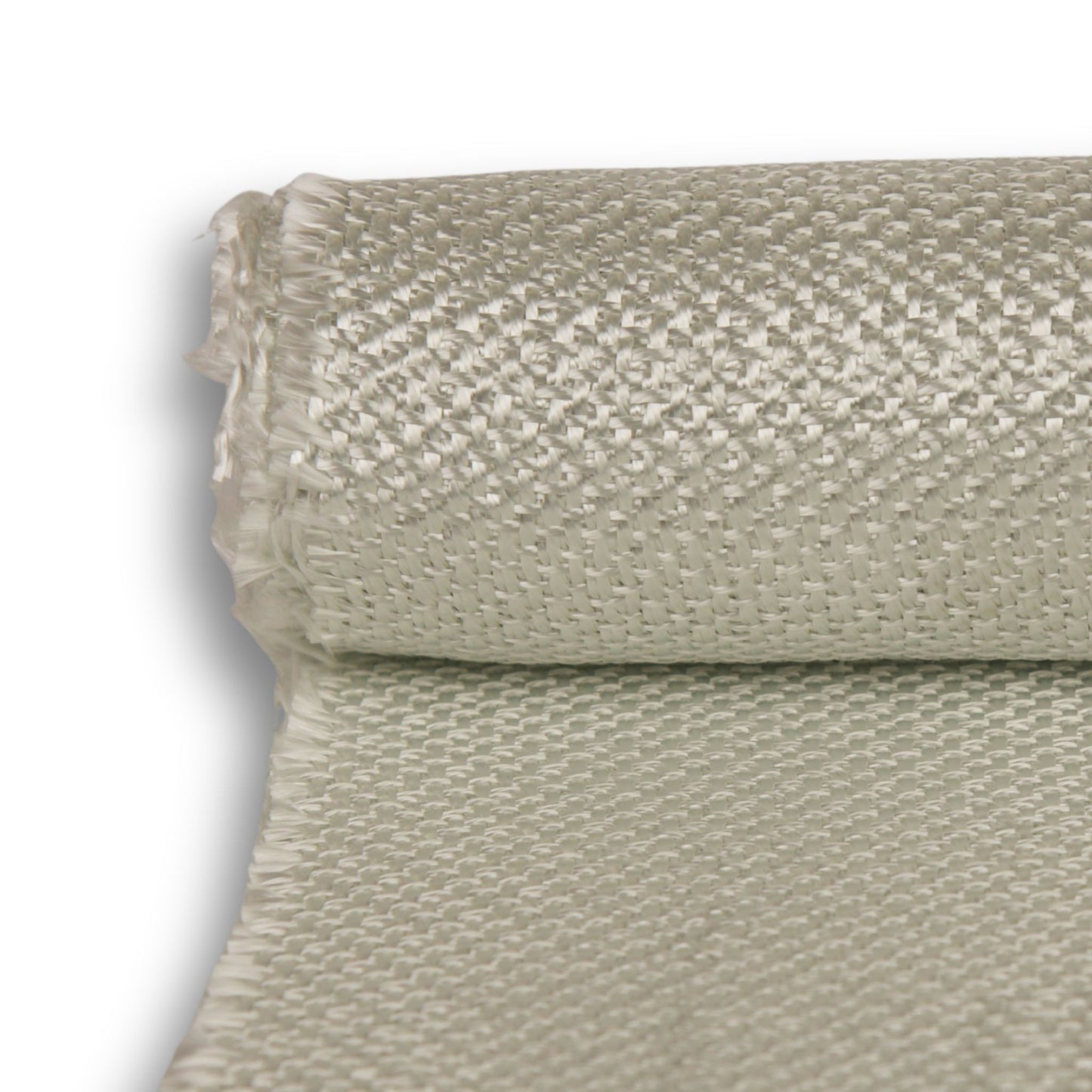
40 oz/yd² double plain weave, 38 in wide. This is the heaviest woven glass we cut, and one ply lays down serious thickness in a single pass. It belongs on structural build-ups where ply count and labor matter more than finish: keel and skeg reinforcement, heavy hull sections, tank and tooling work.
- 40 oz/yd² E-glass, double plain weave, 0/90
- 38 in wide
- Roughly 1:1 resin to glass by weight, so plan resin volume before you start
- Runs in epoxy, polyester or vinyl ester
- Cut to 1, 3 and 10 yards, or take the full roll (50 yards)
Heavy cloth needs pressure and time. Roll it hard, work air out from the center, and expect a longer wet-out than you get from 10 oz. Do not stack a second ply until the first one is properly consolidated.
Specifications


Technical Specifications
Compare Fabrics
| Product |  40oz Fiberglass E ClothYou're viewingfrom $47.95 |  18oz Fiberglass E Clothfrom $27.45 |  18oz Woven Rovingfrom $19.44 |  24oz Woven Rovingfrom $22.39 |
|---|---|---|---|---|
| Material | E-Glass | E-Glass | E-Glass | E-Glass |
| Style | — | Style 7544 | — | — |
| Weight | 40 oz/yd² (1356 g/m²), nominal | approx. 17.8 oz/yd² (604 g/m²), sold as 18 oz | 18 oz/yd² (610 g/m²) | 24 oz/yd² (814 g/m²) |
| Weave | Double plain weave | Plain weave (2-end cloth) | Woven Roving | Woven Roving |
| Orientation | 0°/90° (woven) | 0°/90° (woven) | 0°/90° (woven) | 0°/90° (woven) |
| Thickness | 0.0386" | 0.0207" | 0.030" | 0.040" |
| Widths | 38" | 50" | 50" | 50" |
| Full Roll | 50 yd | 125 yd | 125 yd | approx. 52 yd |
| Thread Count | — | 28 × 14 | ~5 × 4 | ~5 × 4 |
| Tensile Strength | — | ≥750 / ≥750 lb/in (warp / fill, greige) | — | — |
| Resin Ratio | ~1:1 by weight | ~1:1 by weight | ~1:1 by weight | ~1:1 by weight |
| Resins | Epoxy, Polyester, Vinyl Ester | Epoxy, Polyester, Vinyl Ester | Epoxy, Polyester, Vinyl Ester | Epoxy, Polyester, Vinyl Ester |
| Best For | Very heavy structural build | Heavy structural reinforcement | Fast bulk build between mat layers | Heavy bulk build between mat layers |
| View | View | View |
What To Expect When You Order Fabric Rolls

Can epoxy resin be used with fiberglass cloth?
Can fiberglass cloth be used on wood or metal?
What does the weight (oz) of fiberglass cloth mean?
How do I cut fiberglass cloth?
What is fiberglass cloth used for?
What’s the difference between fiberglass cloth and chopped mat?
Guides for this product

What Oz Fiberglass Cloth to Use: A Comprehens...
What Oz Fiberglass Cloth to Use: A Comprehens...

Best Fiberglass Cloth for Boat Floors
Best Fiberglass Cloth for Boat Floors

How to Fiberglass Over Plywood: Complete Step...
How to Fiberglass Over Plywood: Complete Step...
Calculators and charts:Fiberglass Laminate Thickness ChartFiberglass Cloth Weight ChartEpoxy & Resin Calculator