
19.7oz 12K 2x2 Twill Weave Carbon Fiber - 1st Quality
2×2 Twill50″ Wide


19.7oz 12K 2x2 Twill Weave Carbon Fiber - 1st Quality
19.7oz 12K 2x2 Twill Weave Carbon Fiber - 1st Quality
Share
2×2 Twill50″ Wide
SKU:CF-19750-01
Regular price
$70.95 USD
Sale price
$70.95 USD
Regular price
USD
Unit price
$70.95
per
yd
Shipping calculated at checkout.
In stock
12.5 sq ft·needs about 1.1 qt of resin
Couldn't load pickup availability
Shipping At CheckoutSee your shipping cost before you pay.
30-Day ReturnsEligible unused items. Free return label.
In stock
Key Specs
- Weight
- 19.7 oz/yd² (668 g/m²)
- Fiber Angle
- 0°/90° (woven)
- Widths
- 50 in
- Compatible Resins
- Epoxy, Polyester, Vinyl Ester
- Resin Needed
- About 1.1 qt per yard, waste included
- Ships
- Rolled, never folded
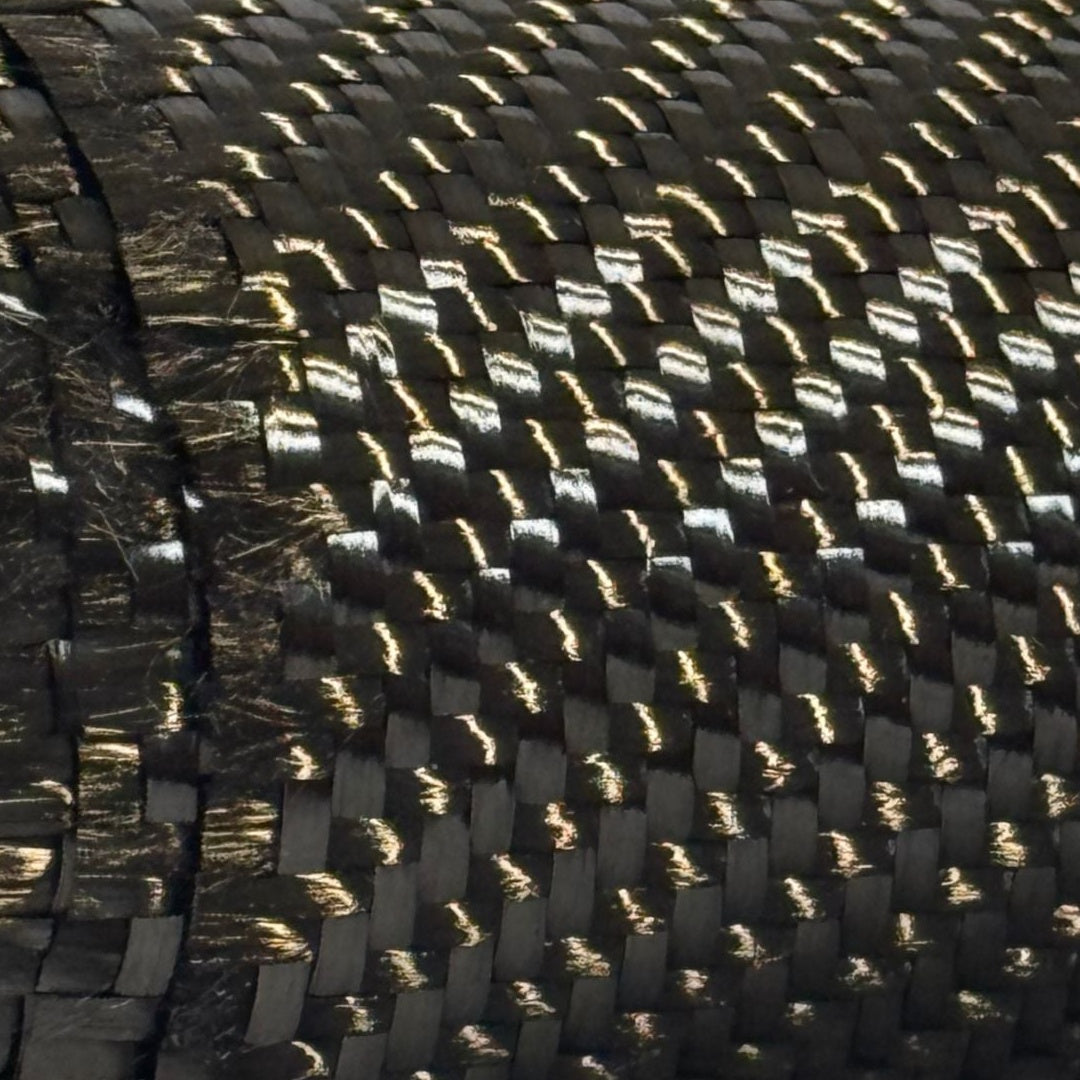
This is the heaviest carbon fabric we stock: 19.7 oz per square yard on 12K tow in a 2x2 twill, 50 in wide, 1st quality. The large tow puts a lot of fiber down per ply, so you hit laminate thickness in fewer layers and burn less resin doing it. It is a structural fabric, not a show-surface fabric, and the big weave is harder to form than a light twill.
- Where it goes: flat and gently curved structural parts, thick plate layups, high-strength panels.
- Build rate: 0.030 in per ply, roughly three times what a 5.7 oz twill lays down.
- Resin demand: roughly 50:50 resin to fiber by weight, about 2.29 oz per square foot.
- Forming: the 12K tow resists tight radii; plan on flat or large-radius tooling.
- Resin compatibility: epoxy, polyester and vinyl ester.
Cut it with sharp shears or a rotary cutter and tape both sides of the cut line. Heavy tow frays hard.


Technical Specifications
Carbon Fiber2x2 TwillWorks with Epoxy, Polyester, Vinyl Ester
MaterialCarbon Fiber
Weight19.7 oz/yd² (668 g/m²)
Weave / Construction2x2 Twill
Fiber Orientation0°/90° (woven)
Tow Size12K
Thickness0.030"
Available Widths50"
Full Roll Length100 yd
Resin-to-Reinforcement Ratio~50:50 by weight (≈1:1)
Compatible ResinsEpoxy, Polyester, Vinyl Ester
Best ForHeavy carbon build, large 12K weave
Compare Fabrics
| Product |  19.7oz 12K 2x2 Twill Weave Carbon Fiber - 1st QualityYou're viewingfrom $70.95 |  5.7oz 3K Plain Weave Carbon Fiber Fabric - 1st Qualityfrom $56.95 |  5.7oz 3K 2x2 Twill Weave Carbon Fiber Fabric - 1st Qualityfrom $56.95 |  6oz 3K 2x2 Twill Carbon Fiber Fabric – Stabilizedfrom $60.95 |
|---|---|---|---|---|
| Material | Carbon Fiber | Carbon Fiber | Carbon Fiber | Carbon Fiber |
| Weight | 19.7 oz/yd² (668 g/m²) | 5.7 oz/yd² (193 g/m²) | 5.7 oz/yd² (193 g/m²) | 6 oz/yd² (203 g/m²) |
| Weave | 2x2 Twill | Plain weave | 2x2 Twill | 2x2 Twill (veil-stabilized) |
| Orientation | 0°/90° (woven) | 0°/90° (woven) | 0°/90° (woven) | 0°/90° (woven) |
| Tow Size | 12K | 3K | 3K | 3K |
| Thickness | 0.030" | 0.010" | 0.010" | 0.011" |
| Widths | 50" | 50" | 50", 60" | 50" |
| Full Roll | 100 yd | 100 yd | 100 yd | 100 yd |
| Thread Count | — | 12.5 × 12.5 | 12 × 12 | 13 × 13 |
| Resin Ratio | ~50:50 by weight (≈1:1) | ~50:50 by weight (≈1:1) | ~50:50 by weight (≈1:1) | ~50:50 by weight (≈1:1) |
| Resins | Epoxy, Polyester, Vinyl Ester | Epoxy, Polyester, Vinyl Ester | Epoxy, Polyester, Vinyl Ester | Epoxy, Polyester, Vinyl Ester |
| Best For | Heavy carbon build, large 12K weave | Cosmetic and structural carbon skins (uniform look) | Cosmetic carbon parts (classic 2x2 twill look) | Easy-handling cosmetic twill (veil-stabilized) |
| View | View | View |
What To Expect When You Order Fabric Rolls
What is carbon fiber?
Can carbon fiber be used with epoxy resin?
How Strong Is Carbon Fiber Fabric?
How is carbon fiber different from fiberglass?
Guides for this product

07 April 2026
Carbon Fiber Weave Patterns Explained: Plain,...
07 April 2026
Carbon Fiber Weave Patterns Explained: Plain,...

06 July 2025
What's the Difference Between 2x2 Twill and P...
06 July 2025
What's the Difference Between 2x2 Twill and P...

05 April 2026
How to Make Carbon Fiber Parts from Scratch: ...
05 April 2026
How to Make Carbon Fiber Parts from Scratch: ...
Calculators and charts:Fiberglass Laminate Thickness ChartEpoxy & Resin Calculator