Carbon Fiber Weave Patterns Explained: Plain, Twill, and Unidirectional for Marine Use

07 April 2026
Spec plain weave carbon for flat structural reinforcement, 2x2 twill for anything curved or on display, and unidirectional wherever the load runs in one known direction. The weave is a structural decision before it is a cosmetic one: it sets how stiff the laminate gets, how the cloth drapes over compound curves, how efficiently the fibers carry load, and whether the part comes off the mold as a showpiece or a plain structural blank.
Pick the wrong one and you pay for it in wasted material, extra weight, or bridging and voids on a curved tool. Nearly every marine carbon job comes down to those three patterns, so we take them one at a time below, then cover tow size and chopped fiber.
What the Weave Does to the Laminate
Each tow is a bundle of individual filaments, and the weave is simply the way the tows cross each other. At every crossing a tow bends over or under its neighbor. That bend is crimp. A kinked fiber carries tension worse than a straight one, so crimp costs you raw strength, yet the same crimp is what gives woven cloth its damage tolerance and makes it easy to handle. The three patterns trade crimp off against drape, finish quality and strength in each direction in different ways, and choosing a weave means choosing that trade.
The other number on the spec sheet is tow size, listed as 3K, 6K or 12K. It counts filaments: 3,000 in each 3K tow, 6,000 in a 6K tow, 12,000 in a 12K tow. Big tows weave into coarser, heavier cloth that is the economical way to build structure. Small tows give a tighter, finer face that suits cosmetic parts. Hold onto that while you read the three patterns.
Plain Weave Carbon: Balanced and Stable on Flat Work
In plain weave each warp tow crosses over a single weft tow, ducks under the next, and repeats. Both faces come out identical, so the cloth looks the same either side up, and its properties at 0 degrees and 90 degrees are close to equal.
What Plain Weave Brings to a Layup
- Even strength both ways: stiffness and tensile capacity match in the two fiber directions, a truly balanced biaxial cloth.
- Lots of crimp: more crossings than twill means more undulation. You give up some peak tensile strength and get better damage tolerance and interlaminar shear for it.
- Holds its shape: the tight interlace keeps tows from wandering while you handle and wet out the cloth, a real help on hand layup.
- Happiest when flat: all that crimp limits drape, so it works best on flat panels and gentle curves.
Our 12.3oz plain weave carbon tape in 12K is the heavy structural version of this pattern. Each square yard weighs 12.3 oz, which adds thickness and stiffness in a hurry: you can reinforce a stringer, double up part of a transom, or stiffen a flat panel without piling on ply after ply. The big 12K tows keep it practical and economical on structure where nobody is judging the finish.
Plain Weave Jobs on a Boat
- Stringer doublers in the hull, plus flat structural panels
- Backing plates and hardware mounting reinforcement on flat or nearly flat areas
- Interior structure, where strength counts for more than looks
- A first carbon layup, since stable cloth is easier to manage
2x2 Twill Carbon: Built for Curves and Visible Parts
A 2x2 twill carries each tow over two neighbors and under two, then shifts the pattern one tow over on the next row. That shift draws the diagonal rib most people picture when they hear carbon fiber. The bigger payoff is mechanical: fewer crossings means less crimp, and the cloth drapes far better than plain weave.
Why Twill Wins on Complex Shapes
- Drape: with less crimp the tows can slide a little against one another, so the cloth follows compound curves and tight radii with no bridging or puckering.
- Wet-out: fewer crossings leave open paths for resin into each bundle, which helps on infusion and on hand layup over curved tools.
- Less print-through: the first ply sits smoother, so less of its texture ghosts through to the finished face.
- Looks: the diagonal reads as premium on helm panels, console faces and cowlings.
Helm station faces, center console panels, engine cowls: anything with compound curvature that will be on display calls for the 11oz 6K 2x2 twill carbon fiber. At 11 oz per square yard on a 6K tow, three to five plies make a structural laminate, and each ply still lays down cleanly over tight radii. The 6K tow gives you the familiar diagonal pattern without paying extra for finer 3K cloth. When one part has to carry load and look finished, this is the fabric we point people to.
When Twill Is the Call
- Curved helm stations, instrument surrounds and console panels
- Exterior trim, covers and cowlings that show off the weave under clear coat
- Molded parts with a radius too tight to drape plain weave comfortably
- The outer cosmetic ply over a structural laminate, so the part gets the look while the plies underneath keep their mechanical performance
Unidirectional Carbon: All the Fiber Where the Load Goes
Unidirectional carbon skips interlacing entirely. Every structural fiber lies parallel, running one way, held in line by a light cross binder thread or by resin, which is only there so you can handle the fabric. Crimp is essentially zero, so each filament stays straight and lined up to carry load.
What Uni Does That Woven Cloth Can't
- Top tensile and flexural stiffness along the fibers: with no crimp, the fibers work at their full mechanical potential.
- No wasted material: strength goes exactly where the load path calls for it, and nowhere else.
- Less resin: parallel fibers nest tighter than woven tows, so fiber volume fraction goes up while resin use goes down.
- Lighter parts: a woven or biaxial fabric puts half its fiber in a direction that may carry little load, and uni lets you leave that half out.
The 11oz unidirectional carbon tape (12K) lays every fiber down the length of the tape. With 12K tows at 11 oz per square yard, each ply adds serious stiffness in the main direction. Use it where the load path is obvious: along a stringer, down a boom, or spanwise across a rudder blade. Before you cut anything for a stringer run or beam reinforcement, plug the ply count into the resin calculator to get material and resin targets.
Uni Jobs on a Boat
- Hull stringers and longitudinal beams running the length of the boat
- Mast and boom reinforcement along the main bending axis
- Stiffening a rudder blade or centerboard along its span
- Foam core panels, stiffened against bending with uni cap strips
- Deck beam caps that only bend in a single plane
Keep in mind that uni has essentially no strength across the fibers. In a laminate schedule that is by design, not a defect: you pick up transverse loads with extra plies at 45 or 90 degrees. If designing that schedule is new territory for you, a woven fabric forgives more.
Tow Size: 3K, 6K or 12K
Tow size sits right next to weave pattern on the spec sheet, and it changes how the part looks and how it performs.
- 3K: each tow holds 3,000 filaments. The weave comes out fine and tight with a smooth cosmetic face, the right choice for thin laminates and visible surfaces, and it costs more per yard.
- 6K: with 6,000 filaments in every tow, it strikes a balance between appearance and structural efficiency. Our 11oz twill and most mid-weight fabrics are 6K. It is the practical pick for structural parts that also show.
- 12K: at 12,000 filaments a tow, the cloth is coarser and stacks up thickness and stiffness fast. Both of our structural tapes are 12K: the 11oz uni and the 12.3oz plain weave. Use it on structure where you want the most material in every ply and appearance comes second.
Chopped Carbon: Not a Weave at All
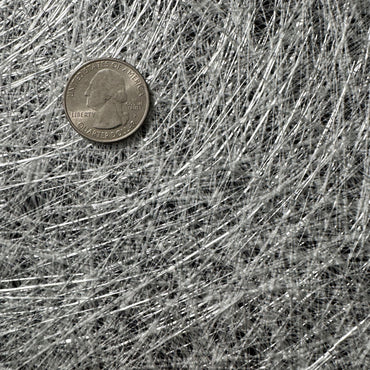
Chopped carbon fiber is short, loose fiber that you stir into resin instead of laying up as cloth. It answers a different set of jobs, but builders ask where it fits often enough that it belongs here.
1/4" chopped carbon fiber goes into epoxy or polyester to stiffen castings, repairs and filler compounds, with no cloth to cut or wet out. 1/2" chopped carbon fiber brings longer strands and a stiffer cured casting. Reach for chopped carbon on forged-style parts, in paste compounds around hardware bedding, or to put structure into a poured or molded section where cloth won't go. Neither one stands in for woven or uni fabric in a primary structural laminate, but a shop that works in carbon regularly will use both.
Weave Picker by Job
| Job Type | Best Pattern | Product |
|---|---|---|
| Structural reinforcement, flat or near-flat | Plain weave | 12.3oz Plain Weave Tape (12K) |
| Curved cosmetic panels, console, cowl | 2x2 Twill | 11oz 6K 2x2 Twill Weave Carbon Fiber |
| Stringer, beam, mast, rudder reinforcement | Unidirectional | 11oz Unidirectional Carbon Fiber Tape (12K) |
| Castings, forged parts, resin filler reinforcement | Chopped fiber | 1/4" Chopped Carbon Fiber or 1/2" Chopped Carbon Fiber |
Carbon Weave Questions
What is the difference between plain weave and 2x2 twill carbon fiber?
Plain weave runs a simple over-one, under-one pattern that looks identical on both sides. It has more crimp, which lowers ultimate tensile strength slightly but improves damage tolerance and keeps the fabric stable during handling. 2x2 twill passes each tow over two and under two, creating the diagonal look, with less crimp, better drape around compound curves, and easier wet-out. If the part is flat and structural, use plain. If it curves or will be visible, use twill.
Which carbon fiber weave drapes best around tight curves like a console or helm?
2x2 twill. The lower crimp lets tows shift slightly relative to each other so the fabric conforms to compound curves and tight radii without bridging or puckering. Plain weave resists that shifting and will wrinkle on anything tighter than a gentle curve. Unidirectional will not drape at all around a compound curve and is not intended to.
When should I use unidirectional carbon fiber tape instead of a woven fabric?
Use unidirectional any time loads run in a clearly defined single direction and you want to put maximum fiber in that direction without wasting material at 90 degrees. On a boat that means hull stringers, mast and boom reinforcement along the bending axis, rudder blade span-wise stiffening, and deck beam cap strips. For multi-directional loads, a woven fabric is easier to design with and more forgiving if your load assumptions are slightly off.
What does 3K vs 6K vs 12K mean on carbon fiber?
It is the number of individual filaments in each tow. 3K gives a finer, tighter weave suited to thin cosmetic laminates at higher cost. 6K is a practical mid-range for parts that need to look good and perform structurally. 12K builds thickness and stiffness quickly at lower cost per yard, making it the working builder's choice for structural tape and unidirectional reinforcement.
What is chopped carbon fiber used for?
Chopped carbon is loose short fiber added to resin rather than laid up as cloth. Use it to reinforce castings, build forged-style carbon parts, stiffen paste compounds, or add structural content to a poured or molded section where cloth layup is not practical. It is not a substitute for woven or unidirectional fabric in primary structural laminates.
Carbon for Each Job
- 12.3oz plain weave carbon tape, 12K: reinforcing flat and nearly flat structure
- 11oz 6K 2x2 twill carbon fiber: console faces, curved show panels and molds with compound curves
- 11oz unidirectional carbon tape, 12K: one-axis stiffness for beams, spars and stringers
- 1/4" chopped carbon fiber: stiffer resin castings and forged-style parts, no cloth layup needed
- 1/2" chopped carbon fiber: longer strands for castings and repairs when the mix has to be as stiff as possible
Prev post

Chopped Strand Mat Layers: How Many Do You Actually Need?
Updated on 07 April 2026
Next post

How to Sand Fiberglass to a Mirror-Smooth Finish: Complete Guide to Sanding Fiberglass Like a Pro
Updated on 07 April 2026