


1708 Biaxial Fiberglass & Resin Kit - 5 Yards 50" Wide + Gallon Resin
1708 Biaxial Fiberglass & Resin Kit - 5 Yards 50" Wide + Gallon Resin
Share
SKU:SK-17085P
20 in stock
Couldn't load pickup availability
Five yards of 1708 biaxial, the workhorse structural fabric of every boatyard, with a full gallon of laminating resin and mixing supplies. 1708 is 17oz of +/-45 stitched biaxial glass with a 3/4oz mat backing: one fabric that builds thickness, strength, and a bondable surface in a single pass. Transoms, stringers, hull sides, repairs that need real strength.
What is in the kit:
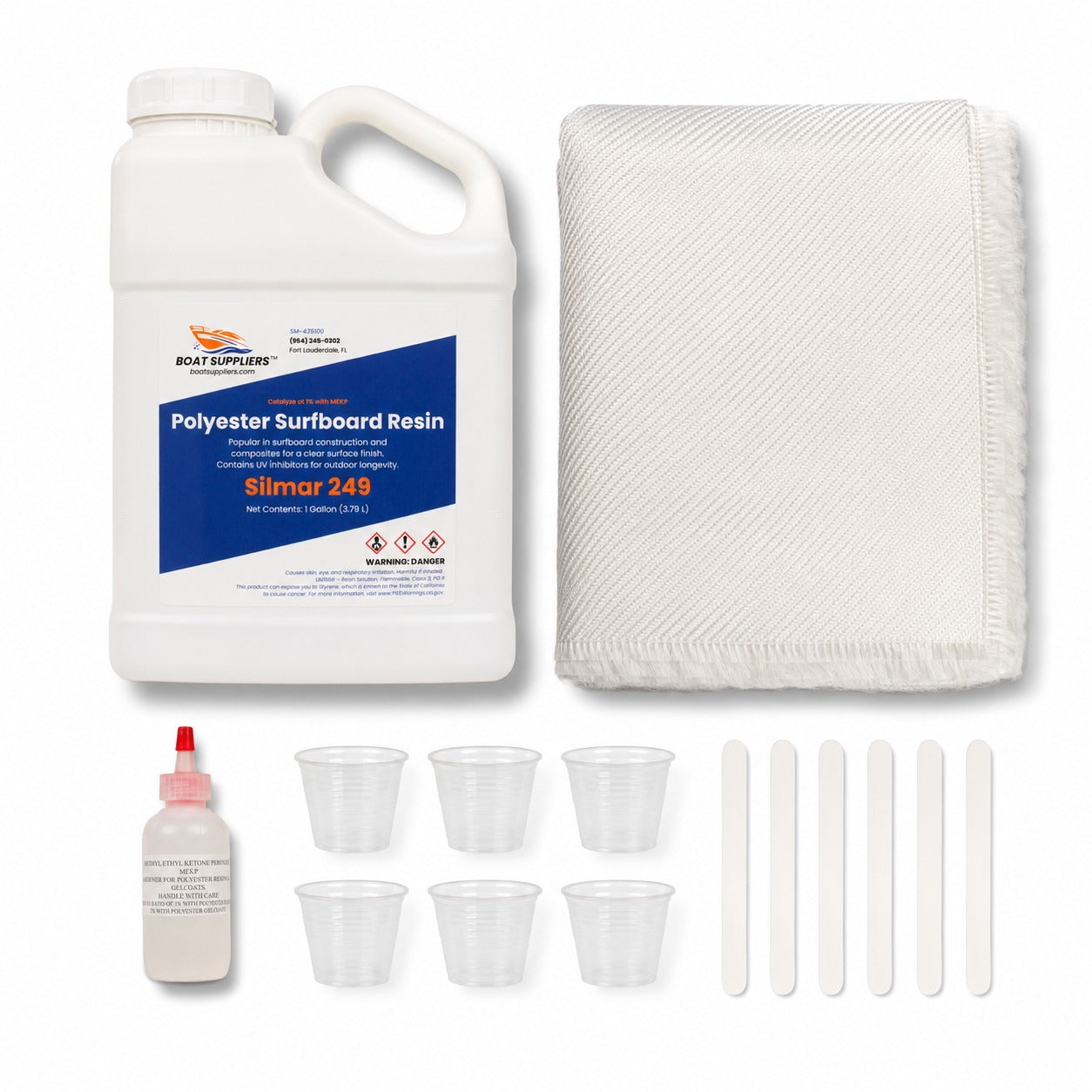
- 5 yards x 50" of 1708 biaxial fiberglass, folded pack
- 1 Gallon of laminating resin, your choice of clear Silmar 249 polyester or premium vinyl ester for below-waterline and chemical resistance
- MEKP hardener
- 6 mixing cups and mixing sticks
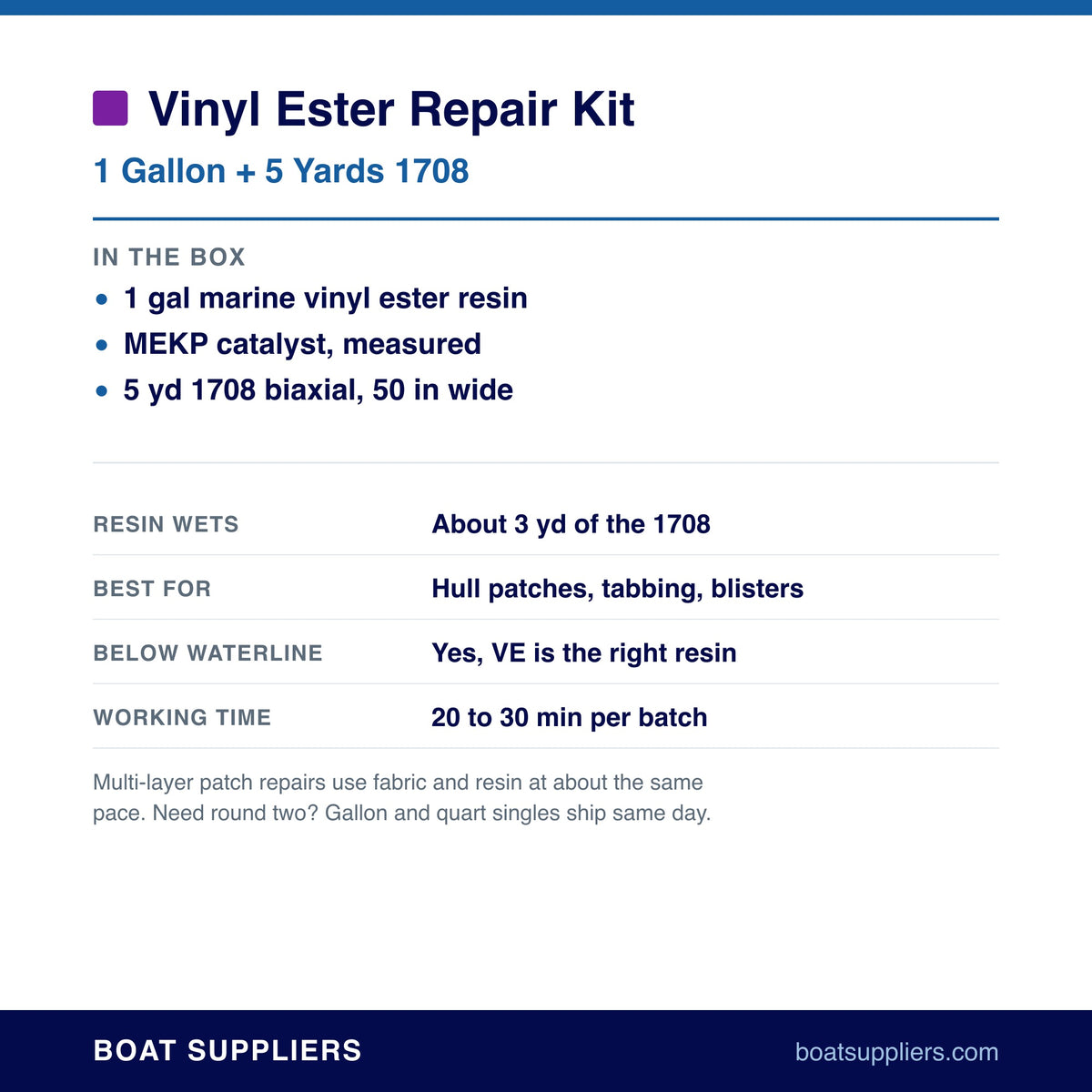
Coverage: 1708 is a heavy fabric; a gallon wets out roughly 4 of the 5 yards in one layer. For full multi-layer structural work, plan a second gallon.
Prefer epoxy? See our 1708 Fiberglass Repair Kit with 1.33 gallons of marine epoxy and tools.
Specifications


How to use this kit
Five yards of 1708 biaxial with a gallon of laminating resin. Every kit ships with this same sheet printed and in the box.
What is in the kit
- 5 yd 1708 biaxial fiberglass, 50 in wide, folded pack17 oz +/-45 stitched biaxial with 3/4 oz mat backing
- 1 gal Laminating resinclear Silmar 249 polyester, or vinyl ester if you chose it
- 1 MEKP hardenercatalyzes the full gallon
- 6 / 6 Mixing cups, mixing sticks
You supply: a laminating roller, chip brushes, gloves, acetone, a respirator, a grinder for prep, and fumed silica if you plan to fair.
Mixing MEKP (1.5 percent)
| 8 oz mix | 3.6 mL MEKP (about 3/4 tsp) |
| 16 oz mix | 7 mL MEKP (about 1.5 tsp) |
| 32 oz mix | 14 mL MEKP (about 3 tsp) |
That is 1.5 percent for 65 to 85 F. Above 85 F drop to 1 percent; at 60 to 65 F go to 2 percent. Quick field rule: 10 drops per ounce.
Never mix more than you can lay up in 15 minutes. A full gallon catalyzed at once will boil in the bucket.
The job, start to finish
Prep the surface
New mold: wax and release it thoroughly. Old laminate: grind off all gloss, gelcoat and contamination back to solid glass, then wipe with acetone. Polyester is a poor secondary bond, so every bit of its grip comes from clean, freshly ground surface.
Cut everything dry
Cut every piece of fabric to size and stage it in the order it goes down, smallest first for a repair, largest first for a mold. Cut all of it before you mix a drop, because once resin is catalyzed you have about 15 minutes and no time to be looking for scissors.
Mix small batches
Catalyze only what you can lay up in 15 minutes, using the chart at left. Stir thoroughly but slowly to avoid whipping in air, and scrape the sides of the cup. Pour it out of the mixing cup as soon as it is mixed: resin left in a deep cup heats up and kicks early.
Wet out
Brush resin on, lay mat or 1708 in, and stipple straight down with the brush until it turns translucent. Do not brush sideways: that drags the fibers out of place. Work wet on wet through your stack rather than waiting for cures between plies.
Roll out the air
Run a laminating roller firmly in both directions over every layer until the white flecks disappear. White means dry glass or trapped air, and both are weak spots you cannot fix after cure. This one step is the difference between a laminate that hits its numbers and one that does not.
If something goes wrong
Laminate feels tacky
Normal. Clear laminating resin stays tacky on top so the next layer bonds to it.
White flecks in the layup
Dry glass or trapped air. Roll or stipple it out while wet; after cure it must be ground out.
The bucket got hot fast
Too big a batch or too much MEKP. Pour it out thin outdoors and mix smaller.
Nothing hardened
Too little MEKP, or under 60 F. Warm the space and remix.
Resin ran off vertical
Thicken it with fumed silica, or laminate in smaller sections.
Laminating resin has no wax and no UV protection: it stays tacky on top by design and needs gelcoat or paint over it. More resin by the gallon at boatsuppliers.com.
Blog posts

Best Fiberglass Cutting Tools for Clean Edges...
Best Fiberglass Cutting Tools for Clean Edges...

Kevlar Fabric for Boats: A Fabricator's Guide...
Kevlar Fabric for Boats: A Fabricator's Guide...
