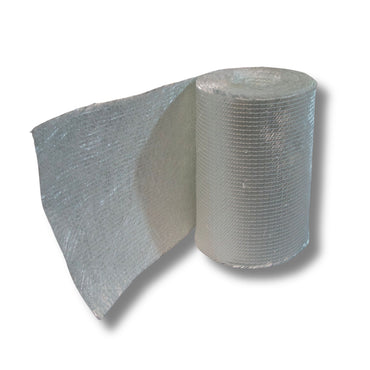
1708 Biaxial Fiberglass Explained: What the Numbers Mean

23 February 2026
If you've shopped for fiberglass reinforcement, you've probably seen "1708" or "1208" biaxial listed. These numbers aren't random—they tell you exactly what the fabric is made of and how strong it is.
Here's what you need to know about 1708 biaxial fiberglass and when to use it.
The fabrics in this guide
Everything below is in stock and ships from our Florida shop.


What Does "1708" Mean?
The numbers decode like this:
- 17 = 17 oz/sq yd of biaxial fiberglass (the structural layer)
- 08 = 0.75 oz/sq ft chopped strand mat backing
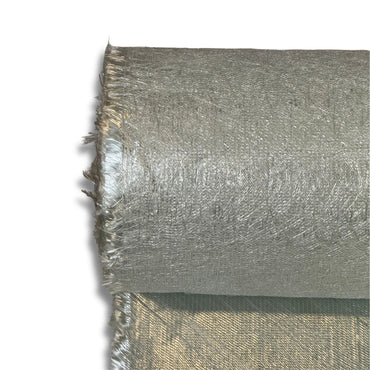
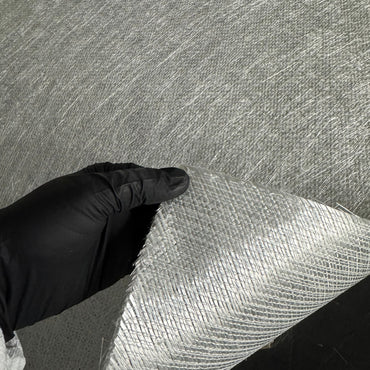
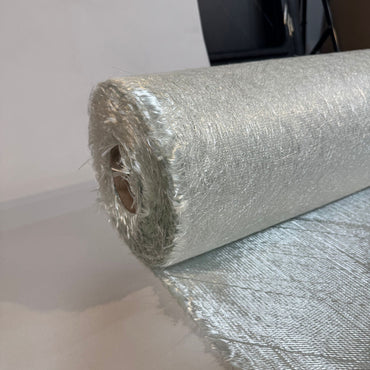
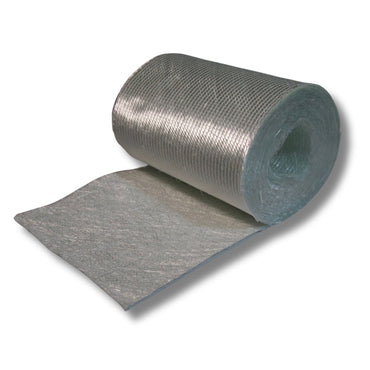
So 1708 biaxial is a 17 oz biaxial fabric with a 3/4 oz CSM backing stitched to one side. The total weight is about 24 oz/sq yd.
Similarly, 1208 biaxial is 12 oz biaxial + 0.75 oz CSM backing.
We also carry a 17oz biaxial fabric without the stitched in mat as well as the 0.75oz chopped strand mat on its own.
Why the CSM Backing?
The chopped strand mat backing serves two purposes:
- Better adhesion with polyester/vinyl ester resins – The CSM binder dissolves in styrene, creating a strong chemical bond to existing fiberglass surfaces
- Easier wet-out – The mat helps hold resin against the biaxial fibers during layup
If you're using epoxy resin, the CSM backing won't bond as well (styrene-soluble binder doesn't dissolve in epoxy). For epoxy projects, you may want plain biaxial without the CSM backing, or use it CSM-side-up away from the epoxy bond line.
Biaxial Fiber Orientation
The "biaxial" part refers to fibers running in two directions at ±45° angles. Unlike woven cloth (0°/90°), biaxial orientation provides:
- Superior shear strength – Resists twisting forces
- Better impact resistance – Fibers deflect energy at angles
- More uniform strength – No weak bias direction like woven fabrics
This makes biaxial ideal for structural applications where loads come from multiple directions.
1708 vs 1208: Which to Choose?
| Property | 1708 Biaxial | 1208 Biaxial |
|---|---|---|
| Biaxial Weight | 17 oz/sq yd | 12 oz/sq yd |
| CSM Backing | 0.75 oz | 0.75 oz |
| Total Weight | about 24 oz/sq yd | ~19.5 oz/sq yd |
| Thickness | Thicker | Thinner |
| Conformability | Moderate | Better |
| Strength | Higher | Moderate |
| Best For | Primary structure | Secondary reinforcement |
Use 1708 When:
- Rebuilding transoms
- Reinforcing stringers
- Major hull repairs
- New construction requiring maximum strength
Use 1208 When:
- Secondary bonding and tabbing
- Lighter reinforcement needs
- Tighter curves (conforms easier)
- Weight is a concern
How to Work with 1708 Biaxial
Cutting
Use sharp scissors or a rotary cutter. The stitching can fray, so cut cleanly and handle carefully. Some fabricators tape the edges before cutting to prevent unraveling.
Layup Tips
- CSM side down for polyester/vinyl ester – The mat bonds to the surface
- CSM side up for epoxy – Keep the mat away from the primary bond
- Wet out thoroughly – Work resin through both the biaxial and CSM layers
- Use a bubble roller – Essential for removing air from the thick laminate
- Don't over-saturate – Target about 1.5:1 resin to glass by weight (the mat soaks up more)
Resin Compatibility
- Polyester – Excellent (CSM backing bonds well)
- Vinyl Ester – Excellent (CSM backing bonds well)
- Epoxy – Good with caveats (orient CSM away from bond line)
Common Applications
Boat Transom Rebuilds
1708 is the go-to material for transom repairs. A typical layup might include 3-5 layers of 1708 biaxial to rebuild the structural core, providing exceptional strength to handle outboard motor loads.
Stringer Reinforcement
When tabbing in new stringers or reinforcing existing ones, 1708 biaxial creates strong, durable bonds. The ±45° fiber orientation handles the flex and vibration that stringers experience.
Hull Repairs
For structural hull damage, 1708 biaxial provides the strength needed to restore integrity. When planning how many layers of fiberglass you'll need, consider that fewer layers of 1708 can often replace more layers of lighter materials.
1708 vs Woven Cloth vs CSM
How does 1708 biaxial compare to other reinforcements?
| Property | 1708 Biaxial | 10 oz Woven Cloth | 1.5 oz CSM |
|---|---|---|---|
| Strength | Highest | High | Moderate |
| Conformability | Moderate | Good | Excellent |
| Best Use | Structural repairs | Hull skins, visible surfaces | Building thickness, tight curves |

Printable version: download the Fiberglass Laminate Thickness Chart (PDF). More free shop charts: composites reference charts.
For more on choosing between materials, see our guide on Biaxial vs Chopped Strand Mat.
How Much Do You Need?
Calculate your material needs:
- Measure the area (length × width)
- Add 10-15% for overlap and waste
- Multiply by number of layers
Resin estimate: Plan for about 1.5:1 resin to glass by weight (the mat soaks up more). One layer of 1708 over 10 sq ft needs about 2.5 lbs of mixed resin (about 3 lbs with 20% waste).
Shop 1708 Biaxial Fiberglass
Ready for your project? We stock 1708 and 1208 biaxial in various roll sizes:
Questions about your layup schedule? Contact us – we help customers plan structural repairs every day.
Frequently asked questions
What do the numbers in 1708 fiberglass actually mean?
The 17 is the biaxial layer, 17 oz/sq yd of glass stitched at plus and minus 45 degrees. The 08 is the chopped strand mat backing, 0.75 oz/sq ft. So 1708 biaxial is a 17 oz biaxial with a 3/4 oz CSM backer stitched to one side, totaling about 24 oz/sq yd. By the same logic, 1208 is a 12 oz biaxial with the same 0.75 oz mat.
Which side of 1708 should face down for a transom repair?
With polyester or vinyl ester, run the CSM side down against the surface. The mat binder is styrene-soluble, so it dissolves into the resin and bonds chemically to the existing laminate. With epoxy it is the opposite: orient the CSM side up, away from the primary bond line, because the styrene-soluble binder does not dissolve in epoxy and will not bond as well.
How many layers of 1708 do I need to rebuild a transom?
A typical transom rebuild runs 3 to 5 layers of 1708 biaxial to restore the structural core and carry outboard motor loads. The exact count depends on the original laminate thickness you are matching. Because 1708 builds fast, fewer layers of it can often replace more layers of lighter cloth. If you are unsure of the schedule, measure the original glass thickness and match it.
Should I pick 1708 or 1208 for my repair?
Use 1708 for primary structure: transoms, stringers, major hull repairs, and new construction needing maximum strength. Use 1208, the lighter 12 oz biaxial with the same mat, for secondary bonding and tabbing, lighter reinforcement, tighter curves where conformability matters, and anywhere weight is a concern. The 1208 conforms easier; the 1708 is thicker and stronger.
How much resin should I plan per layer of 1708?
Target about a 1.5:1 resin-to-glass ratio by weight, since the mat soaks up more, and do not over-saturate. As a working estimate, one layer of 1708 over 10 sq ft needs about 2.5 lbs of mixed resin, or about 3 lbs with 20% waste. Wet out thoroughly through both the biaxial and the mat, then hit it with a bubble roller, which is essential for driving air out of a laminate this thick.
Shop the materials in this guide
Prev post

Sealing and Protecting Marine Plywood for Long-Term Use
Updated on 23 February 2026
Next post

How to Choose the Right Gelcoat for Your Boat's Finish
Updated on 23 February 2026