
Pro Protective Gear Kit - Respirator, Coverall Suit & Nitrile Gloves


Pro Protective Gear Kit - Respirator, Coverall Suit & Nitrile Gloves
Share
In stock
Couldn't load pickup availability
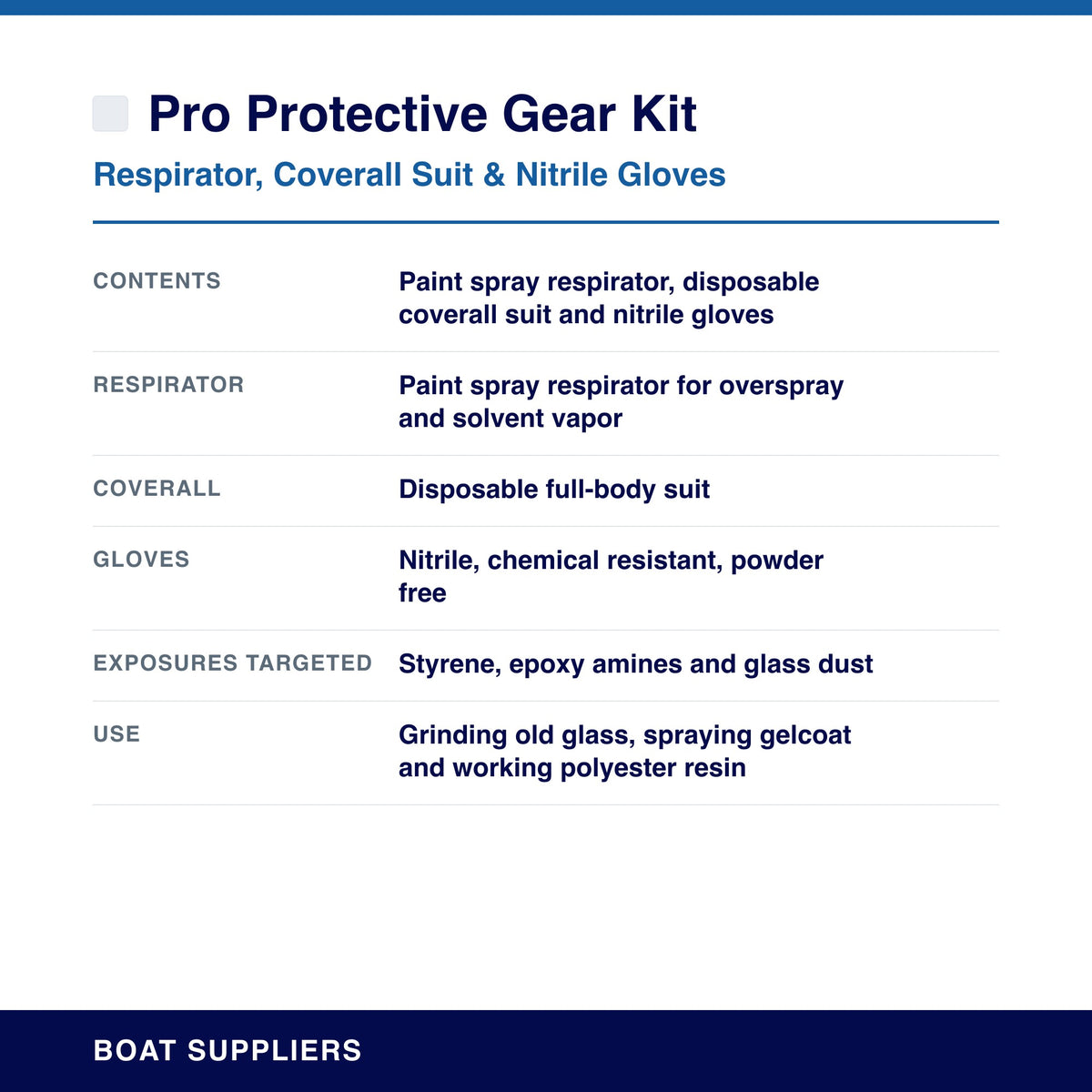
The Pro Protective Gear Kit puts a respirator, nitrile gloves and a disposable coverall suit in one order, covering the three ways composite work gets to you: vapor, dust and skin contact. Pick it up before you grind old glass, spray gelcoat or open a can of polyester resin.
What each piece is for
The 3M paint spray respirator handles overspray and solvent vapor while you spray or lay up. The coverall keeps resin and glass dust off your clothes and skin, and the nitrile gloves stand up to resin, hardener and solvents. As a set they are aimed at styrene, epoxy amines and glass dust.
Fit before you trust it
Check the respirator seal every time it goes on. A respirator that leaks around the edges filters nothing, and facial hair under the seal is enough to break it.
- Respirator: paint spray type, for solvent vapor and overspray
- Disposable full-body coverall suit
- Nitrile gloves, chemical resistant, no powder
- For grinding old glass, spraying gelcoat and working polyester resin
Specifications

What safety gear do I need for fiberglass and resin work?
What gloves protect against epoxy and polyester resin?
Blog posts

How to Post Cure an Epoxy Composite Part: Tem...
How to Post Cure an Epoxy Composite Part: Tem...

Soft Spot Boat Deck Repair: Replace Rotten Co...
Soft Spot Boat Deck Repair: Replace Rotten Co...
