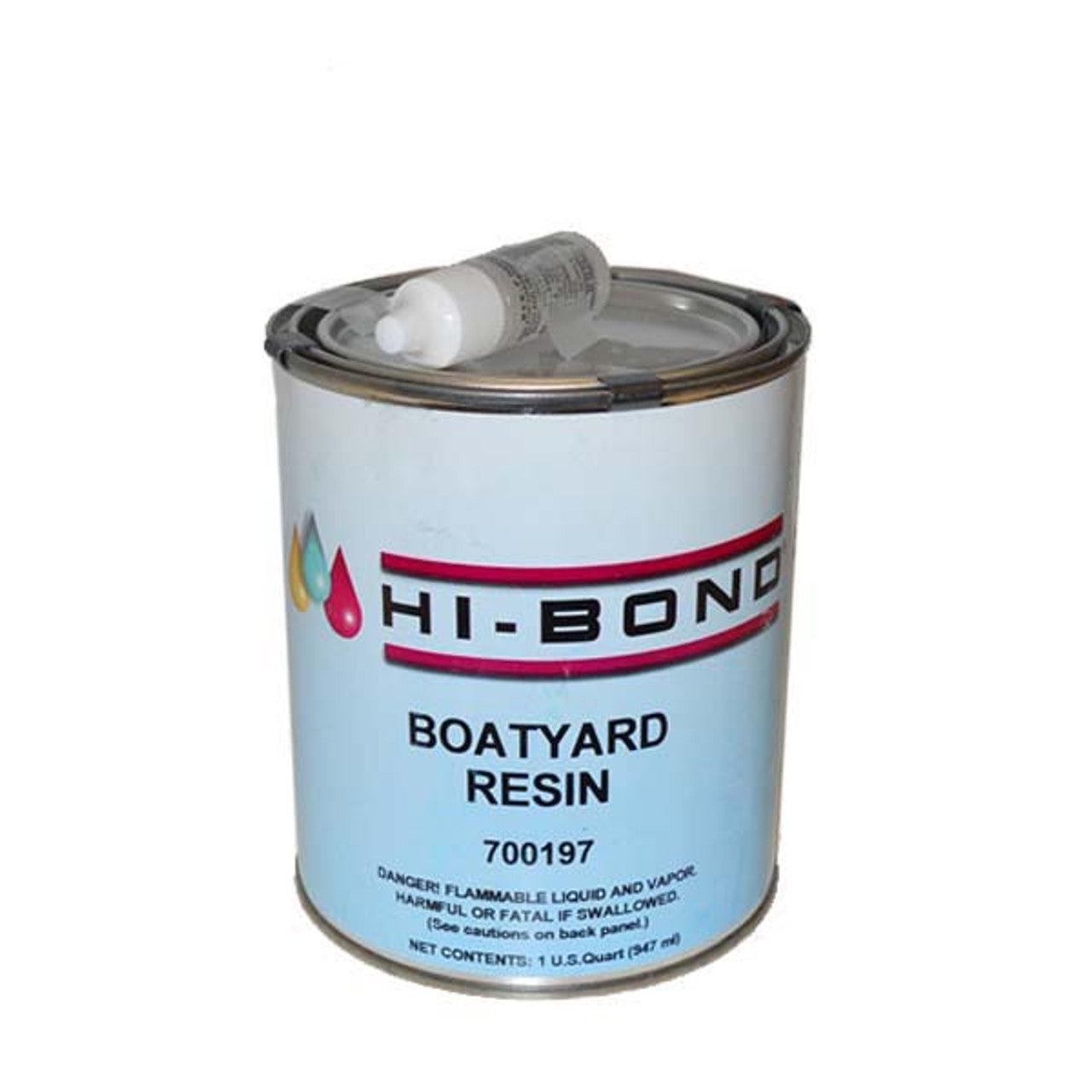
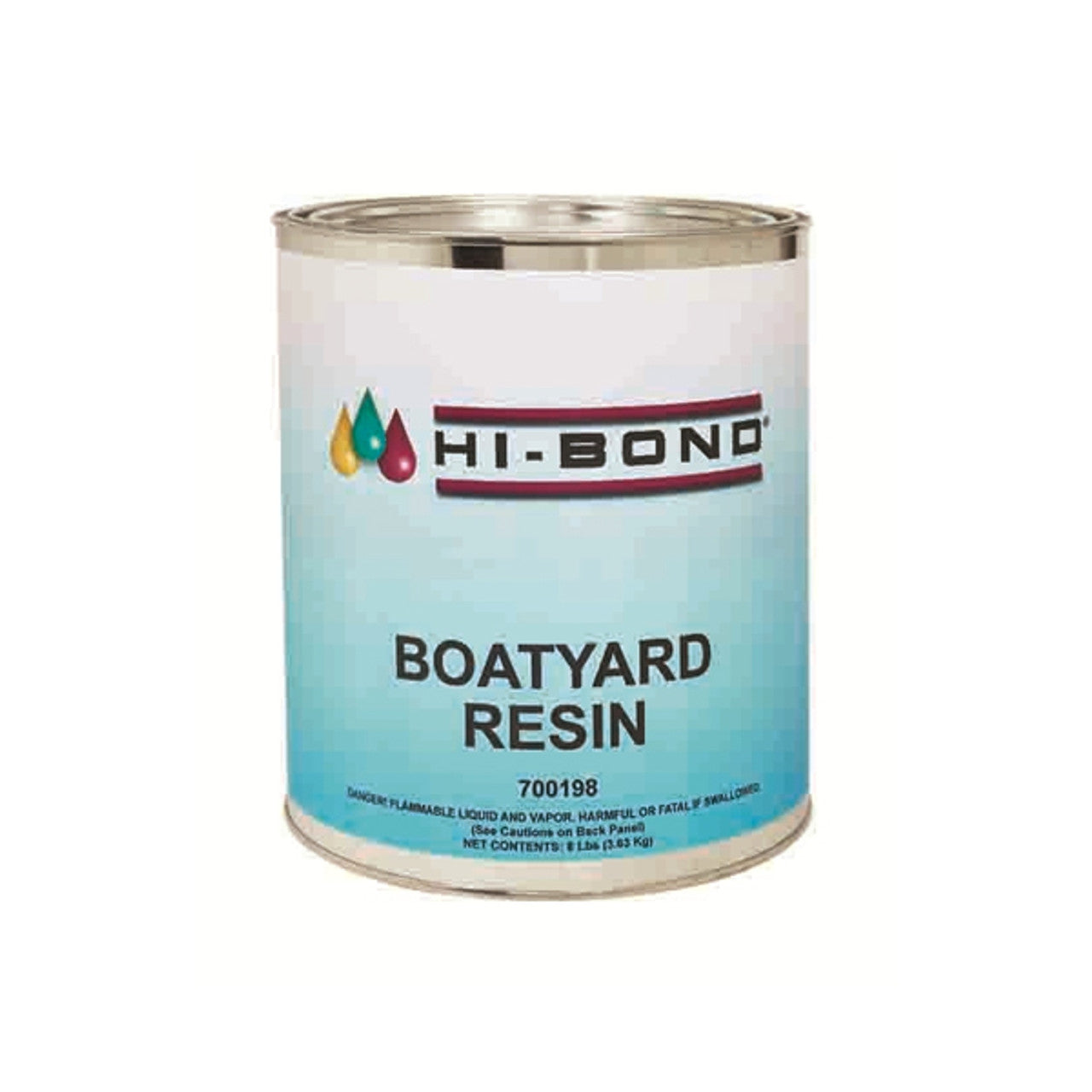
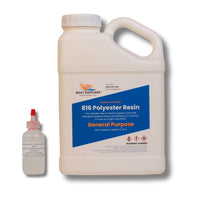
Hi-Bond Polyester Resin W/ Hardener

General purpose
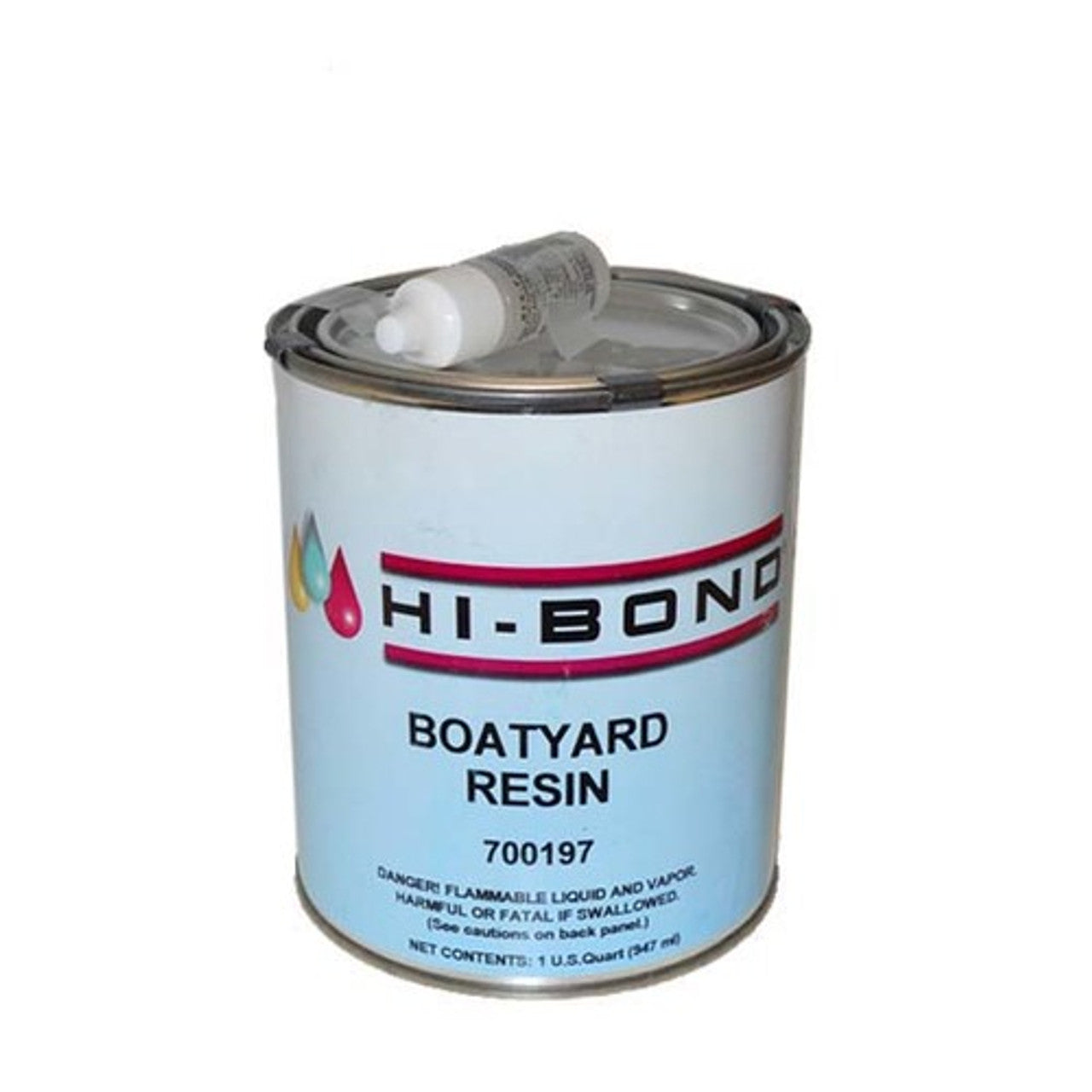
HI-Bond
Hi-Bond Polyester Resin W/ Hardener

Hi-Bond Polyester Resin W/ Hardener

SKU:HIB-700197

Regular price $35.49 USD
Sale price $35.49 USD Regular price USD
Unit price $1.11  per  floz
Sale Sold out
Shipping calculated at checkout.

In stock

Size: Quart

Key Specs

Works With (Fabrics)
Fiberglass cloth, mat, roving, tape
Resin Type
Polyester - general purpose (MEKP hardener included)
Works With (Fillers)$
Polyester - general purpose (MEKP hardener included)

Hi-Bond polyester resin is a general purpose laminating resin for small hull and deck repairs, and it comes with the MEKP catalyst that kicks it. It wets out chopped strand mat, woven cloth, woven roving and tape, and because it is unwaxed, each new ply bonds to the one under it without sanding.

Catalyst dose by shop temperature

MEKP runs 1 to 2 percent by volume: more in a cold shop, less in a hot one. At 75 to 80°F a batch at a typical dose gels in roughly 20 to 30 minutes. Starting points:

  • 60 to 70°F: about 17 cc per quart, 68 cc per gallon
  • 71 to 90°F: about 11 cc per quart, 44 cc per gallon
  • 91°F and up: about 9 cc per quart, 36 cc per gallon

What it goes over

Lay it over polyester or vinyl ester laminate, bare fiberglass or wood, and never over epoxy. Any filler we stock mixes in for fillets and fairing: fumed silica, glass bubbles, Q-cells, microballoons, milled fiber, chopped strand or cotton flock. The air side of an unwaxed coat stays tacky, so stir surfacing wax into the last coat if you plan to sand it. Gelcoat can go on while the laminate is still green, or after a scuff sand once it has fully cured.

  • Pre-promoted general purpose polyester, amber liquid, no wax
  • MEKP catalyst included
  • Quart (part 700197) or gallon (part 700198)

Check what bonds to what in the resin compatibility chart.

  • Chemistry: Pre-promoted unsaturated polyester resin
  • Appearance: Amber liquid
  • Catalyst: MEKP, 1.0–2.0% by volume (temperature dependent)
  • Working time (75–80°F): ~4–7 minutes (batch-size dependent)
  • Gel time (75–80°F): ~20–30 minutes at typical catalyst levels
  • Sand time: ~2–2.5 hours at 75–80°F
  • Full cure: ~6–8 hours at 75–80°F
  • Typical mix guide (MEKP):
    • 60–70°F → ~17 cc per quart / ~68 cc per gallon
    • 71–90°F → ~11 cc per quart / ~44 cc per gallon
    • 91°F+ → ~9 cc per quart / ~36 cc per gallon
  • Specific gravity: ~1.10–1.15
  • Flash point: ~89°F (32°C)
  • VOC (as packaged): ~405 g/L
  • Packaging: Quart, Gallon, 5-Gallon
  • Transport (summary): Flammable liquid; polyester resin kit when sold with MEKP
  • Safety notes: Styrene-containing; use gloves, eye protection, and adequate ventilation

Hi-Bond Polyester Resin w Hardener

  • Marine-grade polyester resin for hand lay-up, repairs, and general fiberglass work.
  • Fast wet-out, low viscosity for efficient laminate build and strong interlaminar bonds.
  • Available in laminating (unwaxed) and finishing (waxed) formulas—pick unwaxed for multi-layer layups, waxed for a tack-free final coat.
  • Quick turnaround: typically sandable in ~2–2.5 hours; full cure ~6–8 hours at 75–80°F.
  • MEKP-catalyzed only with clear, temperature-based dosing guidance on the label.
  • Broad reinforcement compatibility: CSM, woven cloth, roving, and biaxials (e.g., 1208/1708).
  • Gelcoat friendly: can be gelcoated when “green” or after scuff sanding if fully cured.
  • Boat-shop practical: dependable cure in typical yard conditions; designed for fiberglass and properly prepped wood.
  • Amber finish that sands clean and fair.
  • Shelf life ~12 months when stored cool, sealed, and out of sunlight.
View full details

Technical Specifications


Works with Fiberglass cloth, mat, roving, tape
Resin TypePolyester - general purpose (MEKP hardener included)
Works With (Fabrics)Fiberglass cloth, mat, roving, tape
Works With (Fillers)All BS fillers - fumed silica, glass bubbles, Q-Cells, microballoons, milled fiber, chopped strand, cotton flock
Apply OverPolyester/VE laminate, bare fiberglass, wood - never over epoxy
Best ForSmall-area deck & hull repairs

Compare Resins


ProductHi-Bond Polyester Resin W/ HardenerHi-Bond Polyester Resin W/ HardenerYou're viewingfrom $35.49 Marine-Grade Polyester Layup Resin with HardenerMarine-Grade Polyester Layup Resin with Hardenerfrom $34.95 General Purpose Polyester Resin with HardenerGeneral Purpose Polyester Resin with Hardenerfrom $59.95
TypePolyester - general purpose (MEKP hardener included)Polyester - standard marine laminating (unwaxed)Polyester - general purpose, non-structural (unwaxed)
Mix Ratio—MEKP ~1.25% (about 1.6 fl oz/gal) - includedMEKP ~1.25% (about 1.6 fl oz/gal) - included
Pot Life—15-20 min @ 80°F15-20 min @ 80°F
Wax—Unwaxed (laminating) - add surfacing wax to the final coat to sand/polishUnwaxed (laminating) - add surfacing wax to the final coat to sand/polish
FabricsFiberglass cloth, mat, roving, tapeFiberglass cloth, CSM, woven roving, 1708/1208 biaxial - not for carbon/Kevlar structural workFiberglass cloth, CSM, woven roving, 1708/1208 biaxial - not for carbon/Kevlar structural work
Best ForSmall-area deck & hull repairsMarine construction & structural repairBudget repairs & small projects - not for structural work
SelectedViewView
Hi-Bond Polyester Resin W/ Hardener - image 3

Use acetone to wipe off uncured polyester resin (MEK or polyester thinner also work); once it’s cured, removal is strictly mechanical, scrape and sand. For more tips, read the full blog post

CSM, woven cloth, roving, and biaxials (e.g., 1208/1708). Not for SMC/non-polyester plastics. Avoid EPS foam; safe with PVC, PET, PU cores.

Avoid thinning for structural work. If absolutely needed, advanced users may add ≤5% styrene. Do not use acetone to thin.

At 75 to 80°F, Hi-Bond polyester resin gels in roughly 20 to 30 minutes at a typical MEKP dose of about 11 cc per quart (44 cc per gallon). Warmer temperatures and more catalyst speed it up and cold slows it, so use about 17 cc per quart at 60 to 70°F. It is unwaxed, so the air side stays tacky until surfacing wax goes into the last coat for sanding.

Epoxy resin provides better adhesion, moisture resistance, and flexibility compared to polyester resin. While polyester is more economical and widely used in mass production, epoxy is preferred for high-performance applications, repairs, and situations requiring a strong bond.

Polyester resin is widely used for building and repairing fiberglass boats. It is ideal for laminating fiberglass cloth, molding parts, and creating gelcoat finishes. It’s cost-effective and works well for general-purpose repairs.

At the standard 1.25% MEKP dose and about 77°F, polyester resin gels in roughly 15 to 30 minutes and cures hard over several hours. Warmer temperatures, thicker pours and more catalyst shorten that, and cold lengthens it, so adjust the MEKP dose for your shop temperature.

The standard dose is 1.25% MEKP by volume at 77°F, about 12 cc per quart or 47 cc (1.6 fl oz) per gallon. Use more when it is cold and less in heat, but stay between 1% and 2%: below 1% the resin can stay soft, and above 2% it can crack, smoke or kick before you can work it. Measure in cc with a dispenser, not drops.

Laminating (layup) resin stays slightly tacky as it cures so the next layer of glass bonds chemically without sanding. Finishing resin has a wax or surfacing agent that rises to the top, sealing out air so the last coat cures hard and sands clean. Most marine polyester is laminating resin, so add surfacing wax to the final coat when you are ready to sand and finish.

Yes, polyester resin can be tinted using compatible pigments. This is often done to match gelcoat colors or create custom finishes.

No, you should not use polyester resin on EPS foam (expanded polystyrene). Polyester resin contains styrene, a solvent that dissolves EPS foam on contact. This reaction will ruin your foam core and release harmful fumes. If you're working with EPS foam, for example, in surfboard shaping or foam core laminates, you should instead use epoxy resin, which is chemically compatible and safe for EPS.

Yes. Unopened epoxy resin and hardener usually last one to several years stored cool and sealed, though hardener may darken without losing strength. Polyester resin and gelcoat are shorter lived, often three months to a year depending on the product, because the styrene and promoters break down. MEKP also weakens with age, and old catalyst can leave resin undercured, so check the label.