Winter Boat Storage: Indoor, Outdoor, or Shrink Wrap for Gelcoat

22 October 2026
Winter boat storage comes down to four places the boat can sit from November to April, and what each one does to the gelcoat: heated indoor, unheated indoor, outdoor under shrink wrap, or outdoor under a tarp. Gelcoat does not care about cold. It cares about UV, standing water in open cracks, and chafe where a cover touches it. The cheapest option that keeps sun off the surface and water out of the cracks wins, and the repair work happens before the cover goes on, while the hull is still above 60°F (16°C).
The four options, compared for gelcoat
| Storage | UV | Water in cracks | Chafe | Mildew | Gelcoat verdict |
|---|---|---|---|---|---|
| Indoor heated | None | None | None | None | Best; nothing happens to it |
| Indoor unheated | None | None if bilge is dry | None | Low | Nearly as good; fix cracks first anyway |
| Outdoor, shrink wrap | None under white film | Low if wrapped dry and vented | At every strap and frame contact | High without vents | Good when done right, bad when done fast |
| Outdoor, tarp | Partial | High where it pools | Every grommet and edge that flaps | High | Worst option unless framed off the boat |
Indoor storage
Heated or not, the gelcoat sees no sun, no rain, and no cover touching it, and the only real risk is a forklift and dust. The freeze question is about water in the boat, not the gelcoat: drain the bilge, the livewell, and every locker that holds a puddle. Open cracks matter less here because there is no water to get into them, but fix them anyway while it is warm, because in April you will be rigging, not grinding.
Shrink wrap, done right
Shrink wrap is the outdoor option that actually protects gelcoat, and also the one that does the most damage when it is rushed. Use 7 mil film. White reflects heat; blue runs warmer under the film on sunny days, which is fine in the north and cooks a mildew farm in the south. Build a ridge pole and frame so the film sheds snow and never lies on the deck, and pad every point where a strap or a frame leg touches gelcoat: by spring an unpadded strap has polished a dull stripe through the wax and into the gelcoat, and a rubbing frame leg has gone through to the laminate. Vents are not optional. Put at least two on anything under 24 ft and add one for every 8 ft over that, and treat the film maker's chart as the final word.
Tarps
A tarp lying on the boat is the worst thing you can do to gelcoat over a winter. Grommets and edges flap in every wind and wear circles through the finish, water pools in every low spot and freezes there, and a dark tarp on a sunny day makes a sweat box. If a tarp is the budget, frame it off the boat like a wrap, tie it to the frame and not to the rails, and pull it tight enough that nothing moves.
The pre-storage gelcoat list
Do this in order, on a day above 60°F, before any cover goes on.
- Wash and dewax. Soap, a soft brush, and a full rinse; spots that stay dull after washing are oxidation, and they get compounded now, not in spring.
- Open and fill every crack that holds water. Stress crazing at cleats and hatch corners, chips at the rub rail, spider cracks around stanchion bases. Grind a V into each with a rotary tool, wipe with solvent, and fill with gelcoat. Water that sits in an open crack freezes and lengthens it every cycle, and a cover does not stop that if the crack was wet when you covered it.
- Wax twice. Two coats of a paste wax, buffed, so the film has something to slide on and UV has something to chew through before it reaches gelcoat.
- Dry everything. Bilge, lockers, cushions out or stood on edge.
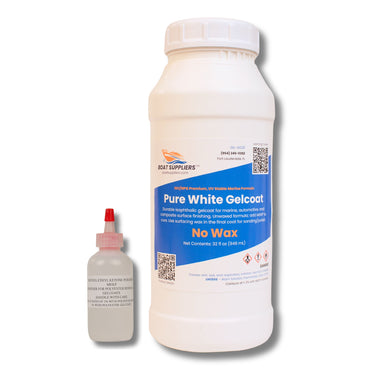
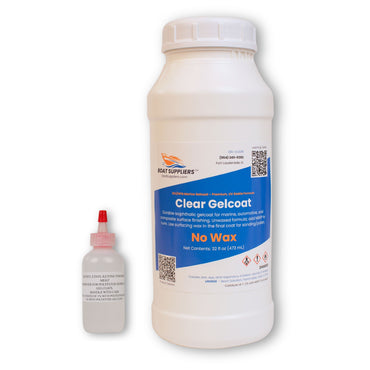
The filling step is where the material choice matters. On a white hull, a waxed white gelcoat kit works straight from the can. On any other color, and on a clear-finished or tinted surface, start with Clear Gelcoat with Hardener, No Wax. It is unwaxed isophthalic gelcoat, so it stays chemically open and you can build a second coat without sanding, and it takes pigment cleanly. Tint it by the drop against a sanded, wetted patch of the actual hull, not the chalky surface next to it: Black Epoxy Resin Pigment for a black boot stripe or hull side, Brown Epoxy Resin Pigment and Bright Yellow Epoxy Resin Pigment in small doses to warm a white toward cream, oyster, or sand. Stir until streak-free before the MEKP goes in. Catalyze at 2% at 70°F (21°C), about 19 cc per quart, and lay 15 to 20 mils wet. Because the gelcoat is unwaxed, the last coat needs a spray of PVA or surfacing wax added per the can to cure tack-free, then wet sand 320, 600, 1000, and compound. Dose it with the MEKP catalyst calculator and size the batch with the gelcoat calculator. Wear a P100 respirator with organic vapor cartridges, nitrile gloves, and eye protection for grinding and for anything with styrene in it.
The decision
Indoor if you can get it, unheated is fine. If the boat lives outside, shrink wrap on a frame with pads and vents beats any tarp, and a framed, tensioned tarp beats a draped one by a wide margin. None of the four fixes a crack that was already holding water when the cover went on, so the gelcoat work is a September job, not a November one.
Frequently asked questions
Does freezing damage gelcoat?
Cold alone does not. Water trapped in an open crack does: it freezes, expands about 9% by volume, and lengthens the crack every cycle. Open and fill every crack that reaches laminate before the boat is covered, and store it with the bilge and lockers dry. Fixed cracks and a dry boat can sit through any number of freeze cycles without a change in the finish.
Should I wax the boat before winter storage?
Yes, two coats of paste wax after a full wash and any compounding. Wax gives shrink wrap and tarp contact points something to slide on instead of grinding into gelcoat, and it buys the finish months of UV exposure at the vent flaps and edges. Wax again in spring after the cover comes off, since the winter coat will have done its job by then.
Is blue or white shrink wrap better for the boat?
White for anywhere with real sun, because it reflects heat and keeps the space under the film cooler, which means less condensation and mildew. Blue is the standard in the north, where the extra warmth on a sunny day helps dry the interior. Either way use 7 mil film, at least two vents on a boat under 24 ft, and one more vent for every 8 ft over that.
Can I repair gelcoat in cold weather before storage?
Not below 60°F. Polyester gelcoat cures slowly and stays tacky and dull when the surface is cold, even with MEKP bumped to 2.5%. Do the repairs in September, on a day when the hull itself reads 60°F or more, at 2% MEKP and 15 to 20 mils wet. If the cold has already arrived, seal the cracks with epoxy now and gelcoat over them in spring.
How many vents does a shrink wrapped boat need?
At least two on anything under 24 ft, one forward and one aft, and add one for every 8 ft of length beyond that. Vents let the moisture the boat gives off escape instead of condensing on the underside of the film and raining back down. If the boat was wrapped on a damp day, double the count. The film manufacturer's chart overrides any rule of thumb.
What You Need For This Job
- Clear Gelcoat with Hardener, No Wax: unwaxed isophthalic base for tinted crack and chip repairs before the cover goes on
- Black Epoxy Resin Pigment, 1 oz: tints clear gelcoat for boot stripes and dark hull sides
- Brown Epoxy Resin Pigment, 1 oz: warms white gelcoat toward cream and sand
- Bright Yellow Epoxy Resin Pigment, 1 oz: a drop at a time to match oyster and ivory hulls
Prev post

Divinycell Foam Core: Contoured vs Plain Sheets and Which Thickness
Updated on 22 October 2026
Next post

Boat Winterization Checklist: Fix the Fiberglass Before It Sits
Updated on 20 October 2026