

Composites 101 Class Kit - Student Fiberglass & Epoxy Lab Kit
Composites 101 Class Kit - Student Fiberglass & Epoxy Lab Kit
Share
SKU:SK-EDU101
20 in stock
Couldn't load pickup availability
The hands-on materials for a first composites lesson, kitted per student. One kit takes one student through a complete hand layup: measure and mix a small epoxy batch, wet out real woven fiberglass, learn fiber orientation and squeegee technique, and pull a finished flat laminate panel they keep. This is the same lesson sequence intro composites courses run at community colleges and technical high schools.
Each student kit contains:
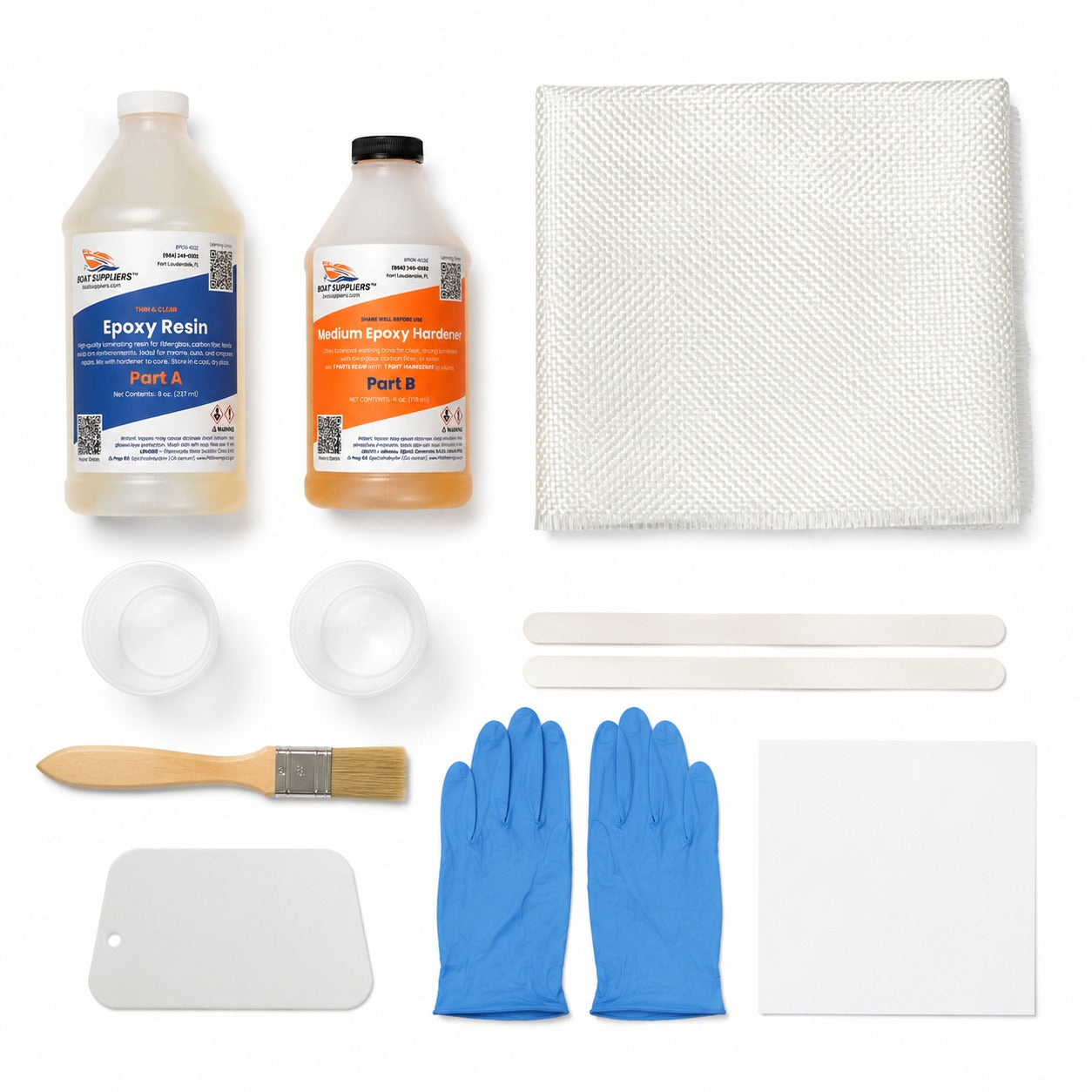
- 1 yard x 38" of 6oz woven E-glass fiberglass cloth, enough for a multi-layer coupon panel plus spare
- 12oz two-part epoxy kit (8oz resin + 4oz hardener), no styrene smell, no separate catalyst to control, classroom-friendly cure window
- 2 mixing cups, 2 mixing sticks, chip brush, plastic spreader, nitrile gloves
- Layup lab card with a step-by-step first-panel exercise
Classroom 10-Pack: ten student kits in one box at program pricing, one line on your PO. Running a bigger program or need a different mix, more cloth, carbon fiber, or vacuum bagging? We kit custom packs for schools; ask through our Wholesale Pro program, which also handles tax-exempt purchasing.
The epoxy resin is not regulated for transport. The small hardener bottle is a limited quantity corrosive, so kits ship by ground to the lower 48 rather than by air. No special handling is needed to receive or store them.
Specifications
How to use this kit
One student, one complete hand layup, one finished laminate panel. Every kit ships with this same sheet printed and in the box.
What is in the kit
- 1 yd 6 oz woven E-glass fiberglass cloth, 38 in wideenough for a multi-layer coupon panel plus spare
- 12 oz Two-part epoxy kit8 oz resin plus 4 oz hardener, 2:1 by volume
- 2 / 2 Mixing cups, mixing sticks
- 1 / 1 / 1 pr Chip brush, plastic spreader, nitrile gloves
Instructor supplies: a flat work board, packing tape or release film to cover it, scissors, a marker, and paper towels.
Mixing epoxy (2:1 by volume)
| Ratio | 2 parts resin to 1 part hardener |
| One panel | 2 oz resin + 1 oz hardener |
| Full kit | 8 oz resin + 4 oz hardener |
Measure by volume in the cups. Epoxy has no separate catalyst to dose, so the only variable is the ratio, and off-ratio never fully cures.
Stir 2 minutes scraping sides and bottom, then re-pot and stir again. This double-potting step is worth teaching explicitly.
The job, start to finish
Prepare the board
Cover a flat board with packing tape or release film so the panel will pop off when cured. Epoxy does not stick to packing tape, which makes it the cheapest release surface in a classroom. Mark the fiber direction you plan to use.
Cut the plies
Cut three or four squares of cloth about 6 by 6 inches. Cut two with the weave running straight and two at 45 degrees. Comparing them at the end is the point of the lesson: fiber orientation, not resin, is what carries load in a composite.
Mix a batch
Measure 2 parts resin to 1 part hardener by volume. Stir 2 minutes scraping the sides and bottom, then pour into a second cup and stir again. Unmixed resin clinging to the first cup wall is the most common reason a student panel stays soft.
Wet out the layup
Brush epoxy onto the board, lay the first ply, and stipple with the brush until the weave turns from white to clear. Add each ply the same way, alternating orientation. Squeegee gently to a wet, not flooded, surface. Excess resin adds weight, not strength.
Cure and evaluate
Leave it overnight. Pop the panel off the tape, trim the edges, and have students compare stiffness in each direction, look for white dry spots and trapped air, and weigh it. A heavy panel means too much resin, which is the classic beginner result.
If something goes wrong
Panel stayed soft or greasy
Off-ratio or under-stirred. Teach the re-pot step: stir, pour to a second cup, stir again.
Panel is white and patchy
Dry glass. Stipple until the weave turns clear, then it has strength.
Panel is heavy and glossy
Too much resin. Squeegee to wet, not flooded. Excess resin is weight without strength.
Would not come off the board
The release was missed or torn. Packing tape must cover the whole area.
Cure crawled overnight
Room under 60 F. Epoxy stalls in the cold. Warm the room, do not add hardener.
Classroom 10-packs and custom school packs with carbon or vacuum bagging are available through our Wholesale Pro program, which also handles tax-exempt purchasing.
Blog posts

Best Fiberglass Cutting Tools for Clean Edges...
Best Fiberglass Cutting Tools for Clean Edges...

Kevlar Fabric for Boats: A Fabricator's Guide...
Kevlar Fabric for Boats: A Fabricator's Guide...
