


SKU:SWES-410-2
In stock
Couldn't load pickup availability
West System 410 Microlight is the filler that turns mixed 105 epoxy into a tan fairing compound for shaping large areas, and it is the lightest and easiest sanding filler in the West line. By West's own rating it sands about 30% easier than most epoxy fairing compounds.
Using it
Add it to resin already mixed with hardener and stir to a peanut butter consistency, then trowel it on and fair it down with 80 grit after cure. The microballoon blend adds the least weight for the volume it fills and feathers to a fine edge, which keeps big skim coats on topsides and decks quick to sand. West's own limits: do not use it under dark paint or on a surface that gets hot.
410 or your own blend
If you already run 105, 410 brings West's data sheet and mix guidance with it. To blend your own fairing compound for less per quart, mix Q-cells, phenolic microballoons or 3M glass bubbles into the resin you already use, and work out the amounts with the fairing filler calculator.
- 410-2: 2 oz (57 g) can
- 410-7: 5 oz (142 g) can
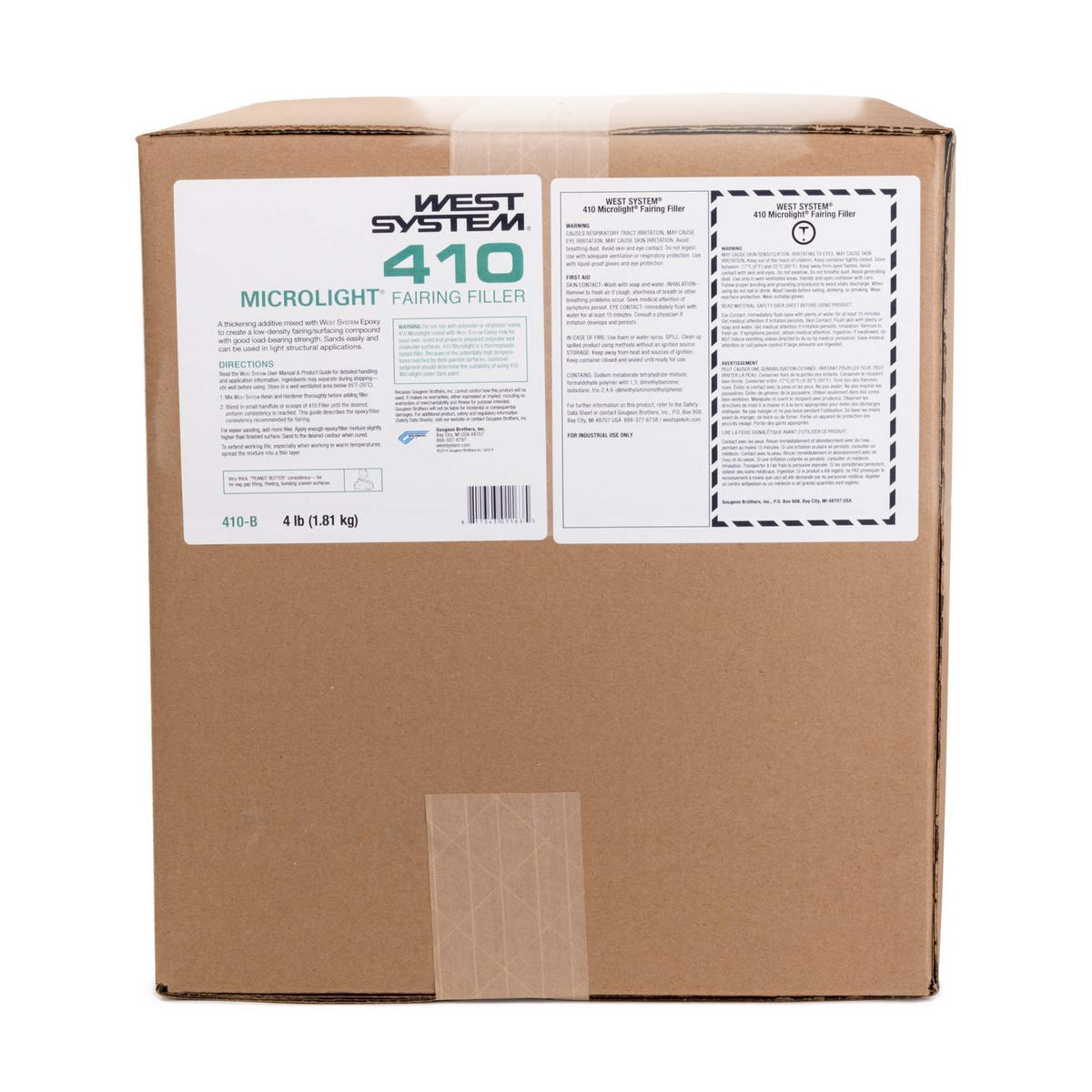
- 410-B: 4 lb (1.81 kg) box
- Dry powder, microballoon blend, light density class
- Cures tan
- For epoxy (West System 105)
More of the system is in West System.


Technical Specifications
Net Weight by Size
Compare Fillers
| Product |  West System 410 Microlight Fairing FillerYou're viewingfrom $34.70 |  Phenolic Microballoonsfrom $18.95 |  3M Glass Bubblesfrom $9.95 | 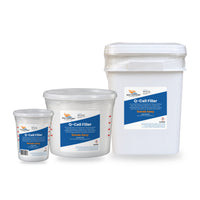 Q-Cellsfrom $8.95 |
|---|---|---|---|---|
| Best for | Lightweight fairing filler (microballoon blend) | Lightweight fairing filler | Lightweight fairing filler | Lightweight fairing filler |
| Density | Light | Light | Light | Light |
| Sandability | Easy | Easy | Easy | Easy |
| Resins | Epoxy | Epoxy, Polyester, Vinyl Ester | Epoxy, Polyester, Vinyl Ester | Epoxy, Polyester, Vinyl Ester |
| Material | N/A | Phenolic resin hollow microspheres (microballoons) | Soda-lime-borosilicate hollow glass microspheres | Expanded perlite (sodium potassium aluminum silicate) |
| View | View | View |
Which epoxy filler do I use for fairing, bonding, or filleting?
What's the difference between a fairing filler and an adhesive filler?
How much filler do I add to epoxy or polyester resin?
Which filler makes the easiest-to-sand fairing compound?
Are epoxy fillers structural?
What's the difference between West System 403, 404, 405, 406, 407, and 410?
Guides for this product

Fairing Compound: Mixing a Batch That Sands Flat
Fairing Compound: Mixing a Batch That Sands Flat

Marine Filler Types: Complete Guide to Fairin...
Marine Filler Types: Complete Guide to Fairin...
