Chopped Strand Mat vs Woven Roving: When to Use Each in Marine Fiberglass Work

06 April 2026
The Decision You Are Actually Trying to Make
You are standing at the bench with a hull repair to do, or a transom to rebuild, and you need to know which roll to grab. Chopped strand mat (CSM) and woven roving are both fiberglass reinforcements, but they behave completely differently in the laminate, absorb resin at different rates, and suit entirely different parts of a boat. This guide gives you the numbers and the logic to choose correctly every time, not just for this job but for every layup afterward.
What Chopped Strand Mat Actually Is
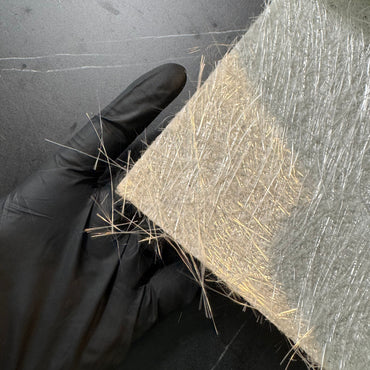
CSM is made from randomly oriented glass fibers cut to roughly 1 to 2 inches in length and held together with a styrene-soluble binder. The moment polyester or vinyl ester resin contacts the mat, the binder dissolves and the fiber mass becomes pliable enough to press into tight curves and compound shapes without wrinkling or bridging. Fiber orientation is random, so strength is nearly equal in every direction through the plane of the laminate.
CSM is sold by weight per square yard. The four weights you will encounter most often in marine work are:
- 0.75 oz/sq yd - Lightweight, maximum conformability, used for surfacing layers, small repairs, and detail work over core materials.
- 1.5 oz/sq yd - The most versatile weight. Balances conformability with meaningful structural contribution. The standard choice for hull repairs.
- 2 oz/sq yd - Maximum CSM thickness per pass. Used when you need to build laminate quickly or when load requirements are higher.
Resin-to-glass ratio for CSM runs roughly 1.5:1 to 2:1 by weight, meaning CSM drinks significantly more resin than woven roving. Factor that into your material estimates or use the resin calculator before you mix.
What Woven Roving Actually Is
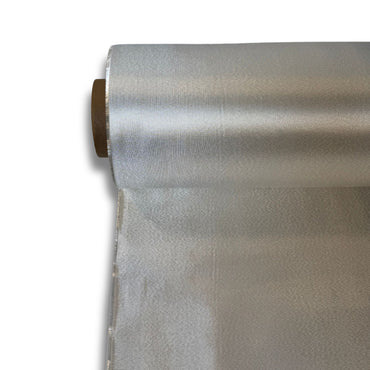
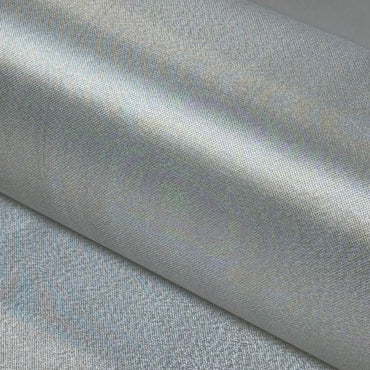
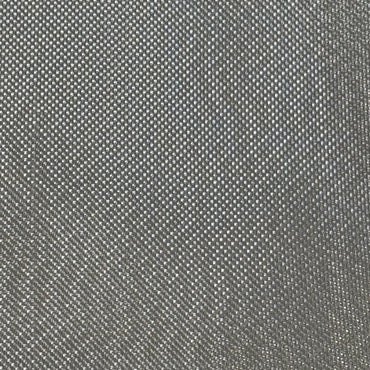
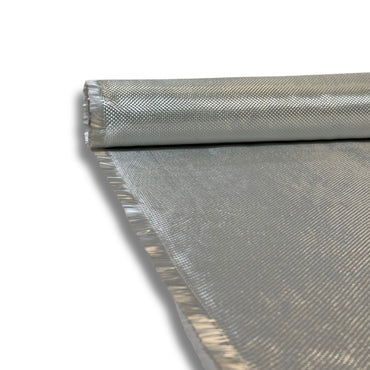
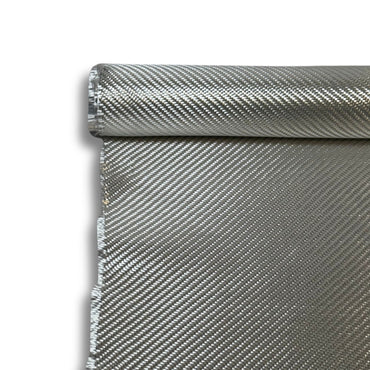
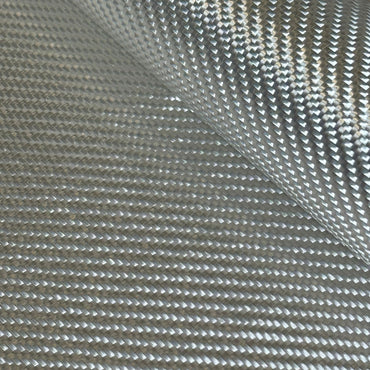
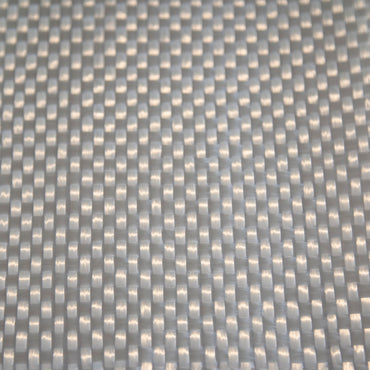
Woven roving is made from continuous glass fiber bundles woven in a plain or basket pattern, typically at 0 and 90 degrees. Fabric weights run from 18 oz to 24 oz per square yard, which is four to sixteen times heavier than CSM on a per-yard basis. That weight translates directly into structural performance: woven roving delivers exceptional tensile and flexural strength along the fiber axes.
The trade-off is conformability. Because the fibers are continuous and interlocked, woven roving resists bending around tight curves. Force it into a concave hollow and it will bridge, leaving air pockets under the fabric that become failure points under load. Resin-to-glass ratio is lower than CSM, typically around 1:1 by weight, so you get more glass into the laminate per pound of material consumed.
The Numbers That Drive the Decision
| Property | CSM (1.5 oz) | Woven Roving (18 oz) |
|---|---|---|
| Fiber orientation | Random (isotropic) | 0/90 (anisotropic) |
| Resin-to-glass ratio | 1.5:1 to 2:1 | ~1:1 |
| Conformability | Excellent | Poor on tight curves |
| Tensile strength | Moderate, equal in all directions | High, along fiber axes |
| Typical use | Curves, repairs, surfacing | Flat panels, structural builds |
When to Choose Chopped Strand Mat
CSM is the right call whenever your surface curves, whenever you need the laminate to finish smooth, or whenever you are building up thickness in a repair that needs to blend into the surrounding hull. The random fiber orientation means you do not have to think about load direction: the laminate handles stress from any angle with equal competence.
Best Applications for CSM
- Hull damage repairs on curved bow and stern sections
- Gelcoat ding repairs and stress crack reinforcement
- First layer over foam or balsa core (the mat bridges the core texture better than woven cloth)
- Building thickness in 2 to 4 layer increments, alternating weights as needed
- Final surfacing layer before fairing and paint
- Repairs around through-hull fittings and hardware backing plates
For most hull repairs, start here: 1.5oz Fiberglass Chopped Strand Mat is the most forgiving weight to hand laminate and gives you a solid structural contribution without the resin demand of the 2 oz grade. If you are doing very fine surface work or need to conform around tight radii, step down to 0.75oz Fiberglass Chopped Strand Mat for the outermost layers. When you need to build laminate quickly or when the repair area sees higher loads, reach for 2oz Fiberglass Chopped Strand Mat for the core layers of your stack.
For sealing edges, reinforcing corners, and tabbing stringers where sheet material is awkward to position, 1.5oz Fiberglass Mat Tape delivers the same conformability as CSM sheet in a width-controlled strip that stays exactly where you put it.
Products used in this guide
-

1.5oz Fiberglass Chopped Strand Mat
Regular price From $6.45 USDSale price From $6.45 USD Regular priceUnit price $6.45 per yd -
2oz Fiberglass Chopped Strand Mat
Regular price From $8.95 USDSale price From $8.95 USD Regular priceUnit price $8.95 per yd -

18oz Woven Roving
Regular price From $19.44 USDSale price From $19.44 USD Regular priceUnit price $19.44 per yd -
24oz Woven Roving
Regular price From $22.39 USDSale price From $22.39 USD Regular priceUnit price $22.39 per yd$19.44 USD


When to Choose Woven Roving
Woven roving earns its place in a laminate when you need maximum structural contribution per layer on surfaces that are relatively flat or only gently curved. A single layer of 18 oz woven roving adds more tensile strength in the fiber direction than three layers of 1.5 oz CSM, while consuming less resin per unit of strength delivered.
Best Applications for Woven Roving
- Transom rebuilds, where you need laminate thickness and load-bearing capacity
- Large flat hull panel reinforcement
- Structural bulkheads and floor support panels
- Building new hull sections in a mold where flat or low-crown panels dominate
- High-stress areas such as engine mount beds and keel attachment zones
Woven roving requires more careful wet-out technique. Apply resin, position the cloth, then stipple rather than brush to avoid disturbing the weave and shifting the fiber alignment. Work out air bubbles with a ribbed roller along the fiber axes. Never try to stretch woven roving around a tight inside corner. If the surface curves at all, use CSM for that section and let the woven roving handle the adjacent flat panels.
Combining Both Materials: The Standard Professional Layup
The strongest, most practical marine laminates almost always combine both materials. The approach is straightforward and repeatable:
- Layer 1: CSM - Wet out directly against the mold surface or existing hull. Eliminates air entrapment, provides good adhesion to gelcoat or substrate, and gives isotropic strength as a foundation.
- Layers 2 to N: Woven Roving alternated with CSM - Each woven roving layer is sandwiched between thin CSM layers. The CSM fills the coarse texture of the woven cloth, preventing print-through and improving interlaminar bond.
- Final Layer: CSM or surfacing veil - A final CSM pass gives a surface that sands and fairs cleanly. For a truly paint-ready surface, follow with a surfacing veil.
A typical production boat transom laminate might read: 1.5 oz CSM / 18 oz woven roving / 1.5 oz CSM / 18 oz woven roving / 1.5 oz CSM. That five-layer stack delivers structural stiffness from the woven roving and clean bond interfaces from the CSM, with a surface layer that fairs without print-through.
Resin Quantities: Do the Math Before You Mix
The biggest mistake on multi-material layups is underestimating resin. Because CSM absorbs at 1.5:1 to 2:1 and woven roving at roughly 1:1, a mixed layup needs a calculated approach. As a working rule:
- 0.75 oz CSM: approximately 1.1 to 1.4 oz of resin per sq ft
- 1.5 oz CSM: approximately 2.2 to 3.0 oz of resin per sq ft
- 2 oz CSM: approximately 3.0 to 4.0 oz of resin per sq ft
- 18 oz woven roving: approximately 1.1 to 1.5 oz of resin per sq ft
These figures assume a well-controlled wet-out with no excess resin pooling. Use the resin calculator to convert these estimates into total batch sizes for your repair area before you catalyze anything. Running short of resin mid-layup forces you to stop and restart, creating a weak interlaminar boundary.
Working Temperature and Timing
Both materials perform best when applied at 65 to 75 degrees F with relative humidity below 60 percent. Below 60 degrees F, polyester and vinyl ester resins cure slowly and incompletely, and the CSM binder may not dissolve as quickly. Above 85 degrees F, pot life shortens dramatically, and you risk exothermic overheating in thick CSM layups where resin mass accumulates.
When building thickness with CSM, do not apply more than 3 to 4 layers in a single wet session. Past that point, exothermic heat from the curing resin can distort the laminate or cause cracking. Let each session reach gel before adding more material, or limit layer counts per pass and return when the previous work is tack-free but not fully cured for the best interlaminar bond.
Choosing the Right Weight for Specific Repair Scenarios
Small Hull Ding or Stress Crack
Use 2 to 3 layers of 0.75oz CSM to fill and fair. Total laminate will be thin and blend to the surrounding hull thickness without high spots.
Moderate Hull Damage Penetrating the Laminate
Start with one layer of 1.5oz CSM, let it gel, then build with 2 to 3 more 1.5 oz passes until you match original thickness. Finish with 0.75 oz for fairing.
Structural Repair: Transom, Stringer, or Floor
Use the alternating stack described above: 1.5 oz CSM base, woven roving structural layers, 1.5 oz CSM between each woven layer and on top. Use 2oz CSM if you need to build thickness faster in the structural core of the repair.
Edge Sealing and Corner Tabbing
Cut 1.5oz Mat Tape to length and wet out in place. Its narrow width eliminates the need to cut and trim sheet material in confined spaces and conforms around inside corners without lifting.
Frequently Asked Questions
What is the real difference between chopped strand mat and woven roving?
Fiber layout. CSM is randomly oriented short glass fibers held by a styrene-soluble binder, giving uniform strength in all directions and excellent conformability. Woven roving is continuous glass bundles interlocked at 0 and 90 degrees, giving high directional tensile strength but very poor conformability around tight curves.
Which weight of CSM should a beginner start with?
1.5 oz. It wets out quickly, lies flat without excessive resin demand, and gives enough structural contribution to matter. The 0.75 oz grade is too thin to build with efficiently and the 2 oz grade can trap air more easily if your wet-out technique is still developing.
Can I use CSM with epoxy resin?
With caution. Most CSM uses a styrene-soluble binder that dissolves when it contacts styrene-based polyester or vinyl ester resin. Epoxy contains no styrene, so the binder may not release fully, leaving stiff, poorly saturated patches. Some manufacturers offer epoxy-compatible CSM with a powder binder. Check the data sheet before mixing materials.
How many layers of 1.5 oz CSM equals one layer of 18 oz woven roving in thickness?
Roughly 4 to 5 layers of 1.5 oz CSM approach the cured thickness of one layer of 18 oz woven roving, but the woven roving layer will still be significantly stronger in the fiber direction. Thickness and strength are not interchangeable metrics in composite design.
Does CSM work with vinyl ester resin?
Yes. Vinyl ester contains styrene, so it dissolves the CSM binder just as polyester does. Vinyl ester also offers better adhesion and moisture resistance than standard polyester, making it the preferred choice for waterline and underwater repairs where osmotic blistering is a concern.
What You Need For This Job
- 1.5oz Fiberglass Chopped Strand Mat: the standard structural and repair layer for curved hull sections
- 0.75oz Fiberglass Chopped Strand Mat: lightweight surfacing and fine detail layers over complex shapes
- 2oz Fiberglass Chopped Strand Mat: maximum thickness per pass for structural core layers and heavy repairs
- 1.5oz Fiberglass Mat Tape: edge sealing, corner tabbing, and stringer reinforcement in tight spaces
Prev post

Biaxial Fiberglass Fabric: Why It Outperforms Woven Fabrics for Marine Repairs
Updated on 06 April 2026
Next post

How to Wet Out Fiberglass Cloth Perfectly Every Time
Updated on 05 April 2026