How Much Resin Per Yard of Fiberglass: Calculator Guide

28 February 2026
Plan on about 6.6 oz of resin per square yard of 6 oz fiberglass cloth and about 31 oz per square yard of 1.5 oz chopped strand mat, by hand layup. Per square foot per ply, that is 0.73 oz for 6 oz cloth, 1.22 oz for 10 oz cloth, 3.4 oz for 1.5 oz mat and 4.0 oz for 1708 biaxial; vacuum bagging uses about 30% less, and add 15 to 20% for waste. Run your own layup through the resin calculator, or work it by hand below.
The resins in this guide
-


Marine-Grade Polyester Layup Resin with Hardener
Regular price From $34.95 USDSale price From $34.95 USD Regular priceUnit price $1.09 per floz -

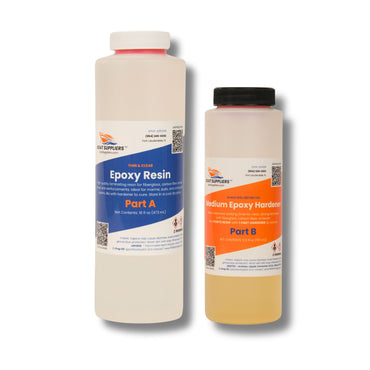


Boat Suppliers Epoxy Resin Kit – Thin, Clear, with Hardener
Regular price From $17.95 USDSale price From $17.95 USD Regular priceUnit price $1.46 per floz -
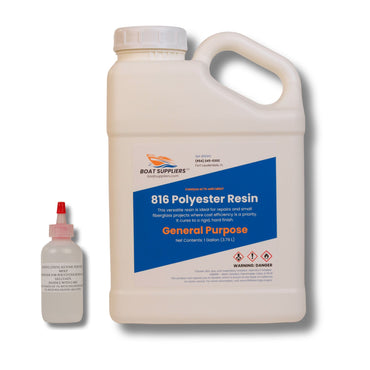
General Purpose Polyester Resin with Hardener
Regular price From $59.95 USDSale price From $59.95 USD Regular priceUnit price $0.47 per floz


Resin-to-Glass Ratios
- Chopped Strand Mat (CSM): about 2.3:1 (2:1 to 2.5:1)
- Woven Cloth: 1:1 to 1.5:1
- Woven Roving: 1:1 to 1.3:1
- Biaxial Fabrics: 1:1 to 1.5:1
Basic Formula
Resin Required = Fabric Weight x Area x Resin Ratio
Use fabric weight per square yard. Chopped strand mat is rated in ounces per square foot, so multiply a mat weight by 9 first (1.5 oz mat is 13.5 oz per square yard).
| Fabric Type | Weight/Sq Yd | Ratio | Resin/Sq Yd |
|---|---|---|---|
| 0.75 oz CSM | 6.75 oz (0.75 oz/sq ft) | 2.3:1 | 15.3 oz (1.7 oz/sq ft) |
| 1.5 oz CSM | 13.5 oz (1.5 oz/sq ft) | 2.3:1 | 30.6 oz (3.4 oz/sq ft) |
| 6 oz Cloth | 6 oz | 1.1:1 | 6.6 oz (0.73 oz/sq ft) |
| 18 oz Roving | 18 oz | 1.1:1 | 19.8 oz (2.2 oz/sq ft) |

Printable version: download the Fiberglass Laminate Thickness Chart (PDF). More free shop charts: composites reference charts.
Fiberglass Types
Chopped Strand Mat
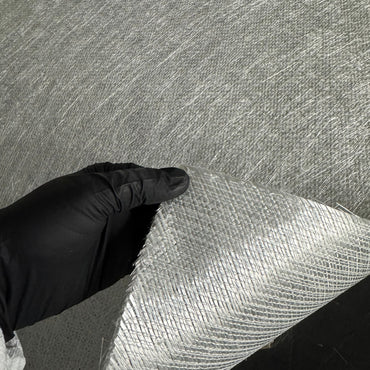
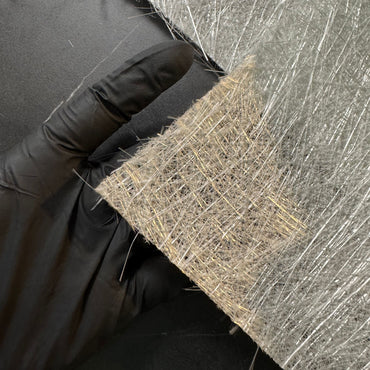
Chopped strand mat uses random fibers held by styrene-soluble binder. It requires the most resin because of air pockets in the random fiber orientation.
Woven Cloth
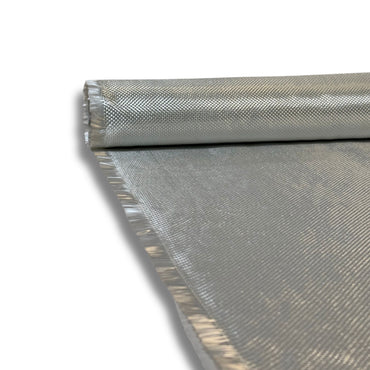
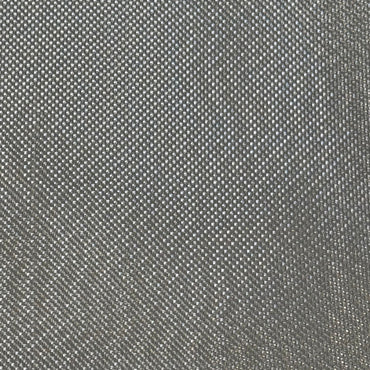
Fiberglass cloth has a tight weave that requires less resin to wet out. For guidance on selecting the right materials, consult our fiberglass buyer's guide.
Woven Roving
Woven roving is heavier and builds thickness quickly for structural applications. To understand the differences better, read our comparison on woven roving vs fiberglass cloth.
Biaxial Fabrics
Biaxial fabrics have oriented fibers for superior strength.
Factors Affecting Resin Usage
Laminating Technique
- Hand layup: the table figures above
- Vacuum bagging: about 70% of the hand layup figure
- Spray-up: up to 30% more resin
Temperature
Warmer temps thin resin (faster gel). Cold temps thicken it. For detailed information, check our guide on choosing polyester resin and review your polyester resin data sheets.
Surface Porosity
Porous surfaces absorb resin. Add 10-20% for first layer on wood or foam.
Waste Factor
- Small projects: Add 15-20%
- Medium projects: Add 15-20%
- Large projects: Add 10-15%
Example: Hull Repair
Repairing 2 ft x 3 ft (0.67 sq yd) with 1.5 oz CSM + 18 oz roving + 6 oz cloth:
- CSM: 0.67 x 30.6 = 20.5 oz
- Roving x2: 0.67 x 19.8 x 2 = 26.5 oz
- Cloth: 0.67 x 6.6 = 4.4 oz
- Total with 15% waste: 59.1 oz (3.7 lbs)
For specific repairs like transom work, see our guide on fiberglass boat transom repair, and learn about how many layers of fiberglass are needed for different repairs.
Resin Types
- Polyester Resin: Most economical, works with CSM
- Vinyl Ester: Better water resistance
- Epoxy: Best adhesion (works with chopped strand mat, which stays stiffer in epoxy)
Pro Tips
- Measure twice, mix once
- Mix small batches (10-15 min working time)
- Keep records for future estimates
- Pre-cut all fabric before mixing
- Use less catalyst in hot weather
- Consider making a fiberglass mold for repeated projects
Shop at Boat Suppliers
Boat Suppliers carries:
Contact our team with questions!
Frequently asked questions
What is the resin-to-glass ratio for chopped strand mat versus cloth?
Chopped strand mat runs about 2.3:1 (2:1 to 2.5:1) resin to glass because its random fibers trap air and need more resin to wet out. Woven cloth is far leaner at 1:1 to 1.5:1, and woven roving sits around 1:1 to 1.3:1. Biaxial fabrics fall near 1:1 to 1.5:1. Use the higher end of each range for hand layup and the lower end if you are vacuum bagging.
How do I calculate resin needed per square yard?
Use resin required equals fabric weight times area times resin ratio. For example, 1.5 oz CSM is rated per square foot, so it weighs 13.5 oz per square yard and at about 2.3:1 needs about 31 oz of resin per square yard (3.4 oz per square foot), while 6 oz cloth at 1.1:1 needs about 6.6 oz, and 18 oz roving at 1.1:1 needs about 19.8 oz. Run the math per fabric, add each layer, then tack on a waste factor for the total.
How much extra resin should I add for waste and porous surfaces?
Add a waste factor based on job size: roughly 15 to 20 percent for small projects, 15 to 20 percent for medium, and 10 to 15 percent for large ones. On porous surfaces like wood or foam, add another 10 to 20 percent on the first layer because the substrate soaks up resin. Vacuum bagging uses only about 70 percent of the hand layup resin figure, and spray-up can run up to 30 percent more.
Can I use epoxy with chopped strand mat?
Yes. Our chopped strand mat works with epoxy for repairs, tabbing, and flat or gently curved panels. Its binder is made to dissolve in the styrene in polyester and vinyl ester, so in epoxy it stays put: the mat is stiffer, drapes less into tight curves and can cure cloudy. Roll it firmly until no dry white fibers remain, and for complex shapes use polyester, vinyl ester or 1708 biaxial.
How does temperature change how much resin I need?
Temperature changes resin viscosity and working time more than total volume. Warm temps thin the resin and speed the gel, so use less catalyst in hot weather to keep your working window. Cold temps thicken it and slow the cure. Either way, mix small batches with about 10 to 15 minutes of working time, pre-cut all your fabric before mixing, and keep records to sharpen future estimates.
Prev post

Resin Cleanup Made Easy: Boatyard-Pro Tips
Updated on 01 March 2026
Next post

How to Repair Gelcoat: Step-by-Step Guide
Updated on 28 February 2026