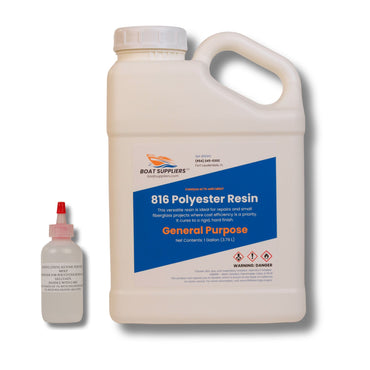
MEKP (Methyl Ethyl Ketone Peroxide) is the catalyst that makes polyester and vinyl ester resins cure. Understanding proper mixing ratios and safety precautions is essential for successful fiberglass work. Too little catalyst and your resin will not cure; too much and you risk dangerous exothermic reactions.
This guide covers everything you need to know about using MEKP safely and effectively.
What you need to mix safely
Everything below is in stock and ships from our Florida shop.


What Is MEKP?
MEKP is an organic peroxide that initiates the chemical reaction (polymerization) in polyester and vinyl ester resins. When mixed with resin, it generates free radicals that cause the resin molecules to cross-link and harden.
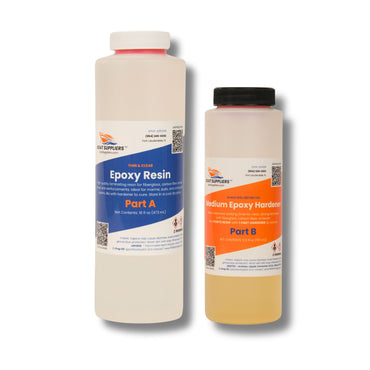
Important: MEKP is NOT used with epoxy resins. Epoxy uses a completely different hardener system.
Standard Mixing Ratios
The amount of MEKP catalyst needed depends on temperature, humidity, and desired working time.
General Guidelines
- Standard ratio: 1-2% MEKP by volume
- Minimum: 0.5% (cold temperatures)
- Maximum: 3% (never exceed this)
Temperature-Based Adjustments
- Below 60F (15C): Use 2-2.5% - cold slows cure
- 60-77F (15-25C): Use 1.5-2% - ideal working range
- Above 77F (25C): Use 1-1.5% - heat accelerates cure
- Above 90F (32C): Use 0.5-1% - work in small batches
By Application
- Gelcoat: 1.5-2% for spray, 2-2.5% for brush application
- Laminating resin: 1.5-2% standard
- Tooling resin: 1-1.5% (slower cure preferred for molds)
- Casting resin: 0.5-1% for thick pours to control heat
How to Measure MEKP
Accurate measurement is critical. Use graduated mixing cups for precise ratios.
Quick Reference (per quart of resin)
- 1% = 10cc (about 2 teaspoons)
- 1.5% = 15cc (about 1 tablespoon)
- 2% = 20cc (about 4 teaspoons)
Pro Tip: Use syringes or graduated droppers for small batches. Guessing leads to problems.
Mixing Procedure
- Pour measured resin into a clean mixing container
- Add MEKP catalyst
- Stir thoroughly for 1-2 minutes
- Scrape sides and bottom of container
- Work time starts now - apply promptly
Never add MEKP directly to a large container of resin. Always pour what you need first.
Working Time and Cure Time
Working time (pot life) and cure time are affected by:
- MEKP percentage
- Ambient temperature
- Batch size (larger = more heat = faster cure)
- Resin type and promoter level
Typical Times at 77F with 1.5% MEKP
- Gel time: 15-20 minutes
- Tack-free: 1-2 hours
- Full cure: 24-48 hours
Safety Precautions
MEKP is a powerful oxidizer and can be dangerous if mishandled.
Required Safety Equipment
- Safety glasses or goggles
- Nitrile or latex gloves
- Adequate ventilation
- Fire extinguisher nearby
Critical Safety Rules
- NEVER mix MEKP with accelerators/promoters directly - explosive reaction
- NEVER exceed 3% catalyst
- NEVER store MEKP above 80F
- NEVER return unused MEKP to the original container
- Keep away from heat, sparks, and flames
- Store in original container only
First Aid
- Skin contact: Wash immediately with soap and water
- Eye contact: Flush with water for 15+ minutes, seek medical attention
- Ingestion: Do NOT induce vomiting, seek immediate medical attention
Storage Requirements
- Store in cool, dark location (below 80F)
- Keep container tightly closed
- Store away from heat sources and direct sunlight
- Keep separate from accelerators and combustibles
- Shelf life: 6 months to 1 year when stored properly
Troubleshooting
Resin Will Not Cure
- Not enough MEKP - add more next batch
- Old or degraded MEKP - use fresh catalyst
- Temperature too cold - warm the workspace
- Resin too old - check expiration
Resin Cures Too Fast
- Too much MEKP - reduce percentage
- Temperature too hot - work in smaller batches
- Batch too large - mix smaller amounts
Soft or Sticky Cure
- Insufficient MEKP - cannot be fixed after the fact
- May need to apply additional catalyzed resin over top
Final Thoughts
Proper MEKP usage is fundamental to successful fiberglass work. Whether you're creating fiberglass molds or performing gelcoat repairs, taking time to measure accurately, adjust for temperature, and always prioritize safety is essential. When in doubt, start with 1.5% and adjust based on results.
Shop MEKP catalyst and all your fiberglass supplies at Boat Suppliers.
Frequently asked questions
How much MEKP do I add per quart of polyester resin?
Standard catalyst load is 1 to 2 percent by volume. Per quart that works out to about 10cc (1 percent, roughly 2 teaspoons), 15cc (1.5 percent, about a tablespoon), or 20cc (2 percent, about 4 teaspoons). When in doubt start at 1.5 percent and adjust based on results. Measure with graduated cups, syringes, or droppers. Never exceed 3 percent.
Can I use MEKP to catalyze epoxy resin?
No. MEKP is the catalyst for polyester and vinyl ester resins only. It generates free radicals that cross-link those resins. Epoxy uses a completely different two-part hardener system and will not cure with MEKP. Match the curing agent to the resin chemistry: catalyst for polyester and VE, hardener for epoxy.
Why does my MEKP ratio change with temperature?
Heat accelerates the cure and cold slows it, so you compensate with the catalyst load. Below 60F (15C) run 2 to 2.5 percent. In the 60 to 77F (15 to 25C) ideal range use 1.5 to 2 percent. Above 77F (25C) drop to 1 to 1.5 percent, and above 90F (32C) go 0.5 to 1 percent and mix small batches to keep the exotherm under control.
How long is the working time after I catalyze polyester resin?
At 77F (25C) with 1.5 percent MEKP, expect a gel time of 15 to 20 minutes, tack-free in 1 to 2 hours, and full cure in 24 to 48 hours. Working time shortens with more catalyst, higher temperature, or a larger batch, since a big mass holds more heat. Mix only what you can apply before it gels.
What safety gear and storage rules apply when handling MEKP?
MEKP is a powerful organic peroxide and oxidizer. Wear safety glasses or goggles and nitrile or latex gloves, work with adequate ventilation, and keep a fire extinguisher nearby. Never mix it directly with accelerators or promoters, which can react explosively. Store below 80F in the original container, tightly closed, away from heat, sparks, sunlight, and combustibles. Shelf life runs 6 months to a year stored properly.
Prev post

How to Repair Gelcoat: Step-by-Step Guide
Updated on 28 February 2026
Next post

How to Fiberglass Over Plywood: Complete Step-by-Step Guide
Updated on 23 February 2026