How to Fix Common Epoxy Resin Problems: Bubbles, Sticky Spots, and Yellowing

05 April 2026
Most epoxy resin problems have a straight fix: pop fresh bubbles with gentle heat, warm small sticky spots or scrape off a coat that stays tacky and redo it, and sand yellowed epoxy back before a fresh topcoat. Nearly all of these failures start in one of three places: the mix ratio, the shop conditions, or contamination. The same fixes carry over if you need to repair an EPS epoxy surfboard, and knowing the cause before you start the repair saves time, money and aggravation on the next job.
Quick reference: epoxy resin problems, causes and fixes
| Problem | Likely cause | Fix | Prevent it |
|---|---|---|---|
| Bubbles, epoxy still workable | Air whipped in while mixing | Heat gun or hair dryer on low | Mix slowly; warm resin and hardener slightly |
| Deep bubbles, partly cured | Air surfacing as the resin cures | Sand to the bubble, clean, recoat | Slow hardener for more working time |
| Small sticky spots | Too much or too little hardener | Gentle heat from a hair dryer | Follow the mix ratio exactly |
| Whole surface tacky after 24 to 48 hours | Off ratio, contamination or bad conditions | Scrape off, clean with acetone, reapply | 65 to 75°F, humidity below 50% |
| Light yellowing | UV breaking down the resin | Light sanding, then a fresh topcoat | UV-resistant epoxy plus a topcoat |
| Severe yellowing | Heat and extended sun exposure | Sand to fresh epoxy, refinish | Shade during application and initial cure |
| Slow cure in a cool shop | Cool conditions extend cure times | Switch to a fast hardener | Keep the shop at 65 to 75°F |
Why Epoxy Fails in the First Place
Look for the cause before you reach for a fix. Off-ratio mixing, the wrong environment and dirty surfaces account for most bad batches, and temperature, humidity and surface prep each decide whether the cure comes out right. On a boat those variables matter even more, given the conditions a hull sees all season.
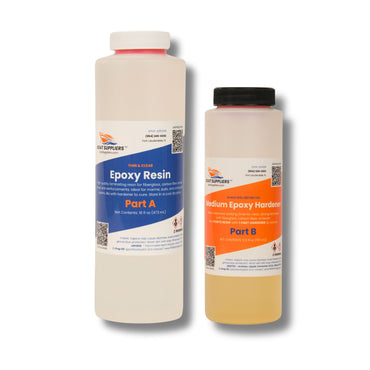
The material you start with counts too. A marine-formulated system such as the Boat Suppliers Epoxy Resin Kit behaves more consistently, and more predictably, than a generic resin off the shelf.
Getting Bubbles Out of Epoxy
Bubbles are the epoxy resin problem we hear about most, and the easiest to spot. Some form while you apply the coat, others rise later as it cures, and either way they cost you finish quality and strength.
Stop Them at the Mixing Cup
The cheapest epoxy resin bubbles fix is never making the bubbles. Stir slowly and on purpose, scrape the walls and the bottom of the cup as you go, and never whip air into the batch. If you can, warm the resin and the hardener a little before they meet: thinner material lets trapped air work its way out.
Popping Bubbles That Already Formed
While the epoxy can still be worked, sweep a heat gun or hair dryer set on low across the surface, never letting it sit in one spot. The mild heat pulls bubbles up and bursts them. Bubbles buried in partially cured epoxy are another matter: sand down until you open the void, clean it thoroughly, and recoat. Good roller technique keeps many of them from forming during application in the first place.
On bigger jobs that need more working time, switch to the Boat Suppliers Slow Epoxy Hardener. It leaves you longer to chase bubbles out before the resin starts to set.
Fixing Sticky Epoxy That Never Cures
Sticky epoxy resin that stays tacky and never hardens almost always points to a bad mix ratio, contamination, or poor conditions during the cure.
Find Out Why It's Tacky
Most of the time the culprit is too much hardener or too little. Boats make this harder, since swings in temperature and humidity affect cure times and ratios. Weigh your components rather than measuring by volume for the most accurate mix, and get the hardener ratio right every single batch if you want cures you can count on.
Fixing the Sticky Spots
Small tacky patches often respond to gentle heat from a hair dryer, with plenty of ventilation. When the whole surface is still tacky after 24 to 48 hours, there is no saving it: scrape the uncured epoxy off, take off the residue with solvent, and begin again. Wipe the surface down with acetone and let it dry completely before the new coat goes on.
In tough conditions, a marine-grade epoxy resin brings stronger adhesion and a more predictable cure, which is what you want on critical marine work.
Preventing and Fixing Yellowed Epoxy
Yellowing is the long-term complaint with many epoxy systems, and UV light is the main driver. Some of it will show up with age no matter what you do, but you can slow it down and you can clean it up once it appears.
What UV Does to Epoxy
Epoxy turning yellow is UV radiation breaking the chemical bonds in the resin. Heat and long hours of sun speed it along, and a boat gets plenty of both. Structural integrity usually survives the yellowing, but the boat ends up looking old and neglected.
Slowing the Yellowing Down
Your first line of defense is a UV-resistant epoxy under the right topcoat. Work in the shade when you can, and keep direct sun off the job through application and the first stage of the cure. Some marine epoxy systems carry UV inhibitors, but those only slow yellowing down, they never stop it. On work where surface finish really matters, a surfacing veil can add some UV protection.
Bringing Yellowed Epoxy Back
Light yellowing usually improves a lot after a light sanding and a fresh topcoat. Bad cases mean sanding back to fresh epoxy and refinishing the whole area, which is worth the effort on spots everyone sees, like cabin tops and deck repairs.
If you want tight control over cure speed so the coat goes on right the first time, a slow epoxy hardener stretches out your working time and cuts down on the application mistakes that turn into problems later.
Habits That Head Off the Next Problem
Good epoxy work comes from prep, patience and decent materials. Read the manufacturer's instructions and follow them, especially the parts about mix ratio and shop conditions. Keep the work area clean, hold the temperature steady, and don't hurry the job. When you're deciding between resin types, knowing how the marine composite resins compare helps you match the product to the work.
Control the Shop
Epoxy cures best at 65-75°F with relative humidity under 50%. Outside that window, expect slower or less reliable results and consider a different product. In a cool shop, where normal cure times stretch out, the Boat Suppliers Fast Epoxy Hardener picks the pace back up.
Buy Marine-Grade Material
Marine-grade epoxy systems built for boats pay for themselves over the years. They are formulated for what a boat actually lives through: temperature cycling, moisture and UV.
When to Bring In a Pro
Patience and the right method fix most epoxy problems, but not all of them. Structural repairs, big refinishing jobs and failures that keep repeating can point to a deeper issue that needs an expert to diagnose. If the part is critical structure, or you have tried more than once and it keeps failing, get a marine professional to look at it.
Epoxy skills get better with every job. Preventing a problem is always easier than correcting one, so spend the time on prep and start with good materials.
Frequently asked questions
How do I get bubbles out of epoxy that has already been poured?
If the epoxy is still workable, pass a heat gun or hair dryer on low heat across the surface, keeping it moving. The gentle heat warms the resin, lets trapped air rise, and pops the bubbles. For deeper bubbles in partially cured epoxy, sand down to the bubble, clean the spot thoroughly, and apply a fresh coat. Check back at 15 to 20 minutes, since new bubbles can surface as the resin penetrates.
Why is my epoxy still sticky and tacky after curing?
Sticky, never-hardening epoxy almost always comes from an off mixing ratio, too much or too little hardener, plus contamination or bad temperature and humidity. Measure components by weight, not volume, for the most accurate cure. If the whole surface is still tacky after 24 to 48 hours, scrape off the uncured epoxy, clean down to clean substrate with acetone, let it dry completely, then mix and reapply correctly.
What causes epoxy to turn yellow, and can I fix it?
Yellowing happens when UV light breaks down the chemical bonds in the resin, sped up by heat and long sun exposure, which is exactly what a boat sees. It rarely hurts structural integrity but looks aged. For light yellowing, sand lightly and lay a fresh topcoat. For severe cases, sand back to fresh epoxy and refinish the area, which matters most on visible spots like cabin tops and decks.
How can I stop epoxy bubbles before they form during mixing?
Prevention beats chasing bubbles later. Mix slowly and deliberately, scraping the sides and bottom of the cup, and avoid whipping air into the batch. Warming the resin and hardener slightly before mixing drops the viscosity so trapped air escapes more easily. On larger pours, a slow hardener buys you extra working time to roll and work bubbles out before the resin starts to set.
What temperature and humidity should I cure epoxy in?
Ideal conditions are 65 to 75F (18 to 24C) with relative humidity below 50 percent. Outside that window your cure suffers: cool conditions stretch cure times, and high humidity invites surface issues. If you must work cool, a fast hardener helps offset the longer cure. Either way, keep the area clean and control temperature, since most epoxy problems trace back to mixing, environment, or contamination.
Epoxy for these fixes
Prev post

How to Make Carbon Fiber Parts from Scratch: Complete DIY Guide for Marine Applications
Updated on 05 April 2026
Next post

Vinyl Ester Resin Application: Professional Techniques for Superior Marine Composites
Updated on 05 April 2026