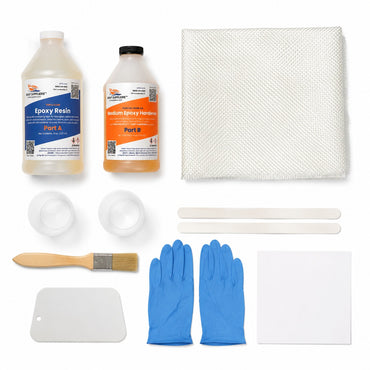
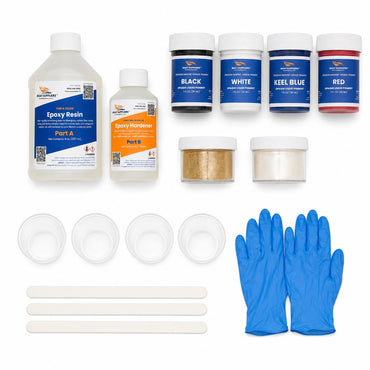
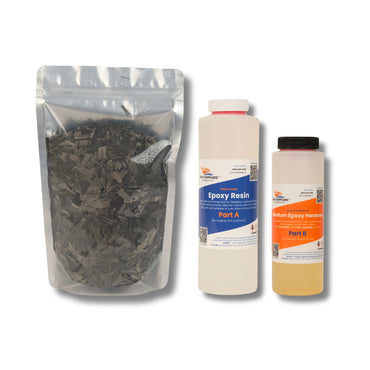
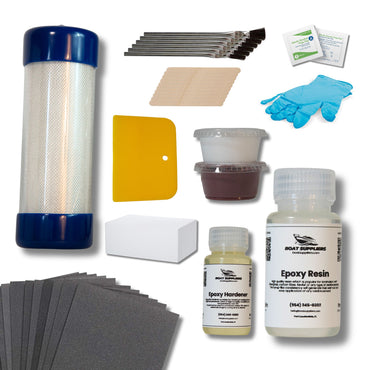
At Boat Suppliers, we're excited to introduce our new line of starter kits—designed to make composite repairs simple and effective. Today, we're walking you through a real-world repair using our EPS Epoxy Surfboard Repair Kit. Whether you're patching up a dinged surfboard or restoring an eFoil, this step-by-step guide will show you how to get pro-level results.
What this repair needs
Everything below is in stock and ships from our Florida shop.


🛠️ Project: eFoil Repair on EPS Construction
This tutorial features an electric eFoil with an EPS (expanded polystyrene) core and fiberglass shell. Let's get started.
Step 1: Prep the Damaged Area
- Remove loose debris and any broken fiberglass.
- Sand down the edges of the damaged area to create a smooth transition for the new fiberglass to bond to the old.
- For deeper repairs, use the EPS foam block included in the kit to fill large voids. This minimizes epoxy use and maintains structural integrity.
Step 2: Seal the Foam Core
- Apply a thin seal coat of epoxy directly over the exposed foam. This protects it from over-saturation and preps the surface for bonding.
Step 3: Build the Shape with Q-Cell Filler
- Mix q-cell filler with epoxy to create a thick paste.
- Fill in the damaged area, shaping it as close to the original contour as possible.
-
Let it cure, then sand smooth.
Step 4: Fine Tune with Fairing Compound
- Inspect for any air bubbles or low spots.
- Use the epoxy fairing compound (also included in the kit) to touch up imperfections.
-
Sand again, then wipe clean with alcohol to remove any dust or residue.
Step 5: Apply Fiberglass Layers
-
Cut two fiberglass cloth patches:
- One slightly smaller than the repair zone (base layer)
-
One larger, overlapping the existing fiberglass (top layer)
- Mix fresh epoxy resin (no fillers).
- Apply both layers wet-on-wet, saturating the cloth completely.
-
Allow the resin to fully cure before moving to the next step.
Step 6: Sand and Feather the Edges
- Once cured, sand down the fiberglass patch, carefully feathering the edges into the surrounding board.
-
Avoid sanding through the new fiberglass—just smooth and blend. For detailed sanding techniques that can help you achieve professional results.
Step 7: Finish with a Hot Coat
- Mix a clean batch of epoxy resin, no fillers.
- Apply a final hot coat over the repair area to seal everything in.
-
After curing, you can:
- Sand and paint, or
-
Apply a decal or sticker to match the board's look.
You're Done!
Your EPS surfboard or eFoil is now watertight, reinforced, and ready to ride. This entire process is made simple with the EPS Epoxy Repair Kit from Boat Suppliers—built for durability and ease of use.
If you have questions or need more help, don't hesitate to reach out to our support team.
✅ Shop the EPS Epoxy Repair Kit
🔧 Need Help? Contact Us Anytime
📦 Fast Shipping. Pro-Quality Materials.
Frequently asked questions
Why can't I use polyester resin on an EPS surfboard or eFoil?
Polyester resin melts EPS foam, so on an expanded polystyrene core you must use epoxy only. Epoxy is compatible with the foam and will not eat into the core during the repair. That is why an EPS repair kit is built around an epoxy resin kit and epoxy filler, and it is the first thing to get right before you start sealing foam or laying glass.
Do I need to seal the EPS foam before filling the ding?
Yes. Once the damaged area is prepped and any large voids are packed with the EPS foam block, brush a thin seal coat of epoxy directly over the exposed foam. That seal coat protects the foam from over-saturation and preps the surface so the filler and fiberglass bond cleanly. Skipping it lets the foam soak up resin and weakens the repair.
How do I rebuild the shape of a deep gouge in a surfboard?
After sealing the foam, mix Q-cell filler with epoxy into a thick paste and pack it into the damage, shaping it as close to the original contour as you can. Let it cure, then sand smooth. Use the epoxy fairing compound to touch up any air bubbles or low spots, sand again, and wipe clean with alcohol before you move on to the fiberglass.
How should I lay the fiberglass patches over an EPS repair?
Cut two patches of fiberglass cloth: one slightly smaller than the repair zone as a base layer, and one larger that overlaps onto the existing fiberglass as the top layer. Mix fresh epoxy with no fillers and apply both layers wet-on-wet, saturating the cloth completely. Light boards do fine with 4 oz cloth, with 6 oz available when you want more build.
What is a hot coat and why does an EPS surfboard repair need one?
A hot coat is a final coat of clean, filler-free epoxy applied over the cured and feathered fiberglass patch to seal everything in. It locks out water and gives you a uniform surface to finish. Once it cures you can sand and paint, or apply a decal to match the board. After the hot coat the EPS board or eFoil is watertight, reinforced, and ready to ride.
Prev post

Fiberglass Buyer's Guide
Updated on 04 July 2025
Next post

Understanding the Different Types of Fiberglass
Updated on 11 July 2024