Boat Suppliers

1/2" Chopped Carbon Fiber

1/2" Chopped Carbon Fiber

SKU:CF-CH50005

Regular price $17.95 USD
Sale price $17.95 USD Regular price
Unit price $35.90  per  lb
Sale Sold out
Shipping calculated at checkout.

13 in stock

Weight: 0.5lb
Earn 17 Boat Points Learn More
Ships Today if ordered before 4pm Learn More
Free Shipping on orders over $99 Learn More

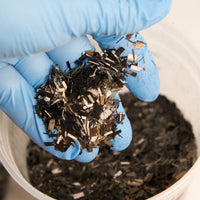
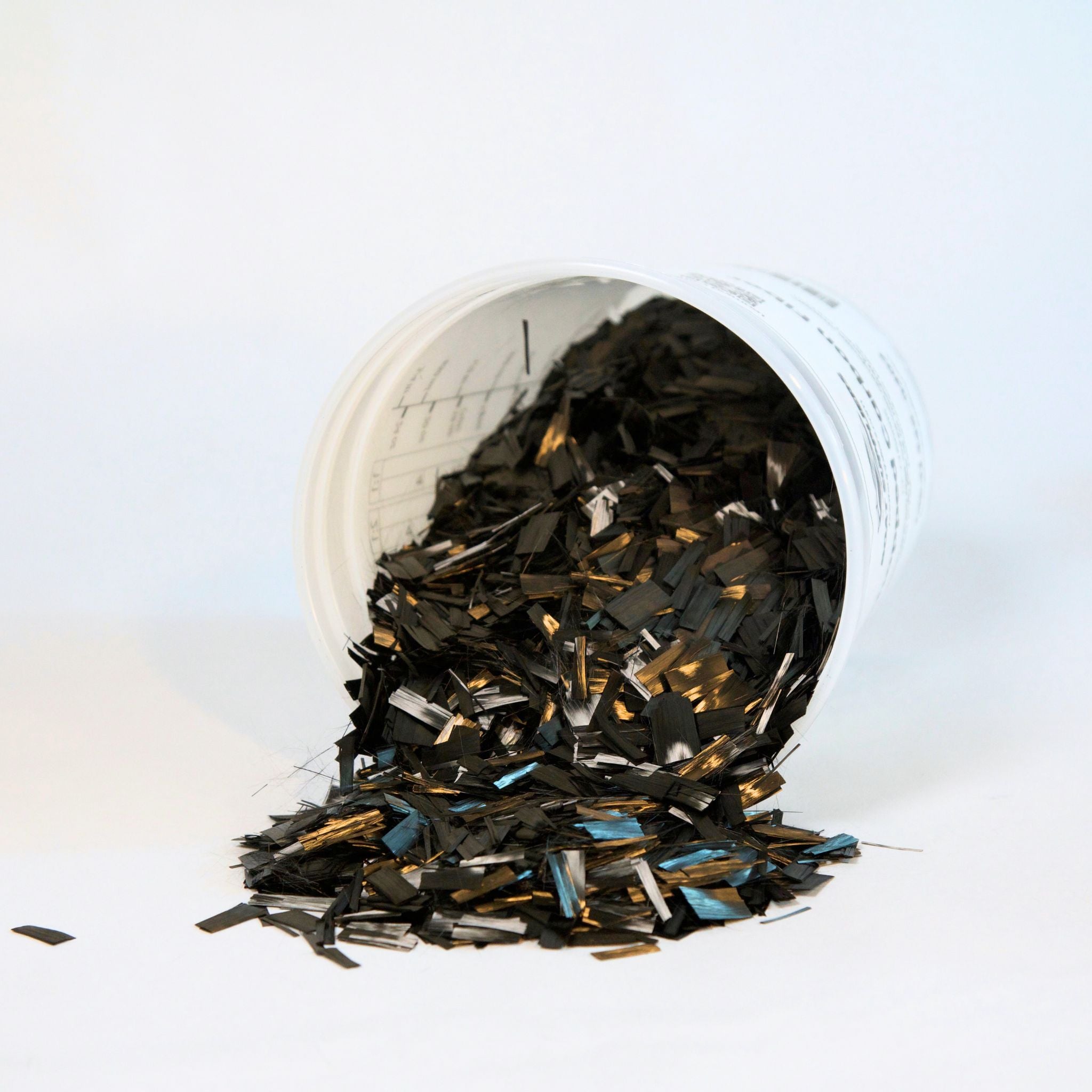
1/2 inch chopped carbon fiber: longer strands for stiffer, stronger castings and repairs where structural stiffness is the priority.

Our 1/2" chopped carbon fiber is a long-strand, high-strength reinforcement filler designed to deliver maximum structural support in composite and marine applications. The extended fiber length improves bridging across gaps and enhances load distribution, making it ideal for critical repairs and fabrication work.

  • Recommended Use: Structural reinforcement in laminating, filleting, gap-filling, and composite layups
  • Fiber Length: 1/2 inch (12.7 mm)
  • Resin Compatibility: Compatible with epoxy, polyester, and vinyl ester resins
  • Note: Epoxy resin provides superior bond strength and performance
  • Mix Ratio: Gradually add chopped fiber to mixed resin until the desired consistency is reached. For a thick, paste-like structural mix, use approximately 1 quart of resin with 1 to 1.5 quarts of chopped carbon fiber
  • Appearance: Coarse black chopped strands
  • Key Properties:
  • Excellent tensile and flexural strength
  • Improved gap-bridging due to longer fibers
  • Electrically conductive
  • Lightweight and corrosion-resistant
  • Application Tips: Mix thoroughly into fully catalyzed resin to ensure even dispersion. Ideal for high-load repairs in transoms, bulkheads, stringers, and custom carbon laminates.

1/2" chopped carbon fiber is the go-to reinforcement for heavy-duty marine builds and repairs where long fiber length and structural integrity are paramount. For best results, use with epoxy resin to achieve optimal bonding and mechanical performance.

Chopped Carbon Fiber 1/2" (0.5 inches) by weight

  • 1/2 inch chopped carbon fiber, longer-strand reinforcement
  • More reinforcement per fiber for stiffer, stronger parts
  • Light, high-modulus filler for castings and repairs
  • Mixes into epoxy, polyester or vinylester
  • Best where structural stiffness is the priority
  • Available in multiple sizes
View full details

Overview


Half-inch chopped carbon fiber is the longer-strand version of our chopped carbon, giving more reinforcement per fiber for stiffer, stronger castings and repairs. The longer strands carry more load, so the cured mix is tougher where the part really has to resist bending.

Like the 1/4 inch, it keeps weight low while adding carbon stiffness, but the longer fiber is a bit coarser to mix. Reach for it when structural stiffness is the priority in a casting or thick repair.

Available in multiple sizes.

Technical Specifications


Works with Epoxy, Polyester, Vinyl Ester
Material1/2 inch chopped carbon fiber
Filler TypeStructural reinforcement
Physical FormLoose chopped carbon fibers
ColorBlack
Density ClassLight
SandabilityNot for fairing
Compatible ResinsEpoxy, Polyester, Vinyl Ester

Compare Fillers


Product1/2" Chopped Carbon Fiber1/2" Chopped Carbon FiberYou're viewingfrom $17.95 1/4" Chopped Carbon Fiber1/4" Chopped Carbon Fiberfrom $17.95 1/2" Chopped Strand Fiberglass1/2" Chopped Strand Fiberglassfrom $13.95 1/4" Chopped Strand Fiberglass1/4" Chopped Strand Fiberglassfrom $13.95
Best forStructural reinforcementStructural reinforcementChopped strand reinforcementChopped strand reinforcement
DensityLightLightMediumMedium
SandabilityNot for fairingNot for fairingNot for fairingNot for fairing
ResinsEpoxy, Polyester, Vinyl EsterEpoxy, Polyester, Vinyl EsterEpoxy, Polyester, Vinyl EsterEpoxy, Polyester, Vinyl Ester
Material1/2 inch chopped carbon fiber1/4 inch chopped carbon fiber1/2 inch chopped E-glass fiber1/4 inch chopped E-glass fiber
SelectedViewViewView
1/2" Chopped Carbon Fiber

Chopped carbon fiber is added to epoxy, polyester, or vinyl ester resin to boost strength and stiffness without the bulk of woven fabric. Shops use it for reinforcing fillets and bond lines, casting small structural parts, and molded forged-carbon parts where you want the carbon look and high strength in a flowable mix. It is reinforcement, not a fairing filler.

Yes. Chopped carbon fiber works with epoxy, polyester, and vinyl ester resin. Epoxy is the usual choice for structural carbon work because it bonds better and is less brittle. Stir the fiber into mixed resin to the consistency you need, then wet it out fully so there are no dry fibers left in the layup.

Shorter 1/4 inch fiber blends smoother and works into tight fillets and thin sections more easily, giving a cleaner finish. Longer 1/2 inch fiber carries more load and adds more crack resistance, so reach for it where structural reinforcement matters more than surface smoothness. Many shops keep both and pick by the job.

Match the filler to the job, and keep strength fillers below the surface with fairing fillers on top:

  • Bonding and structural fillets: use a high-density or fiber filler like colloidal silica (Cabosil), milled fiber, or microfibers, which cure hard and strong.
  • Fairing and shaping: use a low-density filler like phenolic microballoons, glass bubbles, or a fairing compound, which sand and feather easily.

Adhesive, high-density fillers like colloidal silica and microfibers make a hard, strong mix for bonding and structural filleting, but they are tough to sand. Fairing, low-density fillers like microballoons and glass bubbles make a light, soft mix that sands and feathers easily for a smooth surface, but they are not structural. Use adhesive fillers for strength and fairing fillers for finish.

There is no fixed ratio. Mix the resin and hardener fully first, then stir in filler a little at a time until you reach the consistency the job needs:

  • Ketchup consistency: for a coating or pre-coat that still flows.
  • Mayonnaise consistency: for bonding parts together.
  • Peanut-butter consistency that holds a peak: for filleting and gap-filling.

Low-density microsphere fillers sand the easiest. Phenolic microballoons, 3M glass bubbles, and lightweight blends like our fairing compound or West System 410 Microlight feather to a fine edge and carve with little effort once cured. They trade strength for sandability, so use them above the structural layer for shaping and smoothing, not for bonding or load-bearing fillets.

Some are. High-density and fiber fillers like colloidal silica, milled glass fiber, and microfibers add real strength and are made for bonding and load-bearing fillets. Low-density fairing fillers like microballoons and glass bubbles are not structural; they are for shaping and fairing only. Build strength with a high-density filler first, then fair over it with a low-density filler.