Two-Part Epoxy: Mix Ratios, Pot Life and Which Kit to Buy

01 October 2026
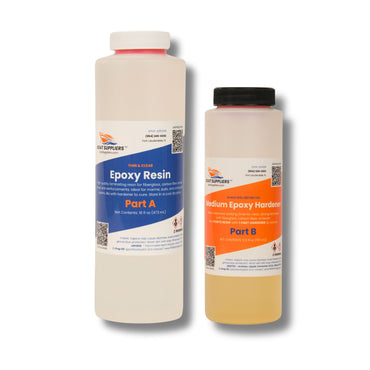
Every two-part epoxy is a resin and a hardener at a fixed ratio, and the three numbers that decide which one you buy are the mix ratio, the pot life at your shop temperature, and the form it comes in: liquid for laminating and coating, cartridge for bonding, putty for fairing. Get the ratio wrong by more than about 5 percent and the cured epoxy is soft; get the pot life wrong and a full cup smokes on the bench. Here are the numbers, then the kit for each job.
Mix ratio is set by the chemistry, not a preference
An epoxy hardener is not a catalyst. It is a reactant, and every hardener molecule needs a resin molecule to pair with. Add extra hardener to a two-part epoxy and you do not get a faster cure, you get unreacted amine sitting in the matrix, a soft, cloudy, sometimes sticky part. Short it and you get the same in the other direction. The tolerance on most marine systems is roughly plus or minus 5 percent of the ratio, which on a 5:1 system means a 20 g error in a 500 g batch already puts you at the edge.
Ratios are published by volume for pumps and by weight for scales, and they differ because resin and hardener have different densities. West System 105/205 is 5:1 by volume and 5.19:1 by weight. 105/207 is 3:1 by volume and 3.7:1 by weight. Use the number that matches your measuring method. A gram scale accurate to 1 g is the cheapest insurance in the shop; calibrated pumps are second; graduated cups are third and only for batches over a pint.
Pot life, working time, and cure are three different clocks
Pot life is how long a 100 g mass in a cup stays workable at a stated temperature, usually 72°F (22°C). Working time is how long the same epoxy stays workable once spread thin, and it is longer because a film sheds heat. Cure to solid and full cure are later still. Two rules from the bench: every 18°F (10°C) rise in temperature roughly halves pot life, and doubling the batch in the same cup shortens it further because the exotherm feeds itself. Mix in a shallow tray, not a tall cup, when you need the time.
| System | Ratio by volume | Pot life, 100 g at 72°F (22°C) | Working time, thin film | Cure to solid |
|---|---|---|---|---|
| West 105/205 Fast | 5:1 | 9 to 12 min | 60 to 70 min | 6 to 8 hr |
| West 105/206 Slow | 5:1 | 20 to 25 min | 90 to 110 min | 10 to 15 hr |
| West 105/207 Special Clear | 3:1 | 22 to 27 min | 100 to 120 min | 10 to 15 hr |
| West 105/209 Extra Slow | 3:1 | 40 to 50 min | 3 to 4 hr | 20 to 24 hr |
| West Six10 cartridge | Metered by the tube | 42 min working time | Same, it is a bead | 5 to 6 hr, full cure 24 hr |
| Pettit EZ-Fair putty | 1:1 by volume | Check the TDS | Long enough to fair a hull side | Sandable next day at 70°F |
Liquid, cartridge, or putty: pick by the job
Liquid two-part epoxy is for wetting out cloth, coating, and mixing with fillers into your own fillet or fairing compound. You measure every batch. It is the cheapest per ounce and the only form for laminating.
Cartridge epoxy is for bonding. The West System Six10 Thickened Epoxy Adhesive puts 105-based resin and hardener through a static mixing tip from a standard caulking gun, so the ratio is metered by the tube and there are no cups, no scale, and no measuring error. The bead is non-sag, gap-filling, and shear-thinning, so it wets out under a spreader but stands up on a vertical bulkhead. Working time is 42 minutes at 72°F (22°C), cure to solid 5 to 6 hours, full cure 24 hours. We use it for backing plates, bedding through-bolted hardware in cored decks, gluing cleat stock, and tabbing small bulkheads where mixing a cup of 105 and adding fumed silica would waste more than the job uses.
Putty is for fairing. The Pettit EZ-Fair Two-Part Epoxy Fairing Compound is a lightweight two-part epoxy putty mixed 1:1 by volume, rated above and below the waterline, and it is the fairing step of Pettit's blister repair system. It sands far easier than a homemade silica fairing mix and holds its shape on a hull side. The quart handles a full transom and a few dings; the 250 ml is a single-repair size. If you are estimating how much you need for a hull, the fairing filler calculator takes the area and depth.
Mixing and thinning two-part epoxy
For anything over a quart, a drill-driven mixer beats a stick. The 16" Steel Power Mixer has a 2-3/8 inch head and a 16 inch shaft that reaches the bottom of a gallon can, which is where unmixed hardener hides. Mix two full minutes, scrape the walls and the bottom, then mix another minute. Keep the speed low enough that you are not whipping air in.
Never thin a laminating or coating epoxy with solvent. Acetone or alcohol drops the viscosity, but it also drops the cured strength and water resistance and leaves solvent trapped in the film. Warm the resin and hardener to 80°F (27°C) instead. The one place a reducer belongs is two-part epoxy paint and primer, and there you use the reducer the paint maker specifies. For Interlux two-part polyurethane and epoxy coatings that call for it, the Interlux Marine Paint Reducing Solvent (2333N) is the slow-evaporating reducer, at the percentage on the paint's data sheet and no more.
For color, add an opaque dispersion to the resin side and stir streak-free before the hardener goes in. The Black Epoxy Resin Pigment 1oz and Autumn Epoxy Resin Pigment 1oz are concentrated enough that a few drops per ounce is plenty, and they do not change the ratio at that dose.
Nitrile gloves and eye protection for every batch, and a P100 respirator with organic vapor cartridges when you sand cured epoxy or work near solvents.
Frequently asked questions
Can I add more hardener to make two-part epoxy cure faster?
No. Hardener is a reactant, not a catalyst, so extra hardener leaves unreacted amine in the cured epoxy and you get a soft, cloudy part. Hold the published ratio within 5 percent. To cure faster, switch to a fast hardener such as West 205 (9 to 12 minute pot life at 72°F) or warm the shop and the cans to 80°F (27°C), which roughly halves the time.
What is the difference between pot life and working time?
Pot life is measured on a 100 g mass in a cup, typically at 72°F (22°C), and it is short because the cup traps heat. Working time is for the same epoxy spread as a thin film, and it runs 4 to 6 times longer. West 105/206 has a 20 to 25 minute pot life but a 90 to 110 minute working time. Mix, pour it out into a tray, and the clock slows down.
How much does temperature change epoxy cure time?
Every 18°F (10°C) change roughly halves or doubles pot life and cure time. 105/206 that is solid in 10 to 15 hours at 72°F takes a full day at 55°F (13°C) and may never fully cure below 40°F (4°C). In a hot shop use a slow hardener and small batches; in a cold shop use a fast hardener and warm the resin and hardener before mixing, not after.
Can I thin two-part epoxy with acetone?
Not for laminating, coating, or bonding. Even 5 percent acetone cuts cured strength and water resistance and traps solvent in the film. Heat the components to about 80°F (27°C) to lower viscosity instead. Reducers belong only in two-part epoxy paints and primers that specify one, like Interlux 2333N at the percentage on the paint's data sheet.
Is cartridge epoxy like Six10 strong enough for structural bonding?
Yes, for bonding and small fillets. Six10 is 105-based, meters its own ratio through the mixing tip, and cures to full strength in 24 hours at 72°F. Use it for backing plates, hardware bedding, and gluing blocking. It is not a laminating resin, so a transom or stringer still gets liquid epoxy and 1708; Six10 is the glue that holds the pieces while you build that laminate.
What You Need For This Job
- West System Six10 Thickened Epoxy Adhesive: self-metering two-part epoxy for bonding, bedding, and small fillets
- Pettit EZ-Fair Two-Part Epoxy Fairing Compound: 1:1 fairing putty for above and below the waterline
- 16" Steel Power Mixer: drill mixer that reaches the bottom of a gallon can
- Interlux Marine Paint Reducing Solvent: 2333N reducer for two-part epoxy paints and primers that call for it
- Black Epoxy Resin Pigment 1oz: opaque color for tinted coats and fills
Next post

Fiberglass Resin: Polyester vs Vinyl Ester vs Epoxy for Your Repair
Updated on 29 September 2026