1708 vs 1808 Biaxial Fiberglass: Which Weight for Your Repair

09 October 2026
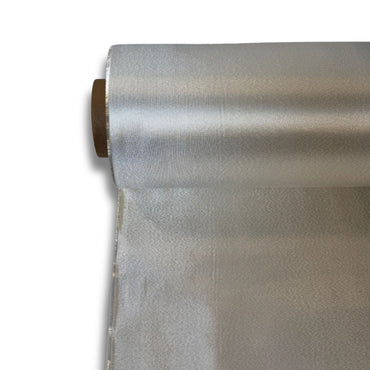
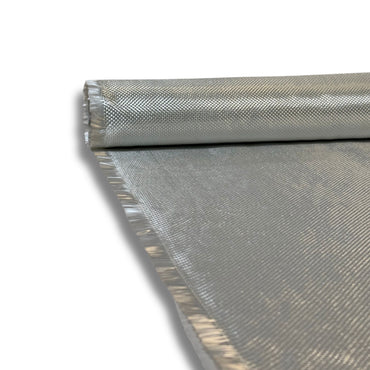
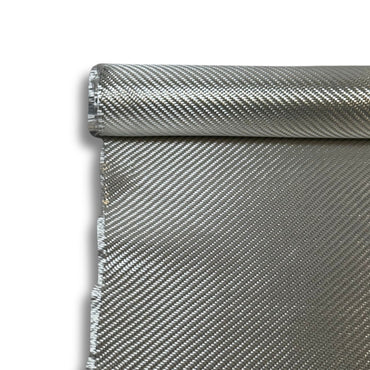
1708 and 1808 biaxial weigh within an ounce of each other, so weight is the wrong spec to choose on. The difference is fiber direction. 1708 is 17 oz/yd² of stitched E-glass at +45 and -45 degrees over a 3/4 oz chopped strand mat backer; 1808 is 18 oz/yd² of the same glass stitched at 0 and 90 over the same mat. One crosses a joint on the diagonal, the other runs straight along it. Pick by how the load crosses the bond line and the 1708 vs 1808 fiberglass question answers itself.
1708: +45/-45 for tabbing, transoms and anything with a corner
Almost every repair joint in a boat is loaded in shear across the joint: a stringer tab trying to peel off the hull, a transom skin trying to shear off the core, a patch trying to pop out of a hull side. Fibers at 45 degrees to that joint cross it in both directions and carry the shear directly; fibers parallel to the joint contribute almost nothing. That is why 1708 is the tabbing and transom fabric. The stitched double-bias construction also drapes: it follows a 3/4 in fillet radius and turns an inside corner without bridging, where a 0/90 fabric of the same weight stands off the fillet and traps a resin-rich void under it. The 3/4 oz mat backer goes down first, against the prepared surface, wets out fast, and gives the next ply a rough, mechanically keyed surface to bond to. It comes 38 in and 50 in wide, to full rolls of about 52 yd.
1808: 0/90 when the load runs straight
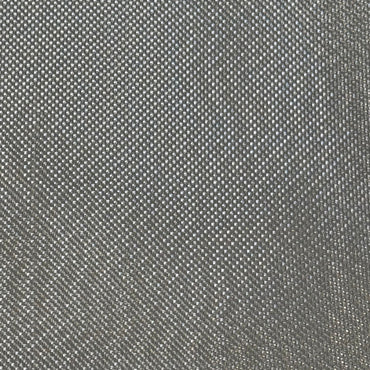
A flat panel skin, a replacement deck section, a hull side laminated from the inside on a flat run, a stringer cap where the fibers should run the length of the stringer: these want fibers along the load and across it, and 0/90 puts them there without wasting glass at an angle. It is also the fabric for a flat part on a tool, because 0/90 lays flat and does not shear out of square under the squeegee the way a double bias does. On a tab or a fillet it is the wrong tool: half the fiber runs parallel to the joint, and it bridges the radius. 1808 is 50 in wide, same mat backer, same cuts up to a roll of about 52 yd.
1208: the drape option
1208 is 1708 at 12 oz of +45/-45 glass on the same 3/4 oz mat, and it goes where 1708 will not: a compound curve on a kayak stem, a tight-radius chine, a small part on a curved mold, the last ply that has to wrap a corner cleanly. A 17 oz fabric bridges a 1/2 in radius no matter how hard you roll it; 12 oz wets into it. Two plies of 1208 run about the same glass weight as one and a half of 1708 and follow shape far better. It comes 50 in wide with a longer full roll, about 67 yd.
Spec table
| Fabric | Structural glass | Orientation | Mat backer | Total weight | Width | Cured ply, hand layup (approx.) |
|---|---|---|---|---|---|---|
| 1708 | 17 oz/yd² (577 g/m²) | +45 / -45 | 3/4 oz CSM | about 24 oz/yd² (805 g/m²) | 38 in, 50 in | 0.040 in (1.0 mm) |
| 1808 | 18 oz/yd² (610 g/m²) | 0 / 90 | 3/4 oz CSM | about 25 oz/yd² (840 g/m²) | 50 in | 0.040 to 0.045 in (1.0 to 1.1 mm) |
| 1208 | 12 oz/yd² (407 g/m²) | +45 / -45 | 3/4 oz CSM | about 19 oz/yd² (635 g/m²) | 50 in | 0.030 in (0.8 mm) |
Ply thickness is figured from glass density at a typical 30 to 35 percent glass by volume for a hand layup with mat; a vacuum-bagged ply comes out thinner and a resin-rich one thicker. Lay up a 12 x 12 in test panel and measure it before committing a transom schedule.
Resin, ratio and cure
Biaxial with a mat backer wets out at roughly 1:1 resin to glass by weight; the mat side drinks more than the stitched side. A gallon of polyester wets 3 to 4 linear yards of 50 in 1708 by hand, before the seal coat and the putty, so run the job through the resin calculator rather than buying by feel. All three fabrics work in polyester, vinyl ester and epoxy. The mat in a stitched biaxial is held by the stitching, not by a styrene-soluble binder, which is why 1708 is the standard transom fabric with a 3:1 marine epoxy even though plain chopped strand mat is not. Grinding cured laminate and wetting out with polyester both call for a fitted P100 with organic vapor cartridges, nitrile gloves and eye protection.
Which one, by job
Transom rebuild on a 16 to 22 ft outboard boat: 3 to 4 plies of 1708 Biaxial Fiberglass over the new core, mat side to the core on the first ply, each ply rotated so the stitching does not stack. Stringer and bulkhead tabs: the same fabric slit narrow, 1708 Biaxial Fiberglass Tape in 6, 8 and 10 in staggered widths, so you are not cutting strips off a roll. Flat deck skin, replacement floor panel, or a flat part on a tool: 2 plies of 1808 Biaxial Fiberglass with the 0 direction along the span. Kayak and canoe stems, radiused chines, and the wrap ply on any tight inside corner: 1208 Biaxial Fiberglass. When a job mixes flat runs and corners, run 1808 on the flat and 1708 or 1208 into the corners.
Frequently asked questions
Is 1808 stronger than 1708?
Not in a repair joint. 1808 carries about 4 percent more total glass per square yard, but its 0/90 fibers run parallel and perpendicular to a tab instead of across it. On a stringer tab or a transom skin loaded in shear, the +45/-45 fibers in 1708 carry the load directly and the joint tests stronger. On a flat panel loaded along its length, 1808 wins. Pick by the direction of the load, not the number on the bag.
Can I use 1708 biaxial with epoxy?
Yes, and it is the standard transom pairing. The 3/4 oz mat on 1708 is stitched to the biaxial, not held with the styrene-soluble binder that makes loose chopped strand mat a bad match for epoxy, so it wets out fine in a 3:1 marine epoxy. Expect roughly 1:1 resin to glass by weight, so about 1.5 lb of mixed epoxy per square yard of fabric by hand. Put the mat side toward the surface you are bonding to.
Which side of 1708 goes down?
Mat side down on the first ply, against the ground and cleaned surface, because the mat wets out fast, fills the grinder scratches and gives a keyed bond. After that, keeping mat side down means each new ply lands on the rougher stitched face of the last one, which bonds better than mat on mat. Rotate each ply 90 degrees so the stitch lines do not stack into a weak plane.
How many layers of 1708 for a transom?
Three to four plies per skin on a 16 to 22 ft outboard boat, which lands the new skin at roughly 0.12 to 0.16 in (3 to 4 mm) of cured laminate. Match the thickness of the skin you ground off. At about 1.5 lb of resin per square yard of 1708, a 12 sq ft (1.3 sq yd) transom skin takes around 2 lb of mixed epoxy per ply, plus the core bedding putty.
What is 1208 biaxial used for?
Curves and corners that 1708 bridges: kayak and canoe stems, chine radii under 3/4 in, small molded parts, and the wrap ply over an inside corner. At 12 oz of +45/-45 glass on a 3/4 oz mat it is about 0.030 in (0.8 mm) per hand-laid ply, so two plies of 1208 replace one and a half of 1708 and actually touch the surface instead of tenting over it.
What You Need For This Job
- 1708 Biaxial Fiberglass: +45/-45 over mat, the transom and tabbing workhorse
- 1808 Biaxial Fiberglass: 0/90 over mat for flat panels and straight-load skins
- 1208 Biaxial Fiberglass: 12 oz double bias for curves, stems and inside corners
- 1708 Biaxial Fiberglass Tape: the same fabric slit to 6, 8, 10 and 12 in for stringer tabs
Next post

PVA vs Wax vs Semi-Permanent Mold Release: Which One for Your Mold
Updated on 08 October 2026