Fiberglass Boat Floor Replacement: A Complete DIY Guide (Step-by-Step)

30 June 2026
If you've noticed soft spots underfoot, a spongy feel when you walk across the deck, or visible delamination around the edges, your boat is probably telling you it's time for a fiberglass boat floor replacement. It's one of the most satisfying DIY projects a boat owner can tackle — and one of the most valuable, both structurally and financially. This guide walks you through the full process, from demo day to final lamination, with specific material choices that will help you get a professional result without a professional price tag.
What a floor replacement needs
Everything below is in stock and ships from our Florida shop.


How Bad Is the Damage? Assessing Before You Demo
Before you pull out a saw, spend 30 minutes doing a proper survey. Use a rubber mallet and tap across the entire floor systematically. A solid, dense thud is good. A hollow, dull slap means the plywood core has delaminated from the fiberglass skin above it — and likely has moisture inside. Mark every suspect area with painter's tape.
Then probe the edges and around any hardware penetrations (drain plugs, live wells, seat pedestals) with a screwdriver or ice pick. Rotted plywood will give way with light pressure. If your probing reveals soft spots near the stringers — the structural ribs running the length of the hull — check those too. A rotted boat floor repair that ignores compromised stringers is a repair you'll be redoing in three years.
Quick rule of thumb: If more than 30–40% of the floor surface tests soft or hollow, plan for a full replacement rather than patching. Partial patches on a badly saturated floor almost always fail at the seams within a season or two.
Tools and Materials You'll Need
Gather everything before you start. Mid-project supply runs kill momentum and let surfaces dry out at the wrong time.
- Circular saw with a carbide blade (set blade depth carefully — you want to cut the floor, not the hull)
- Oscillating multi-tool for detail cuts near the hull sides
- 4" and 6" angle grinder with 36-grit and 80-grit discs
- Drill with assorted bits
- Marine-grade plywood (BS1088 Okoume or equivalent) — ¾" is standard for most recreational boat floors
- Fiberglass mat — more on selecting the right weight below
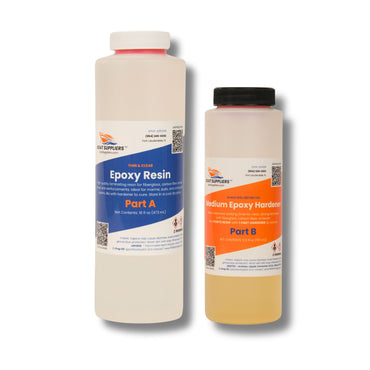
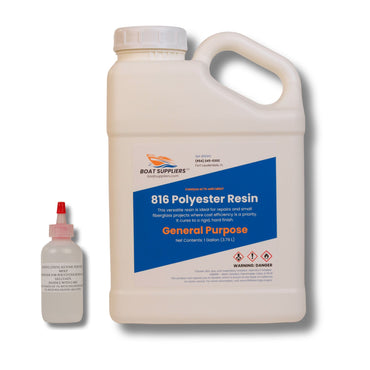
- Epoxy or polyester resin (epoxy is preferred for structural work and rotted boat floor repair)
- Acetone for surface prep
- Mixing cups, brushes, rollers, and gloves
- Thickened epoxy adhesive for bedding the core
Step 1: Cutting Out the Old Floor
Set your circular saw blade depth to just slightly more than the thickness of your existing floor panel — typically ¾" to 1". You want to cut through the plywood core and the top fiberglass skin without gouging the hull bottom. Make your cuts about 2" away from the hull sides to preserve the tab area where the floor is glassed in.
Use an oscillating tool to finish cuts near edges and around any obstructions. Once sectioned, pry out the panels. Expect resistance — original factory floors are typically tabbed in with several layers of fiberglass. Work slowly and avoid prying against the hull itself.
With the panels out, use a chisel and grinder to remove any remaining plywood bonded to the hull. You want to get down to clean fiberglass or solid laminate before you proceed.
Step 2: Surface Preparation — The Step That Determines Everything
This is where most DIY boat floor rebuilds either succeed or fail. The new floor is only as good as the bond between the new laminate and the existing hull structure.
Grind the bonding surfaces thoroughly with a 36-grit disc. You're looking to remove any gelcoat gloss, old adhesive residue, and any remaining soft or contaminated material. Then step up to 80-grit to clean up. Wipe everything down with acetone and let it flash off completely before you touch resin.
If you find areas where the hull fiberglass itself is delaminated or water-damaged, those need to be addressed now — before the new floor goes in. Drill small holes to allow any trapped moisture to escape, let the area dry thoroughly (a heat gun helps), and then re-laminate with fresh fiberglass before proceeding. Before you begin any grinding or lamination work, make sure you have proper PPE for fiberglass and resin work on hand.
Step 3: Cutting and Fitting the New Plywood Core
Use cardboard or rosin paper to make templates of each floor section before cutting your marine plywood. Take your time here — gaps larger than about ¼" will need to be filled and will create weak spots in the finished floor.
Once your plywood panels fit well, round over all edges with a router or sander (a sharp 90-degree edge makes a stress riser that can crack your laminate). Aim for a gentle chamfer or radius on every edge that will be glassed over.
Seal all cut edges of the plywood with unthickened epoxy and let it cure fully before installation. This is critical — raw plywood edges are the primary entry point for moisture that causes rot in the first place.
Step 4: Bedding the Core Into the Hull
Mix up a batch of thickened epoxy to a peanut butter consistency. We use West System Six10 Thickened Epoxy Adhesive for this step — it's a pre-thickened, cartridge-delivered formula that makes it easy to apply even coverage without mixing errors, and it delivers the kind of structural bond you need between the new core and the hull bottom. Getting your epoxy hardener ratio right is equally important for any hand-mixed batches used throughout this project.
Apply the thickened epoxy to the hull bottom, set your plywood panels in place, and weight them down evenly. Wipe up any squeeze-out immediately. Let this cure fully — at least 12 hours at 70°F — before you start laminating over the top.
Step 5: Laminating the Top Skin — Choosing the Right Fiberglass Mat
This is where the structural work happens, and your choice of fiberglass reinforcement matters more than most guides admit.
For the Tabbing (Edges and Seams)
Start by glassing in the perimeter of each panel — this is called tabbing, and it ties the new floor to the existing hull structure. Cut strips of fiberglass mat about 4" wide. For tabbing, our 1.5oz Fiberglass Mat Tape is ideal — it comes pre-cut in strip form, wets out cleanly, and conforms easily to the curved junction between the floor panel and the hull sides. Wet the surface with epoxy, lay the tape, then wet out the tape itself. Work out bubbles with a brush, not a roller, in tight areas.
For the Field (Open Floor Surface)
Over the flat field of the floor panels, you want to build up a proper laminate schedule. A good starting approach for a recreational boat floor:
- First layer: 0.75oz Fiberglass Chopped Strand Mat — this lighter weight mat conforms beautifully and creates an excellent bond coat to the plywood surface. It wets out easily and minimizes print-through.
- Second and third layers: 1.5oz Fiberglass Chopped Strand Mat — this is your primary structural laminate. The heavier weight builds thickness and stiffness quickly. Apply each layer wet-on-wet if your schedule allows, which eliminates the need for sanding between coats.
Three total layers (0.75oz + 1.5oz + 1.5oz) gives you a solid, stiff floor skin that will handle normal foot traffic and loading without flexing. For best results rolling out each layer, review these pro tips for bubble-free fiberglass roller technique.
Filling Voids and Gaps
For any gaps at panel edges or around hull fittings, mix loose chopped strand fiber directly into your epoxy to create a structural filler. 1/4" Chopped Strand Fiberglass blended into epoxy makes an excellent gap filler that's far stronger than microballoons or fumed silica alone. For deeper voids, step up to 1/2" Chopped Strand Fiberglass, which builds more structural mass in a single application.
Step 6: Finishing the Surface
Once your laminate has fully cured (48–72 hours for most epoxy systems), you can sand the surface starting with 80-grit and working up to 120–180 grit for a smooth base. If you're applying a non-skid coating, a final 80-grit scuff is typically enough tooth for paint adhesion.
Apply your chosen topcoat — two-part polyurethane paint, non-skid deck paint, or marine carpet — according to the manufacturer's instructions. Reinstall hardware using fresh sealant at every penetration.
Common Mistakes to Avoid on a Boat Floor Rebuild
- Rushing the dry-out: Installing new plywood over a hull that still has trapped moisture is the number-one cause of repeat rot. Use a moisture meter and don't proceed until readings are consistently below 15%.
- Skipping edge sealing: Every cut edge on your plywood needs epoxy saturation before installation, no exceptions.
- Too few laminate layers: A single layer of 1.5oz mat is not enough for a floor. Three layers minimum; four if you have a heavy-use work boat.
- Not addressing the stringers: A beautiful new floor over rotten stringers is a structural failure waiting to happen. Check them every time.
Final Thoughts
A proper fiberglass boat floor replacement is a weekend-plus project, but it's entirely achievable for a capable DIYer with the right materials and a methodical approach. The key is not to rush the prep, use quality materials for the lamination schedule, and make sure every surface is clean and dry before resin touches it. Done right, a rebuilt floor will outlast the rest of the boat.
Whether you're doing a targeted rotted boat floor repair on a single soft panel or a full boat floor rebuild from hull to hardware, taking the time to do each step properly means you'll be back on the water with confidence — and you won't be pulling up that floor again for decades.
Shop the materials in this guide
Prev post

Fiberglass Repair in Cold Weather: Practical Tips for Getting It Done Right
Updated on 03 July 2026
Next post

Fiberglass Safety Equipment: The Complete PPE Guide for Boat Repair and Resin Work
Updated on 26 June 2026