
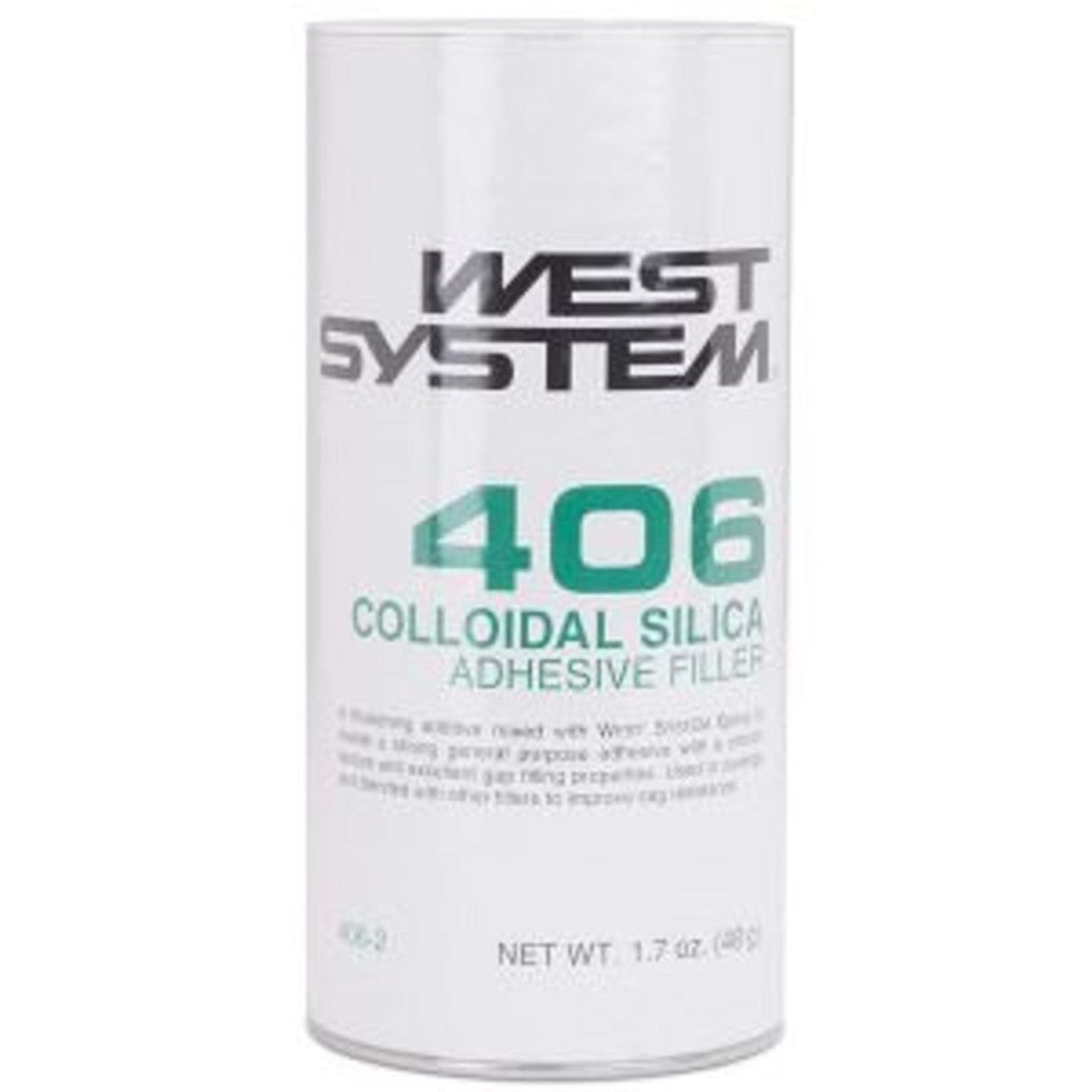
West System 406 Colloidal Silica Adhesive Filler
West System 406 Colloidal Silica Adhesive Filler
Share
SKU:SWES-406-2
25 in stock
Couldn't load pickup availability
Ships Today if ordered before 4pm Learn More
Free Shipping on orders over $199 Learn More
406 Colloidal Silica is fumed silica, the workhorse thixotrope: stir it into mixed 105 epoxy and the resin stops sagging, holds a fillet, and bonds with the highest all-around strength of the West filler range. If you only stock one filler for adhesive work, this is the one.
Add to mixed resin in small shots until the batch hangs on a vertical stir stick; a little goes a long way and over-thickened epoxy wets nothing. Cured mix is near-clear, hard, and not meant for fairing. It also works in polyester and vinyl ester, where the same material shows up under the Cabosil name.
Same material, shop quantity: our Aerosil/Cabosil fumed silica jars are the identical thixotrope in quart to 4-gallon sizes, which is the difference between buying silica by the ounce and buying it by the job. The spec table below puts them side by side.
Specifications
Includes
Features
Resin Calculator
Technical Specifications
Compare Fillers
| Product |  West System 406 Colloidal Silica Adhesive FillerYou're viewingfrom $23.73 West System 406 Colloidal Silica Adhesive FillerYou're viewingfrom $23.73
| 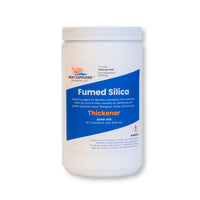 Aerosil - Cabosil (Fumed Silica)from $6.95 Aerosil - Cabosil (Fumed Silica)from $6.95
| 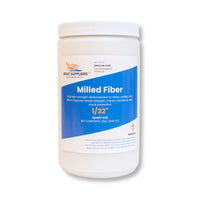 1/32" Milled Fiberfrom $8.95 1/32" Milled Fiberfrom $8.95
|
|---|---|---|---|
| Best for | Thixotropic thickener (fumed silica) | Thixotropic thickener | Thickening / reinforcing filler |
| Density | Light | Light | Medium |
| Sandability | Not for fairing | Not for fairing | Moderate |
| Resins | Epoxy, Polyester, Vinyl Ester | Epoxy, Polyester, Vinyl Ester | Epoxy, Polyester, Vinyl Ester |
| Material | N/A | Amorphous fumed silica (SiO2 >99.8%) | Milled E-glass fiber (1/32 in) |
| View | View |
Which epoxy filler do I use for fairing, bonding, or filleting?
What's the difference between a fairing filler and an adhesive filler?
How much filler do I add to epoxy or polyester resin?
Which filler makes the easiest-to-sand fairing compound?
Are epoxy fillers structural?
What's the difference between West System 403, 404, 405, 406, and 410?
Blog posts

Kevlar Fabric for Boats: A Fabricator's Guide...
Kevlar Fabric for Boats: A Fabricator's Guide...

Resin Mixing Mistakes That Ruin Your Composit...
Resin Mixing Mistakes That Ruin Your Composit...
