
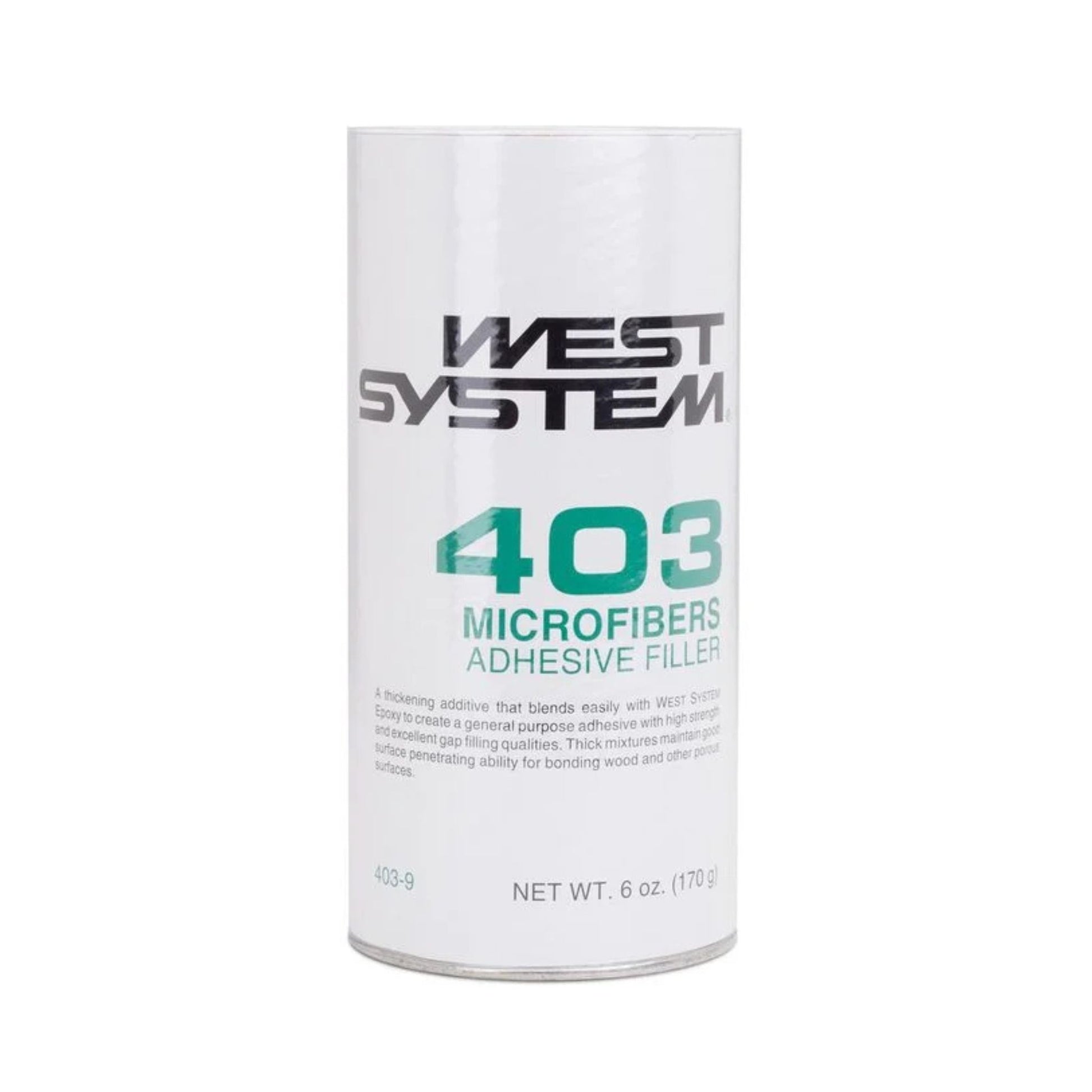
SKU:WEST-4039
26 in stock
Couldn't load pickup availability
Ships Today if ordered before 4pm Learn More
Free Shipping on orders over $199 Learn More
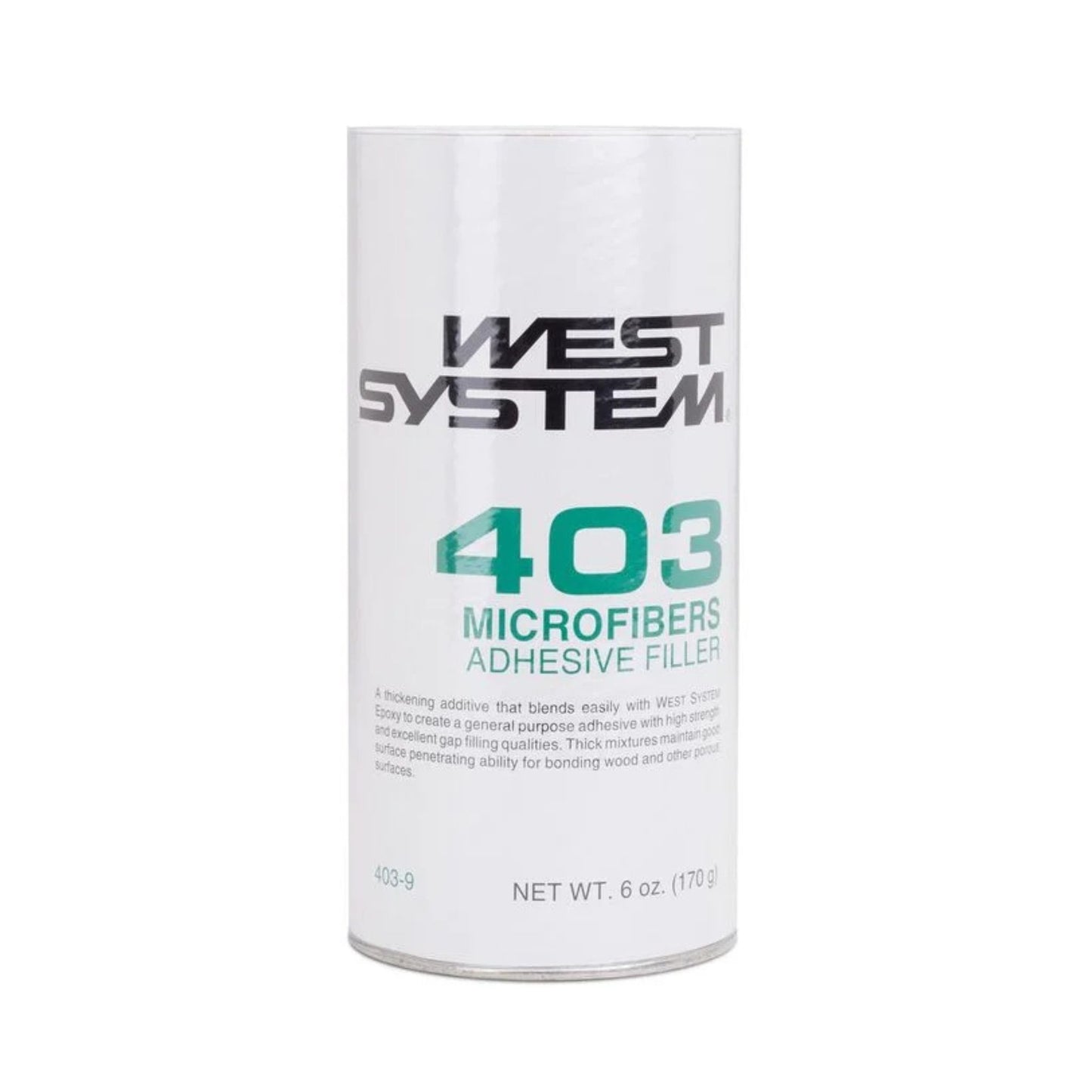
403 Microfibers is West System's cotton-fiber bonding filler: stir it into mixed 105 epoxy to build a non-sag structural adhesive for fillets, gap filling, and glue joints where you need strength more than a pretty sanding job.
Add it to mixed resin until you reach mayonnaise-to-peanut-butter consistency depending on gap and vertical hold. The cured mix is off-white, tough, and deliberately not a fairing compound; keep it in the joint, not on the surface you plan to sand. Works in polyester and vinyl ester too, though West markets it for the 105 system.
Shop-quantity alternative: our 1/32 in milled fiber does the same structural thickening with chopped glass instead of cotton, in any resin, at bulk jar pricing, and fumed silica handles the anti-sag half of the job. The spec table below compares all three.
Specifications
Includes
Features
Resin Calculator
Technical Specifications
Compare Fillers
| Product |  West System 403 MicrofibersYou're viewingfrom $26.03 West System 403 MicrofibersYou're viewingfrom $26.03
| 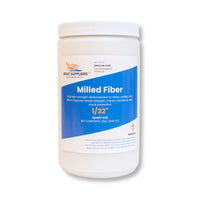 1/32" Milled Fiberfrom $8.95 1/32" Milled Fiberfrom $8.95
| 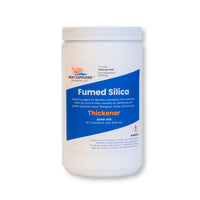 Aerosil - Cabosil (Fumed Silica)from $6.95 Aerosil - Cabosil (Fumed Silica)from $6.95
|
|---|---|---|---|
| Best for | Structural adhesive filler (cotton microfibers) | Thickening / reinforcing filler | Thixotropic thickener |
| Density | Medium | Medium | Light |
| Sandability | Not for fairing | Moderate | Not for fairing |
| Resins | Epoxy, Polyester, Vinyl Ester | Epoxy, Polyester, Vinyl Ester | Epoxy, Polyester, Vinyl Ester |
| Material | N/A | Milled E-glass fiber (1/32 in) | Amorphous fumed silica (SiO2 >99.8%) |
| View | View |
Which epoxy filler do I use for fairing, bonding, or filleting?
What's the difference between a fairing filler and an adhesive filler?
How much filler do I add to epoxy or polyester resin?
Which filler makes the easiest-to-sand fairing compound?
Are epoxy fillers structural?
What's the difference between West System 403, 404, 405, 406, and 410?
Blog posts

Kevlar Fabric for Boats: A Fabricator's Guide...
Kevlar Fabric for Boats: A Fabricator's Guide...

Resin Mixing Mistakes That Ruin Your Composit...
Resin Mixing Mistakes That Ruin Your Composit...
