Fiberglass Repair in Cold Weather: Practical Tips for Getting It Done Right

03 July 2026
Winter doesn't have to mean putting your repair list on hold. Whether you're dealing with a stress crack that appeared at haul-out, a soft spot in the deck that can't wait until spring, or a gelcoat gouge you want fixed before the season starts, fiberglass repair in cold weather is absolutely doable. It just requires understanding what the cold is actually doing to your materials and how to work around it. This guide goes beyond the usual "keep it above 60 degrees" advice to give you the specific techniques that experienced fabricators use when temperatures drop.
Why Cold Weather Makes Fiberglass Repair Harder (The Real Explanation)
The core issue isn't just that resin cures slowly. Cold affects your materials in several compounding ways at once:
- Viscosity increases: Epoxy resin becomes noticeably thicker below 60 degrees F and almost honey-like below 50 degrees F. This makes it harder to wet out fiberglass cloth properly, trapping air bubbles and producing weak, resin-starved laminates.
- Cure stalls: Polyester and epoxy resins are both exothermic. In cold conditions, the reaction starts slowly, generates less heat, and can stall before the resin reaches full cure. You end up with a surface that feels hard but is actually under-cured and brittle.
- Surface condensation: When a cold substrate meets even slightly warmer, humid air, moisture can condense on the repair surface. Epoxy bonded over a moisture-contaminated surface will delaminate under load.
- Substrate contraction: Cold fiberglass contracts slightly. If you repair at 40 degrees F and the boat later sees 80 degrees F summer heat, the repair patch can experience stress if it wasn't bonded with sufficient flexibility.
Once you understand these four factors, the solutions become obvious.
The Temperature Floor: What's Actually Workable?
Here's what experienced fabricators know that most guides don't tell you: the substrate temperature matters more than the air temperature. A boat stored in a 45 degree F shed can still have hull panels that are 38 degrees F after a cold night. You need to measure the actual laminate surface with an infrared thermometer before you commit to a repair.
Practical temperature floors by resin type:
- Polyester resin: 55 degrees F substrate minimum, ideally 65 degrees F and above. Polyester is far more temperature-sensitive than epoxy and will remain tacky or simply never cure properly below this threshold. No amount of extra catalyst fully compensates for cold.
- Epoxy resin: 40 to 45 degrees F substrate is workable with a fast hardener and supplemental heat during cure. Below 40 degrees F, even the best epoxy systems risk incomplete crosslinking.
- Vinylester resin: Similar to polyester. Treat it as requiring 60 degrees F and above at the substrate.
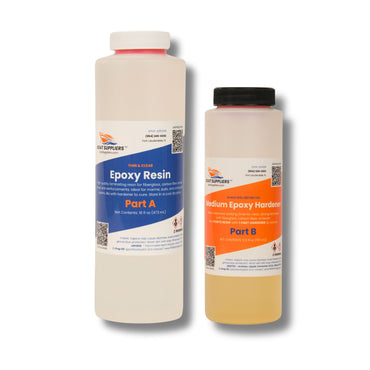
For most winter boat repairs, epoxy is the right choice. Products like West System 105 Epoxy Resin have been the industry standard for decades precisely because of their reliable performance across a wider temperature range and their superior moisture resistance, both critical in winter repair scenarios.
Hardener Selection: Your Most Important Cold-Weather Decision
With epoxy systems, hardener choice dramatically changes your cold-weather outcome. Fast hardeners generate more exothermic heat, which helps push the cure in cold conditions, but there's a trade-off. In a thick layup, a fast hardener in cold weather can kick unevenly, curing hot at the center while the edges stay soft. For structural laminate repairs, stay with the fast hardener, lay up in stages rather than one thick pass, and add supplemental heat for a more consistent cure.
Both West System 105/205 and 105/206 systems use the same mix ratio: 5 parts resin to 1 part hardener by volume, or 9 parts resin to 1 part hardener by weight. Get this wrong and you get an under-cured, sticky mess regardless of temperature, so use calibrated pumps or a gram scale. West System's 205 Fast Hardener is a solid choice for thin fills and fairing work in cold conditions. For structural repairs involving multiple layers of biaxial cloth, use 205 Fast Hardener in stages with a heat tent (more on that below), and save 206 Slow Hardener for warm weather. You'll get better wet-out and a more uniform cure throughout the laminate.
If you need a complete system ready to go, shop the West System cold-weather epoxy repair kit, which includes resin, hardener, and application supplies sized right for typical hull and deck repairs. For smaller jobs such as a crack fill or a loose fitting repair, the West System Fiberglass Handy Repair Pack keeps waste to a minimum.
Prepping the Work Area for Cold Weather Resin Cure
Heat the Substrate, Not Just the Air
The single most effective thing you can do is bring the substrate up to temperature before you mix any resin. Use a heat gun, infrared lamp, or forced-air heater to warm the repair area to at least 65 degrees F, then verify with an IR thermometer. A fiberglass hull holds heat surprisingly well once it's warmed, giving you a useful working window before the surface cools back down.
Build a Heat Tent
For larger repairs or overnight cures, a heat tent is non-negotiable. Drape poly sheeting or moving blankets over a simple frame to create an enclosure around the repair area. A small electric space heater or ceramic shop heater inside the tent will maintain cure temperatures without heating the entire boatyard. To monitor conditions inside the tent, use a probe-style ambient thermometer or a digital thermometer with a remote sensor, not an IR thermometer, which reads surface temperatures only. You're aiming to keep the air inside the tent above 60 degrees F for the entire initial cure period, typically 8 to 12 hours for epoxy.
Warm Your Resin Before Mixing
Cold resin is thick resin. Before mixing, set your epoxy containers in a bucket of warm (not hot) water for 15 to 20 minutes. This brings viscosity back down dramatically, making wet-out much easier and reducing trapped air in the laminate. Never heat resin above 90 degrees F or use direct flame. Gentle warming only.
Use Fumed Silica for Gap Fills and Structural Fairing
Cold-weather repairs frequently involve bridging gaps, filling voids around hardware, or building up a fairing layer before glassing. This is where fumed silica earns its place. Stir fumed silica (Aerosil/Cabosil) into your mixed epoxy to a peanut-butter consistency: about 1 3/4 cups of loose powder per cup of epoxy, or roughly 7.5 percent of the epoxy weight (our guide to how much fumed silica to add has the full chart). This thickened mix resists sagging on vertical surfaces and fills without slumping in cold-slowed resin. It cures hard and sands poorly, so if the fill has to be faired, work microballoons into it or skim it with a fairing putty. Do not use fumed silica as a substitute for cloth reinforcement in structural areas. It's a filler, not a structural fiber.
Working with Polyester in Winter: When You Have No Choice
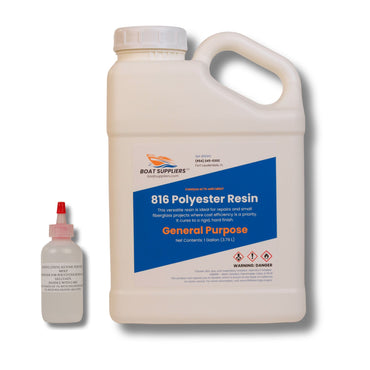
Sometimes the repair specification or a cosmetic gelcoat match requires polyester or styrene-based products. If you're thinning a polyester resin or gelcoat for better flow in cold conditions, Styrene is the correct thinner. It reduces viscosity without disrupting the cure chemistry the way incompatible solvents can. Use it sparingly: no more than 10 percent by volume, and only after you've done everything possible to warm the substrate.
With polyester, adding extra MEKP to compensate for cold is a common mistake. The correct MEKP range for cold-weather polyester work is 1.5 to 2 percent by volume. That's the ceiling. Over-catalyzed polyester cures brittle and hot, which causes micro-cracking. Below that range in cold conditions, you risk a permanently tacky, under-cured surface. Get the substrate temperature right with a heat tent and hold your MEKP dose in the 1.5 to 2 percent window rather than trying to drive the chemistry harder.
Doing It Right: A Cold-Weather Structural Repair Workflow
For a structural fiberglass repair such as a damaged hull section, a delaminated deck panel, or a stress fracture that needs glassing over, here's the workflow that produces professional results in cold conditions. Before starting any repair work, make sure you have the proper PPE for boat repair and resin work on hand, including gloves, eye protection, and respiratory protection appropriate for the materials you're using:
- Grind and prep the repair area at least 24 hours before you plan to laminate. Let all grinding dust and moisture fully clear the surface.
- Warm the substrate to 65 to 70 degrees F using an infrared lamp or heat gun. Verify surface temperature with an IR thermometer.
- Check for moisture. If your IR thermometer shows the substrate is colder than the dew point of the surrounding air, you have a condensation risk. Warm the surface 10 to 15 degrees F above ambient before proceeding.
- Pre-cut all your cloth before mixing resin. Cold-weather working times can be deceptive. The resin may feel like it's staying workable, then kick quickly once your heat tent warms up.
- Mix fumed silica fill first if you're bridging any gaps or voids. Apply it, let it tack, then proceed to your laminating layers.
- Warm your resin in a warm water bath, mix carefully at 5:1 by volume or 9:1 by weight, and apply.
- Enclose the repair in a heat tent immediately after laminating. Maintain 65 degrees F and above air temperature (monitored with a probe thermometer) for 12 hours minimum.
- Post-cure slowly. Don't spike the heat to rush the cure. Gradual, consistent warmth produces the strongest bond.
For structural repairs requiring multiple layers of 1708 biaxial cloth, the 1708 Fiberglass Repair Kit gives you 5 yards of cloth plus 1.33 gallons of marine epoxy, enough material for serious structural work without having to source components separately. If you want a deeper look at what goes into these kits and how to use each component effectively, see our guide to fiberglass repair kit components and usage.
Mold Work and Release Agents in Cold Weather
If your winter project involves pulling parts from a mold such as custom panels, hatch covers, or repair plugs, cold temperatures affect mold release wax performance too. Partall #2 Paste Wax applies and buffs best above 60 degrees F. In cold conditions, warm the mold surface gently before applying wax and allow extra buffing time. Cold wax films can appear hazy and under-buffed even when they're not. Apply a minimum of three coats when working in winter, as cold resin is more likely to microscopically key into any thin spots in the release film.
Know When to Wait and Where to Get What You Need
All that said, there are conditions where the smart move is to protect the damaged area with temporary measures and wait for better weather. If your substrate temperature is consistently below 40 degrees F and you have no practical way to heat the work area, the repair will likely fail. Temporary fixes such as backing plates, marine-grade tape over cracks, and moisture barriers can protect a damaged area until conditions allow a proper repair. When spring arrives, use our spring boat fiberglass repair inspection checklist to systematically identify and address everything that needs attention after winter storage.
Respect the temperature floors for your resin type. Use the correct mix ratios. Warm your substrate and your resin before you start. Protect the cure with a heat tent and a probe thermometer inside it. Do those four things and you'll get January repairs that hold just as long as anything done in July.
Shop the materials in this guide
Prev post

Composite Layup Schedule Guide: How to Plan and Execute Any Fiberglass Build
Updated on 07 July 2026
Next post

Fiberglass Boat Floor Replacement: A Complete DIY Guide (Step-by-Step)
Updated on 30 June 2026