Secondary Bonding: Which Resin Sticks to Cured Laminate (and Which Won't)

16 June 2026
If you're tying new glass into an existing laminate, a repair patch, a transom skin, extending a stringer, the resin you reach for decides whether the new work bonds or just sits there as a mechanical scab that lets go six months later. This is the secondary bonding problem, and it's where a lot of otherwise clean repairs fail.
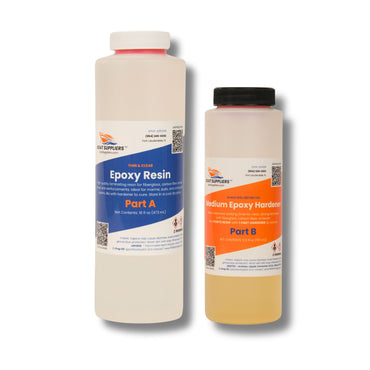
Shop epoxy resin for secondary bonds
Primary vs secondary bond, in one paragraph
A primary (chemical) bond happens when resin cross-links into resin that hasn't fully cured yet: the two plies become one piece. A secondary (mechanical) bond is what you get laying resin onto a substrate that's already fully cured, the new resin grips the texture you've sanded in, but there's no chemical link across the joint. Anything you bond to a cured laminate is a secondary bond. The only question is which resin makes a strong one.
Polyester and vinyl ester: weak on cured laminate
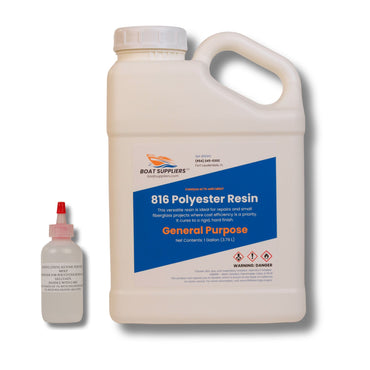
Polyester resin gets almost all of its strength from the primary chemical link. Lay it over fully cured polyester, and especially over cured epoxy, and you're leaning on a mechanical grip polyester is bad at: it shrinks as it cures (roughly 3-8% linear), it doesn't wet into a sanded surface the way epoxy does, and the styrene won't soften a post-cured laminate enough to bite. Poly-on-poly works while the first layer is still green (tacky, same day) because that's a primary bond. Once it's hard, the bond drops off fast. For a deeper look at choosing polyester resin for boats, the tradeoffs go well beyond secondary bonding.
Vinyl ester is a step up for secondary bonds, it's the standard skin coat over a cured laminate when you need chemical or blister resistance, but it still trails epoxy for raw adhesion to a cured surface.
Epoxy: the secondary-bond resin
Epoxy is what you want any time the substrate is already cured. It wets into sanded glass, shrinks almost nothing (under 2%), and grips dissimilar materials, cured polyester, cured epoxy, wood, properly prepped metal, in a way polyester can't. That's why you can lay epoxy over a cured polyester hull, but you should never lay polyester over a cured epoxy repair. If you're weighing your options before committing, this polyester vs vinyl ester vs epoxy comparison covers the full picture.
We had this come through the shop: a transom got patched in epoxy, then a different guy came back later and tried to glass over the patch in polyester. It peeled in sheets, never bit. Had to grind the whole thing back to sound laminate and redo it in epoxy. Cured epoxy is about the worst thing you can ask polyester to stick to.
Quick reference: resin vs substrate
| Bonding to | Polyester | Vinyl ester | Epoxy |
|---|---|---|---|
| Cured polyester laminate | Weak | OK | Strong |
| Cured epoxy | Don't | Weak | Strong |
| Green / uncured polyester | Strong (primary) | Strong | Strong |
| Bare wood | Poor | Fair | Strong |
| Prepped metal | No | Poor | Strong (with prep) |

Printable version: download the Resin Compatibility Chart (PDF). More free shop charts: composites reference charts.
Surface prep makes or breaks the secondary bond
Since the bond is mechanical, the prep is the bond:
- Grind back to clean, sound laminate. 36-40 grit on cured glass; you want a uniform dull, scratched surface with zero gloss left. Gloss anywhere means a spot the resin can't grip.
- Wash amine blush off cured epoxy before you sand. Cured epoxy can leave a waxy amine blush; wipe it with water (not solvent) first, then sand. Sanding blush just smears it into the scratches.
- Clean last, with the solvent the resin likes, and let it flash off. A quick acetone wipe lifts dust and skin oils; let it fully evaporate before you wet out so you're not trapping solvent in the joint. See these boatyard-pro resin cleanup tips for solvent handling details.
- Wet out inside the working window. Prime the prepped surface with neat (unthickened) epoxy, then lay your thickened mix or cloth while it's still wet so the layers link.
The short version
Bonding to anything cured: use epoxy. If the first layer is still green and it's a polyester hull, poly-on-poly is fine as a primary bond. Vinyl ester is your skin-coat-over-cured option when you need chemical resistance. Everything else, anything cured, anything dissimilar, reach for epoxy and prep the surface like the bond depends on it, because it does.
Shop epoxy resin for secondary bonds
Frequently asked questions
Will polyester resin stick to cured fiberglass?
Poorly. Polyester gets its strength from a chemical (primary) bond into resin that is still green. On a fully cured laminate it relies on mechanical grip, and it shrinks 3 to 8 percent as it cures, so the bond is weak. Same-day polyester on green polyester is fine; anything hard and old, switch to epoxy.
Can I put polyester resin over an epoxy repair?
No. Cured epoxy is the worst surface you can ask polyester to grip; it peels off in sheets. Epoxy over cured polyester works, polyester over cured epoxy does not. If a previous repair was done in epoxy, finish the job in epoxy.
Which resin is best for secondary bonding to cured laminate?
Epoxy. It shrinks under 2 percent, wets into a sanded surface and grips cured polyester, cured epoxy, wood and properly prepped metal. Vinyl ester is the middle option when you need chemical or blister resistance as a skin coat, but it trails epoxy for raw adhesion.
What grit should I sand cured fiberglass before bonding?
36 to 40 grit, until every trace of gloss is gone. The bond is mechanical, so the scratch pattern is the bond. Wash amine blush off cured epoxy with water before sanding (sanding smears it into the scratches), then wipe with acetone and let it flash off completely before wet-out.
Should I prime the surface with neat epoxy before laying thickened epoxy or cloth?
Yes. Wet the prepped surface with unthickened epoxy first, then lay the thickened mix or cloth while that coat is still wet so the layers link chemically. Letting the prime coat cure first turns the joint back into a secondary bond.
Prev post

Fumed Silica: What It Is, How Much to Add to Epoxy, and How to Use It
Updated on 16 June 2026
Next post

How to Winterize Fiberglass Boat: Complete Hull Protection Guide
Updated on 12 June 2026